


2. Disconnect the return hose from the power steering reservoir and plug the reservoir nipple.
3. Connect a tube to the disconnected hose and drain the booster fluid.
4. Disconnect the ignition coil high-voltage wires/connectors (petrol engine) or the fuel injection pump pressure regulator connector (diesel engine). While cranking the crankshaft with the starter, turn the steering wheel from lock to lock several times to drain the fluid.
Caution: Do not start the engine, as the pump may be damaged if the pump rotates and there is insufficient fluid. This will cause air to enter the hydraulic drive.
5. Connect the return hose and secure it with a clamp.
6. Pour the working fluid into the tank. Nominal volume: 0.8 l.
7. Turn the steering wheel several times with the front wheels raised to fill the steering gear with fluid. In this case, add fluid if its level drops. Once the fluid level is stable and close to normal, you can start the engine.
8. Start the engine, check for leaks in the hoses, then turn off the ignition.
Bleeding air from the hydraulic system of the power steering
9. Bleed the hydraulic system by turning the steering wheel from lock to lock until no more air bubbles appear in the reservoir.
Caution: Do not hold the steering wheel in the extreme position for more than 10 seconds.
10. Make sure that the liquid is not foamed and that its level is between the "MIN" and "MAX" marks on the tank body.
11. Make sure that the fluid level in the tank with the engine running and stopped differs by no more than 15 mm.
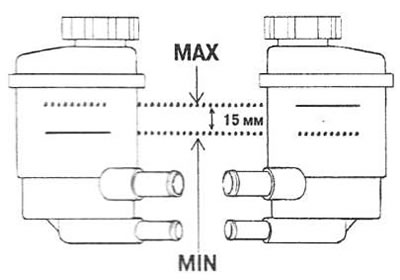
Note: If the fluid level in the reservoir suddenly increases, the air removal operations must be repeated.