


Car suspension Hyundai Accent 2

Technical data of suspension
Front suspension Type MacPherson with coil spring Wire diameter x diameter x height of cylindrical spring, mm 12.3x140x305/314.9 Identification color 12.3x140x305/314.9...
Front suspension Type MacPherson with coil spring Wire diameter x diameter x height of cylindrical spring, mm 12.3x140x305/314.9 Identification color 12.3x140x305/314.9...

Front suspension shock absorber
1 – lower spring support; 2 – dust cover; 3 – upper spring support; 4 – rack support; 5 – self-locking nut, 60–70 Nm; 6 – dust cap; 7 – nut*, 20–30 Nm; 8 – spring; 9 –...
1 – lower spring support; 2 – dust cover; 3 – upper spring support; 4 – rack support; 5 – self-locking nut, 60–70 Nm; 6 – dust cap; 7 – nut*, 20–30 Nm; 8 – spring; 9 –...

Lower control arm of the front suspension
1 – nut, 35–45 N·m; 2 – nut, 35–45 N·m; 3 – nut, 45–60 N·m; 4 – rear engine support; 5 – bolt, 30–40 Nm; 6 – anti-roll bar; 7 – lower frame; 8 – bolt, 95–120 Nm; 9 –...
1 – nut, 35–45 N·m; 2 – nut, 35–45 N·m; 3 – nut, 45–60 N·m; 4 – rear engine support; 5 – bolt, 30–40 Nm; 6 – anti-roll bar; 7 – lower frame; 8 – bolt, 95–120 Nm; 9 –...

Replacing the lower arm bushing
Execution order 1. Install the special tool on the lower arm. 2. Remove the bushing. 3. Lubricate the following parts with soapy water: the outer surface of the new...
Execution order 1. Install the special tool on the lower arm. 2. Remove the bushing. 3. Lubricate the following parts with soapy water: the outer surface of the new...

Replacing the bushing (G) of the lower arm
Execution order 1. Install the special tool on the lower arm. 2. Press out the bushing. 3. Lubricate the following parts with soapy water: the outer surface of the new...
Execution order 1. Install the special tool on the lower arm. 2. Press out the bushing. 3. Lubricate the following parts with soapy water: the outer surface of the new...

Front cross stabilizer
Removal 1. Remove the front wheel. 2. Remove the stabilizer link. 3. Remove the stabilizer bracket and bushing 4. Remove the rear engine mount. 5. Remove the anti-roll...
Removal 1. Remove the front wheel. 2. Remove the stabilizer link. 3. Remove the stabilizer bracket and bushing 4. Remove the rear engine mount. 5. Remove the anti-roll...

Rear suspension strut
1 – lower spring support; 2 – upper spring support; 3 – rack bracket; 4 – self-locking nut, 40–55 Nm; 5 – nut, 20–30 Nm; 6 – spring; 7 – rear suspension strut; 8 – nut,...
1 – lower spring support; 2 – upper spring support; 3 – rack bracket; 4 – self-locking nut, 40–55 Nm; 5 – nut, 20–30 Nm; 6 – spring; 7 – rear suspension strut; 8 – nut,...

Replacing the rear trailing arm bushing of the rear suspension
Execution order 1. Install the special tool on the rear suspension trailing arm. 2. Press out the bushing. 3. Lubricate the bushing and the bushing mounting location on...
Execution order 1. Install the special tool on the rear suspension trailing arm. 2. Press out the bushing. 3. Lubricate the bushing and the bushing mounting location on...

Replacing the rear wishbone bushing (A and B) of the rear suspension
Execution order 1. Install the special tool on the rear suspension arm. 2. Press out the bushing. 3. Lubricate the bushing and the bushing mounting location on the lever...
Execution order 1. Install the special tool on the rear suspension arm. 2. Press out the bushing. 3. Lubricate the bushing and the bushing mounting location on the lever...

Rear stabilizer bar
Execution order 1. Remove the anti-roll bar link. 2. Check the torque required to turn the stabilizer link ball joint pin. If there are cracks in the protective boot,...
Execution order 1. Remove the anti-roll bar link. 2. Check the torque required to turn the stabilizer link ball joint pin. If there are cracks in the protective boot,...

Front wheel alignment angles
Checking the front wheel alignment angles should be done on a special stand, with the car in a horizontal position with the front wheels set for straight-line movement....
Checking the front wheel alignment angles should be done on a special stand, with the car in a horizontal position with the front wheels set for straight-line movement....

Rear wheel alignment adjustment
Rear wheel alignment: 3±2 mm Warning: When adjusting the rear wheel toe-in, the adjusting bolt on the lower wishbones (B) must turn the same angle on both sides of the...
Rear wheel alignment: 3±2 mm Warning: When adjusting the rear wheel toe-in, the adjusting bolt on the lower wishbones (B) must turn the same angle on both sides of the...

Tire wear
Execution order 1. Measure the tread depth of your tire. Minimum permissible tire tread depth: 1.6 mm 2. If the remaining tread depth is less than 1.6 mm, replace the...
Execution order 1. Measure the tread depth of your tire. Minimum permissible tire tread depth: 1.6 mm 2. If the remaining tread depth is less than 1.6 mm, replace the...
Anti-skid chains
Execution order 1. Snow chains are only permitted for use on the front wheels. Do not use chains on the rear wheels. 2. When using winter tires, snow chains can be...
Execution order 1. Snow chains are only permitted for use on the front wheels. Do not use chains on the rear wheels. 2. When using winter tires, snow chains can be...

Wheel beating
Execution order 1. Raise the vehicle and secure it on supports. 2. Use a dial indicator to measure the wheel runout. 3. Replace the wheel if the wheel runout exceeds the...
Execution order 1. Raise the vehicle and secure it on supports. 2. Use a dial indicator to measure the wheel runout. 3. Replace the wheel if the wheel runout exceeds the...

Tightening the wheel nuts
Execution order 1. Tightening torque for wheels with steel and aluminum rims: 90–110 Nm. Warning! The final tightening torque must be applied using a torque wrench. 2....
Execution order 1. Tightening torque for wheels with steel and aluminum rims: 90–110 Nm. Warning! The final tightening torque must be applied using a torque wrench. 2....

Wheel rotation
Execution order Warning! When rotating wheels, the spare wheel must not be used. Rearrange the wheels in accordance with the order shown in the figure.
Execution order Warning! When rotating wheels, the spare wheel must not be used. Rearrange the wheels in accordance with the order shown in the figure.

Checking the vehicle's drift and directional instability
Execution order 1. If your vehicle continually pulls to one side while driving on a level section of road, perform the following checks. a. Reverse the front wheels and...
Execution order 1. If your vehicle continually pulls to one side while driving on a level section of road, perform the following checks. a. Reverse the front wheels and...
Caring for aluminum alloy wheels
Execution order 1. Aluminum alloy is susceptible to the harmful effects of alkali. If the car has been exposed to salt from sea water or road chemicals, it is necessary...
Execution order 1. Aluminum alloy is susceptible to the harmful effects of alkali. If the car has been exposed to salt from sea water or road chemicals, it is necessary...
Troubleshooting
Sign Probable cause Method of elimination Tight steering Front wheel alignment is incorrectly adjusted Adjust the front wheel alignment angles Excessive resistance to...
Sign Probable cause Method of elimination Tight steering Front wheel alignment is incorrectly adjusted Adjust the front wheel alignment angles Excessive resistance to...
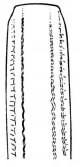
Tire wear diagnostics
Wear of the central part of the tread Very high tire pressure Wear of the central part of the tread down to the cord due to high tire pressure Wear of both side parts of...
Wear of the central part of the tread Very high tire pressure Wear of the central part of the tread down to the cord due to high tire pressure Wear of both side parts of...
This section is available on russian, bulgarian, belarusian, ukrainian, serbian, croatian, romanian, polish, slovak, hungarian
We recommend other sections on the topic of Hyundai manuals:
Chassis: Car suspension Hyundai Elantra 3 (2000-2006)
Chassis: Suspension and wheels Hyundai Getz (2002-2011)
Chassis: Suspension and wheels Hyundai Santa Fe 2 (2007-2012, petrol)
Chassis: Car suspension Hyundai Tucson 1 (2005-2010)
Chassis: Suspension and wheels Hyundai Matrix (2001-2010, petrol)
Link in different formats to this section
TextHTMLBB Code
- General information
- User manual
- Maintenance
- Power unit
- Engine repair
- Cooling and lubrication system
- Power and exhaust system
- Engine electrical equipment
- Engine management
- Transmission
- Clutch
- Mechanical gearbox
- Automatic gearbox
- Chassis
- Front suspension
- Rear suspension
- Wheels and tires
- Steering
- Brake system
- Body
- Exterior (external elements)
- Interior (internal elements)
- Heating and ventilation
- Electrical equipment
- Equipment and devices
- Electrical circuits
- User manual
- Control devices
- Starting engine and driving
- Troubleshooting
- Power unit
- SOHC engines
- DOHC engines
- Lubrication system
- Cooling system
- Decreased toxicity
- Fuel system
- Ignition system
- Transmission
- Clutch
- Mechanical gearbox
- Automatic gearbox
- Axles and drive shafts
- Chassis
- Car suspension
- Steering
- Brake system
- Body
- Exterior (external elements)
- Interior (internal elements)
- Air conditioning system
- Electrical equipment
- Equipment and devices
- Power devices
- General information
- Maintenance
- Power unit
- SOHC engines
- DOHC engines
- Cooling system
- Intake and exhaust systems
- Fuel supply (1.3 l, injection)
- Fuel supply (1.5 l, injection)
- Fuel supply (carburetor)
- Transmission
- Clutch
- Manual gearbox
- Automatic gearbox
- Drive shafts
- Chassis
- Car suspension
- Steering
- Brake system
- Body
- Body elements
- Electrical equipment
- Equipment and devices
- Electrical circuits