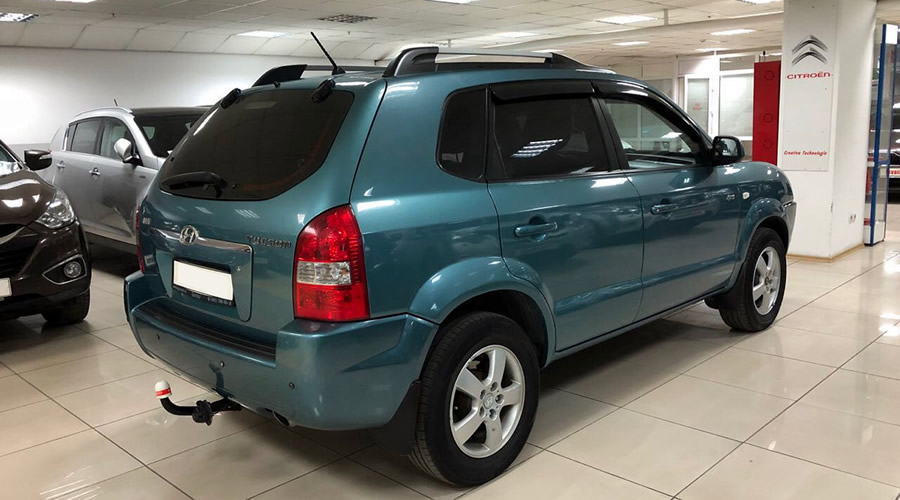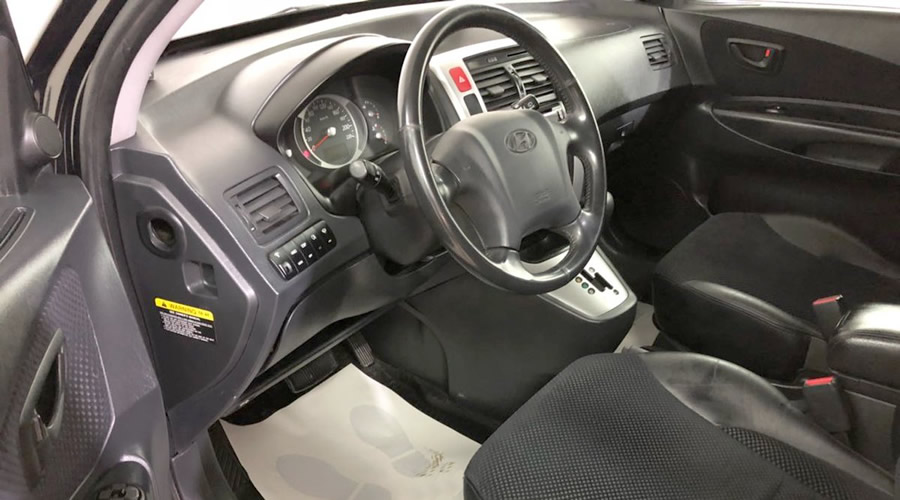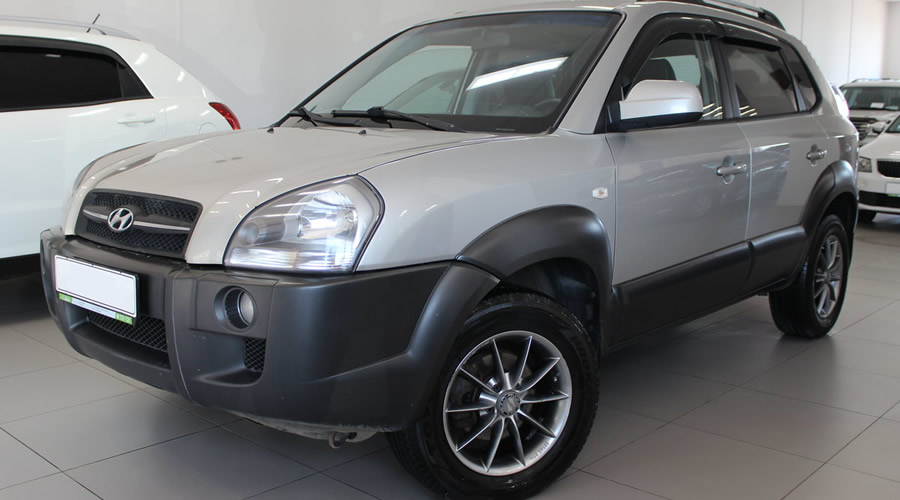
First generation (JM, 2005—2010)
The first generation Hyundai Tucson appeared in 2004 with the code name "JM" as a 2005 model. The car is based on the same platform on which the Hyundai Elantra and Kia Sportage. The full length of the body was 4.33 meters, the width was 1.8 meters, the height was 1.68 meters. Depending on the engine, the curb weight was from 1.47 to 1.53 tons. Assembly shops were located in Brazil, India, China, Ukraine, Taiwan and South Korea.
The car has three trim levels - the base GLS, mid-range SE and top-of-the-line Limited (previously LX). The base trim includes air conditioning, six airbags, electronic stability control, a CD player, alloy wheels, and remote keyless entry. The rear seats fold down, freeing up a large trunk for cargo.
Two 2.0-liter gasoline engines were installed (Beta II, I4) with a capacity of 139 hp and 2.2 liters (Delta, V6) with a capacity of 173 hp, as well as three diesel engines, all with a volume of 2.0 liters (CRDI, I4) with a capacity of 111, 140 and 150 hp. There are three gearbox options - 5- and 6-speed manual or 4-speed automatic with the "Shiftronic" function. All-wheel drive models have a Borg-Warner torque control system.
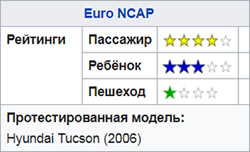
- Front Impact (Driver) - 5/5 stars
- Frontal Impact (Passenger) - 5/5 stars
- Side Impact (Driver) - 5/5 stars
- Side Impact (Passenger) - 5/5 stars
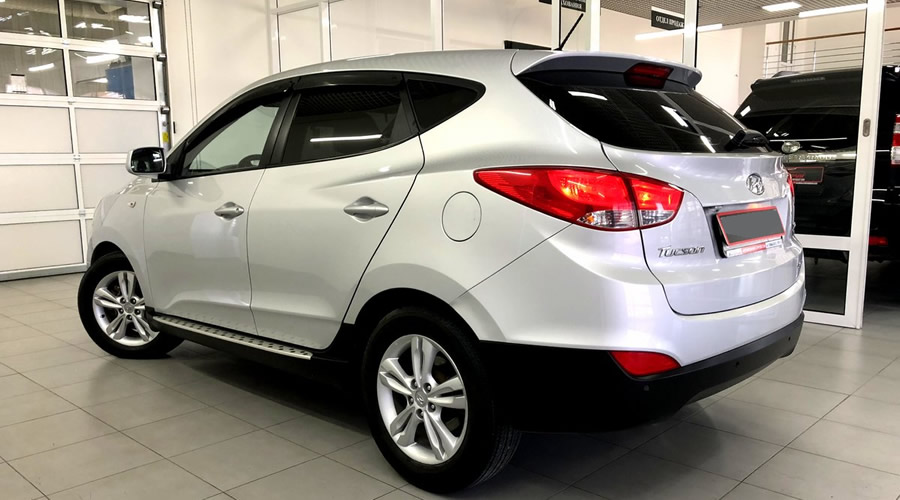
Second generation (LM, 2009—2015)
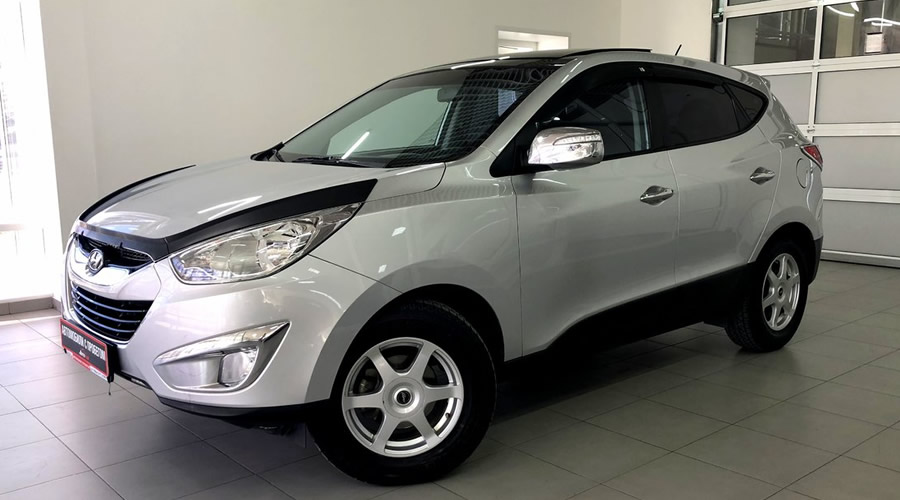
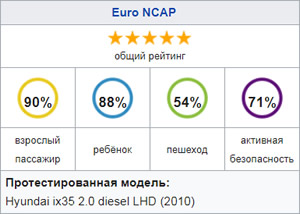
At the Frankfurt Motor Show on September 3, 2009, the next generation (code "LM") was shown to the public. In some countries, the Tucson name was replaced by Hyundai ix35. The development of the car took 3 years and cost the company $225 million. Assembly was carried out in the following countries - Brazil, Egypt, Indonesia, China, Malaysia, Slovakia, Taiwan, Czech Republic and South Korea.
The car's exterior was created by a designer named Cha Il-Hoi in 2007 under the guidance of former BMW designer Thomas Bürkle at Hyundai's Russelsheim design studio in Germany and continues the company's overall style called "fluidic sculpture".
The range of petrol engines consisted of the following models: 1.6 liters (Gamma GDI I4, 138 hp), 2.0 liters (Theta II I4, 163 hp), 2.0 liters (Nu I4, 164 hp) and 2.4 liters (Theta II I4, 176 hp). There were two diesel engines: 1.7 liters (U-Line CRDi I4, 139 hp) and 2.0 liters (R-Line CRDi I4, 150 hp). The cars were equipped with three types of gearboxes: 5- and 6-speed manual or 6-speed automatic.
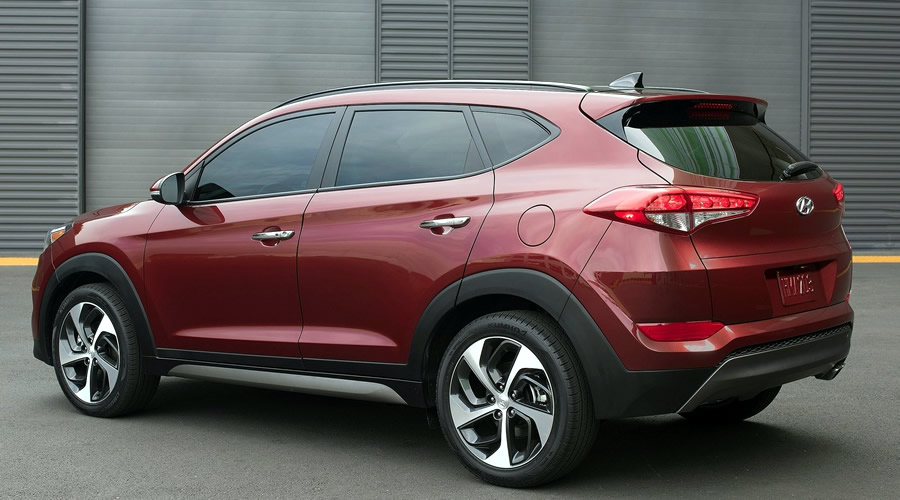
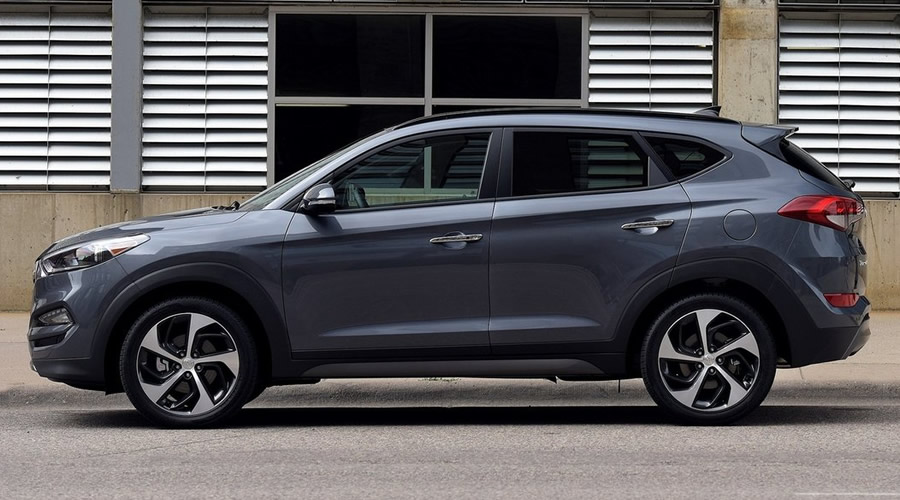
Third generation (TL, 2015–present)
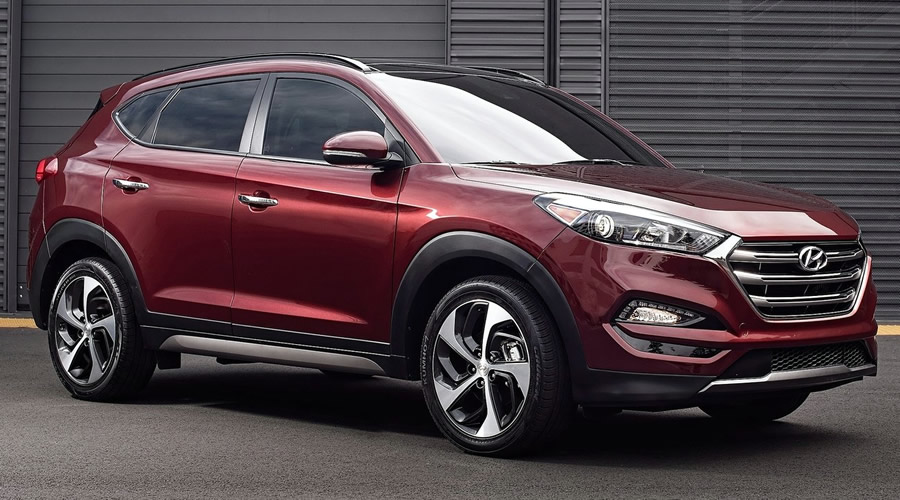
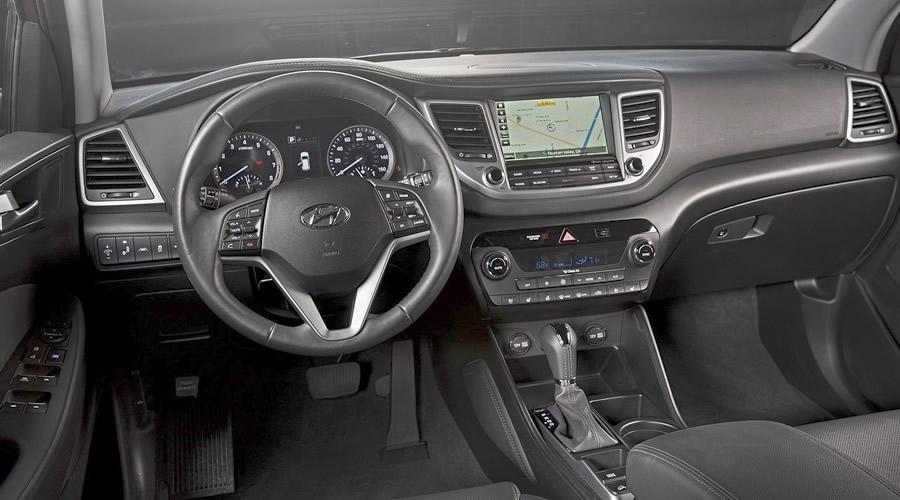
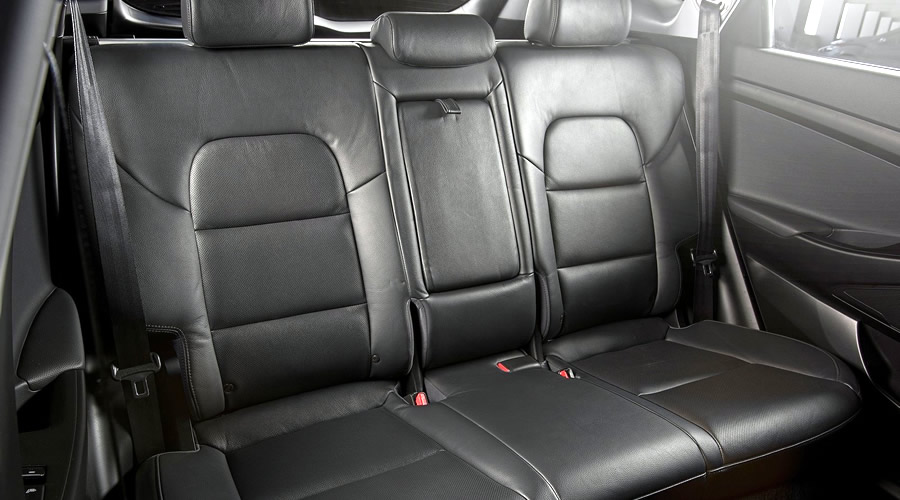
The first news about the third generation, codenamed "TL", appeared on February 17, 2015, and at the Geneva Motor Show on March 3 of the same year, the car was presented to the public as a 2016 model. The Tucson name returned to all countries where the second generation was called ix35. The following trim levels and trims are available: SE, Night, Eco, Sport, SE Plus and Limited. The cars were assembled in Algeria, Brazil, India, Russia, the Czech Republic and South Korea.
At the moment, there are three petrol engines with a volume of 1.6 liters (Gamma GDI I4, 138 hp), 2.0 liters (Theta II I4, 163 hp) and 2.0 liters (Nu I4, 164 hp). The car is also equipped with diesel engines with a volume of 1.7 liters (U-Line CRDi I4, 139 hp) and 2.0 liters (R-Line CRDi I4, 185 hp). There are three types of gearboxes - 6-speed manual, 6-speed automatic "Shift-Tronic" and 7-speed automatic with dual clutch (DCT). There are cars with both all-wheel drive and purely front-wheel drive models.