


Car air conditioner and heater Hyundai Tucson 1

Front Window Heated — General Information
The windshield heating system prevents the windshield wiper from freezing to the glass in winter. The control module receives a signal from the switch and supplies...
The windshield heating system prevents the windshield wiper from freezing to the glass in winter. The control module receives a signal from the switch and supplies...

Checking the front window defroster
1. Disconnect the heater connector (A) near the wiper motor. 2. Check the continuity of the circuit between the contacts on the heater side. 3. Turn on the ignition and...
1. Disconnect the heater connector (A) near the wiper motor. 2. Check the continuity of the circuit between the contacts on the heater side. 3. Turn on the ignition and...

Checking the Front Window Defogger Switch
1. Disconnect the negative battery terminal. 2. Remove the front panel and disconnect the switch connector. 3. Check the continuity of the circuit between the switch...
1. Disconnect the negative battery terminal. 2. Remove the front panel and disconnect the switch connector. 3. Check the continuity of the circuit between the switch...


Checking the rear window heating
1. Turn on the rear window heating. Connect a voltmeter to one end of the heating network and to the center of the glass. The voltage should be 6V. 2. If the voltmeter...
1. Turn on the rear window heating. Connect a voltmeter to one end of the heating network and to the center of the glass. The voltage should be 6V. 2. If the voltmeter...

Rear Window Defogger Switch — Check
1. Disconnect the negative battery terminal. 2. Remove the front panel and disconnect the rear window heating switch connector. 3. Check the continuity of the circuit at...
1. Disconnect the negative battery terminal. 2. Remove the front panel and disconnect the rear window heating switch connector. 3. Check the continuity of the circuit at...
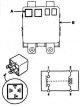
Rear Window Heated Relay — Check
1. Remove the rear window heater relay (A) from the interior relay block. 2. Check the continuity of the circuit between contacts 1 and 4 by applying 12V to contacts 2...
1. Remove the rear window heater relay (A) from the interior relay block. 2. Check the continuity of the circuit between contacts 1 and 4 by applying 12V to contacts 2...


Seat heater switch
1. Disconnect the negative battery terminal. 2. Remove the switch from the front console. 3. Check the continuity of the circuit between the switch contacts.
1. Disconnect the negative battery terminal. 2. Remove the switch from the front console. 3. Check the continuity of the circuit between the switch contacts.

Checking the technical condition of the seat heater
1. Disconnect the connector and check the resistance between the contacts. The normal resistance value is 2.6 Ohm +10%. 2. Check the functionality of the thermostat. The...
1. Disconnect the connector and check the resistance between the contacts. The normal resistance value is 2.6 Ohm +10%. 2. Check the functionality of the thermostat. The...


Direction of air flows
Direction of air flow in the car interior Direction of air flows within the system
Direction of air flow in the car interior Direction of air flows within the system


General information precautions when handling refrigerant
1. R-134a refrigerant is highly volatile. If a drop of refrigerant gets on your skin, it may cause local frostbite. Be sure to wear gloves when working with refrigerant....
1. R-134a refrigerant is highly volatile. If a drop of refrigerant gets on your skin, it may cause local frostbite. Be sure to wear gloves when working with refrigerant....

Precautions when replacing air conditioning system parts
1. It is prohibited to loosen the connections of parts before draining the refrigerant from the system. 2. To prevent moisture from entering, immediately close open...
1. It is prohibited to loosen the connections of parts before draining the refrigerant from the system. 2. To prevent moisture from entering, immediately close open...

Installation of air conditioning system fittings
1. Connections with bolts and nuts 1) Apply compressor oil to all fasteners to facilitate their tightening sufficiently to ensure a tight seal. 2) To prevent twisting of...
1. Connections with bolts and nuts 1) Apply compressor oil to all fasteners to facilitate their tightening sufficiently to ensure a tight seal. 2) To prevent twisting of...

Installation of control pressure gauges
1. Close both valves of the pressure gauge adapter. 2. Connect the filling hoses to the adapter fittings. Connect the low-pressure hose to the low-pressure filling...
1. Close both valves of the pressure gauge adapter. 2. Connect the filling hoses to the adapter fittings. Connect the low-pressure hose to the low-pressure filling...

Draining the refrigerant from the air conditioning system
1. Connect a set of control pressure gauges to the system. 2. Place a towel under the open end of the central hose. 3. Drain the refrigerant by slowly opening the high...
1. Connect a set of control pressure gauges to the system. 2. Place a towel under the open end of the central hose. 3. Drain the refrigerant by slowly opening the high...
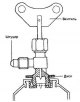
Actions with the air conditioning system charging valve
1. Before connecting the valve to the container with refrigerant, turn its handle counterclockwise until it stops. 2. Set the disk to the extreme upper position by...
1. Before connecting the valve to the container with refrigerant, turn its handle counterclockwise until it stops. 2. Set the disk to the extreme upper position by...

Charging the system with refrigerant vapor
Note: This operation is performed to charge the system with refrigerant in a vapor state through the low-pressure circuit. When the container with refrigerant is in a...
Note: This operation is performed to charge the system with refrigerant in a vapor state through the low-pressure circuit. When the container with refrigerant is in a...

Charging the system with liquid refrigerant
Note: This operation is performed to charge the discharged system with refrigerant in liquid state through the high-pressure circuit. With the container upside down, the...
Note: This operation is performed to charge the discharged system with refrigerant in liquid state through the high-pressure circuit. With the container upside down, the...

Checking the cooling capacity of the system
1. Install control pressure gauges. 2. Start the engine and let it run at a crankshaft speed of 2000 rpm, set the temperature switch to the position corresponding to the...
1. Install control pressure gauges. 2. Start the engine and let it run at a crankshaft speed of 2000 rpm, set the temperature switch to the position corresponding to the...

Compressor oil — general information
The compressor lubrication oil circulates in the system during its operation. In all cases where system parts are replaced or a large amount of refrigerant leaks, add...
The compressor lubrication oil circulates in the system during its operation. In all cases where system parts are replaced or a large amount of refrigerant leaks, add...
Filling the compressor with oil
Before checking the oil level and adding oil, let the engine idle for 20-30 minutes, setting the temperature switch to the position corresponding to the supply of the...
Before checking the oil level and adding oil, let the engine idle for 20-30 minutes, setting the temperature switch to the position corresponding to the supply of the...

Checking and restoring the compressor oil level
To add oil while the compressor is running, first check the oil level as follows: 1) Fill the compressor with oil, stop the engine, drain the refrigerant and remove the...
To add oil while the compressor is running, first check the oil level as follows: 1) Fill the compressor with oil, stop the engine, drain the refrigerant and remove the...

Checking the tightness of the system
In all cases where a refrigerant leak is suspected or work is being carried out involving disconnecting elements or loosening connections, perform a system tightness...
In all cases where a refrigerant leak is suspected or work is being carried out involving disconnecting elements or loosening connections, perform a system tightness...

Air conditioning system diagnostics
During normal operation of the air conditioning system, the low-pressure gauge readings will be 0.15-0.25 MPa, the high-pressure gauge readings will be 1.37-1.57 MPa....
During normal operation of the air conditioning system, the low-pressure gauge readings will be 0.15-0.25 MPa, the high-pressure gauge readings will be 1.37-1.57 MPa....


Electromagnetic clutch
1. Check the gap between the clutch sleeve B and the compressor pulley A with a feeler gauge. The nominal gap is 0.15±0.15 mm. 2. While turning the pulley, repeat the...
1. Check the gap between the clutch sleeve B and the compressor pulley A with a feeler gauge. The nominal gap is 0.15±0.15 mm. 2. While turning the pulley, repeat the...

Removal and installation the compressor
1. Loosen the tensioner pulley and remove the drive belt. 2. Release the refrigerant from the system. 3. Disconnect hoses A and B from the compressor. 4. Remove the...
1. Loosen the tensioner pulley and remove the drive belt. 2. Release the refrigerant from the system. 3. Disconnect hoses A and B from the compressor. 4. Remove the...

Disassembling the compressor
1. Use a special tool to loosen the mounting bolt. 2. Remove the bushing and gasket from the compressor shaft. If the bushing is difficult to remove, screw an 8 mm bolt...
1. Use a special tool to loosen the mounting bolt. 2. Remove the bushing and gasket from the compressor shaft. If the bushing is difficult to remove, screw an 8 mm bolt...

Installing the compressor bushing and pulley
1. Clean the seating surface of the winding sleeve. 2. Place the compressor in a vertical position and install the winding on the front head of the compressor. Check the...
1. Clean the seating surface of the winding sleeve. 2. Place the compressor in a vertical position and install the winding on the front head of the compressor. Check the...

Compressor fuse box
1. The fuse is located in the compressor clutch winding. 2. When the compressor slips (over 184°C), the fuse opens the circuit. The clutch bearing and drive belt are...
1. The fuse is located in the compressor clutch winding. 2. When the compressor slips (over 184°C), the fuse opens the circuit. The clutch bearing and drive belt are...
Checking the technical condition of the condenser
1. Check the condenser plates for clogging and damage. If clogged, wash them with a stream of water and blow them out with compressed air. Carefully straighten bent...
1. Check the condenser plates for clogging and damage. If clogged, wash them with a stream of water and blow them out with compressed air. Carefully straighten bent...

Replacing the capacitor
1. Remove the refrigerant from the system. 2. Remove the expansion tank of the cooling system. 3. Unscrew bolt A and remove bracket B. 4. Loosen bolts A and disconnect...
1. Remove the refrigerant from the system. 2. Remove the expansion tank of the cooling system. 3. Unscrew bolt A and remove bracket B. 4. Loosen bolts A and disconnect...


Heater — replacement
1. Discharge the air conditioning system. 2. Allow the engine to cool and drain the coolant. 3. Disconnect the negative terminal from the battery. 4. Unscrew bolt A and...
1. Discharge the air conditioning system. 2. Allow the engine to cool and drain the coolant. 3. Disconnect the negative terminal from the battery. 4. Unscrew bolt A and...

Electric heater — device
Designed for accelerated heating of the car interior when the engine is not warmed up to operating temperature and the heater is not working at full power. Maximum...
Designed for accelerated heating of the car interior when the engine is not warmed up to operating temperature and the heater is not working at full power. Maximum...

Electric heater damper actuators
Right damper drive Supply voltage 12 V, response time 4 sec, opening current 0.1 A, closing current 0.55 A. Replacement 1. Disconnect connector A from drive C. Unscrew...
Right damper drive Supply voltage 12 V, response time 4 sec, opening current 0.1 A, closing current 0.55 A. Replacement 1. Disconnect connector A from drive C. Unscrew...
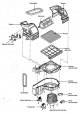

Fan — replacement
1. Disconnect the negative terminal from the battery. 2. Disconnect the electrical wiring connector. 3. Disconnect connectors A of the fan relay, fan motor, and damper...
1. Disconnect the negative terminal from the battery. 2. Disconnect the electrical wiring connector. 3. Disconnect connectors A of the fan relay, fan motor, and damper...

Fan air filter
The combined air filter cleans the air from impurities and odors, which creates a comfortable environment in the car. Replacement 1. Open the glove compartment, press...
The combined air filter cleans the air from impurities and odors, which creates a comfortable environment in the car. Replacement 1. Open the glove compartment, press...

Ventilation system sensors
Thermistor When the evaporator reaches the desired temperature, the thermistor switches off the compressor. Negative temperature coefficient thermistor. 1. Remove the...
Thermistor When the evaporator reaches the desired temperature, the thermistor switches off the compressor. Negative temperature coefficient thermistor. 1. Remove the...

Evaporator temperature sensor
The sensor measures the temperature of the evaporator and, interacting with the air conditioning control unit, helps maintain the set temperature in the vehicle...
The sensor measures the temperature of the evaporator and, interacting with the air conditioning control unit, helps maintain the set temperature in the vehicle...

Photosensor — General Information
The photo sensor is installed on the driver's side in front of the windshield. The sensor emits a light signal at a certain frequency and receives it reflected from the...
The photo sensor is installed on the driver's side in front of the windshield. The sensor emits a light signal at a certain frequency and receives it reflected from the...

Cabin air temperature sensor
The sensor measures the air temperature in the cabin. It adjusts the degree of air cooling, the operation of the temperature control flaps and the fan electric motor.
The sensor measures the air temperature in the cabin. It adjusts the degree of air cooling, the operation of the temperature control flaps and the fan electric motor.
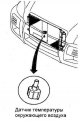
Ambient air temperature sensor
The air temperature sensor, located in front of the radiator, measures the ambient air temperature. Negative temperature coefficient thermistor; the resistance of the...
The air temperature sensor, located in front of the radiator, measures the ambient air temperature. Negative temperature coefficient thermistor; the resistance of the...

Air quality sensor (AQS)
The air quality sensor located in the car's interior detects harmful impurities in the air and sends corresponding signals to the air conditioning system control unit....
The air quality sensor located in the car's interior detects harmful impurities in the air and sends corresponding signals to the air conditioning system control unit....

Humidity sensor — general information
The humidity sensor is designed to determine the moisture content in the air in the car's interior. It adjusts the degree of air cooling, the operation of the...
The humidity sensor is designed to determine the moisture content in the air in the car's interior. It adjusts the degree of air cooling, the operation of the...


This section is available on russian, bulgarian, belarusian, ukrainian, serbian, croatian, romanian, polish, slovak, hungarian
We recommend other sections on the topic of Hyundai manuals:
Body: Air conditioning system Hyundai Accent 2 (1999-2005)
Body: Air conditioning system Hyundai Elantra 3 (2000-2006)
Body: Air conditioning and heater Hyundai Getz (2002-2011)
Link in different formats to this section
TextHTMLBB Code
- General information
- Faults en route
- User manual
- Maintenance
- Power unit
- Gasoline engines
- Diesel engines
- Engine cooling system
- Engine lubrication system
- Engine power system
- Control system
- Intake and exhaust systems
- Engine electrical equipment
- Transmission
- Clutch
- Mechanical gearbox
- Automatic gearbox
- Drive shafts
- Chassis
- Suspension and wheels
- Brake system
- Steering
- Body
- Exterior (external elements)
- Interior (internal elements)
- Security systems
- Air conditioning and heater
- Electrical equipment
- Electrical circuits
- General information
- User manual
- Maintenance
- Power unit
- Gasoline engine G6BA
- Gasoline engine G4GC
- Diesel engine D4EA
- Fuel system (gasoline)
- Fuel system (diesel)
- Engine lubrication system
- Engine cooling system
- Engine electrical equipment
- Transmission
- Clutch
- Car gearbox
- Drive shafts and cardan
- Chassis
- Car suspension
- Steering
- Brake system
- Body
- Exterior (external elements)
- Interior (internal elements)
- Air conditioning and heater
- Airbags
- Electrical equipment
- Equipment and devices
- Electrical circuits