HyundaiBook.ru
Repair Chevrolet Repair Honda Repair Toyota Repair Land Rover Repair VAZ Repair Renault Repair Nissan
English Русский
Български
Беларускі
Український
Српски
Hrvatski
Română
Polski
Slovenský
Magyar
ArticlesSitemapContactsSearch:  


  Accent   Elantra   Getz   Grandeur   Sonata   Santa Fe   Tucson   Others
  • Main
  • Grandeur

History and description of the car Hyundai Grandeur

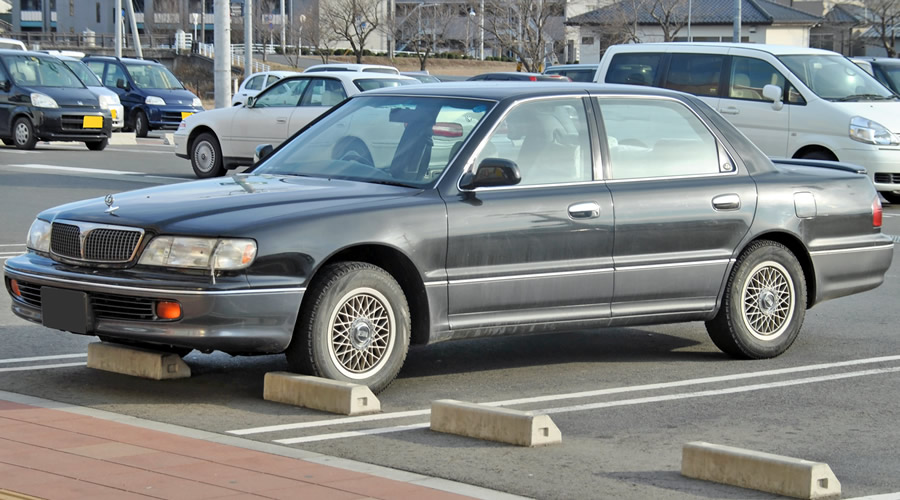
Mitsubishi Debonair III 
Mitsubishi Debonair III
Grandeur — a business class car (E-segment according to the European classification), produced by the South Korean company Hyundai Motor from 1986 to the present. From English, "grandeur" is translated as "greatness". In some countries it is called Azera. Over its more than 30-year history, six generations have been released. In the United States, the Azera model has currently been replaced by the new Hyundai Genesis, produced since 2008, but will remain there under the name Grandeur.

The Grandeur body is produced only as a 4-door sedan. The engine is located in the front with a drive to the front wheels. It is a competitor to such cars as Mercedes E-class, BMW 5 Series, Audi A6, Nissan Teana, Volkswagen Passat, Peugeot 508, Toyota Camry, Honda Crosstour and Infiniti M. From 2000 to 2017 inclusive, sales in the United States amounted to more than 160 thousand cars.
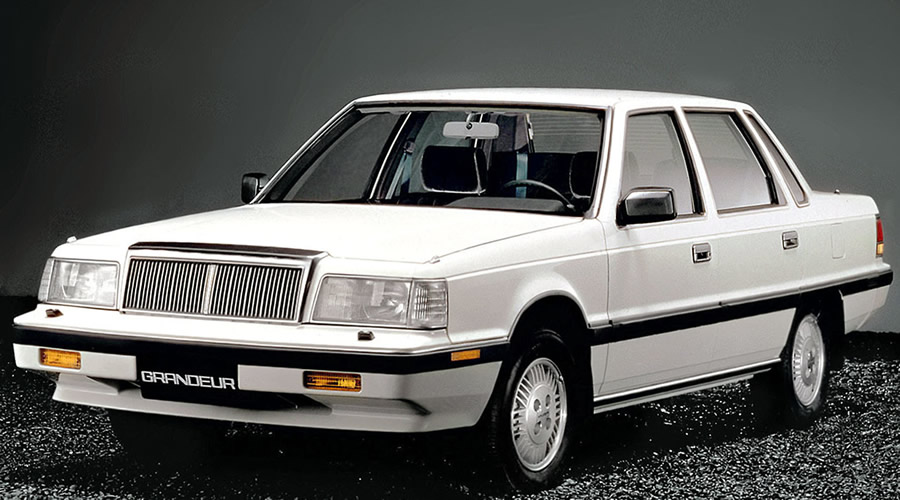
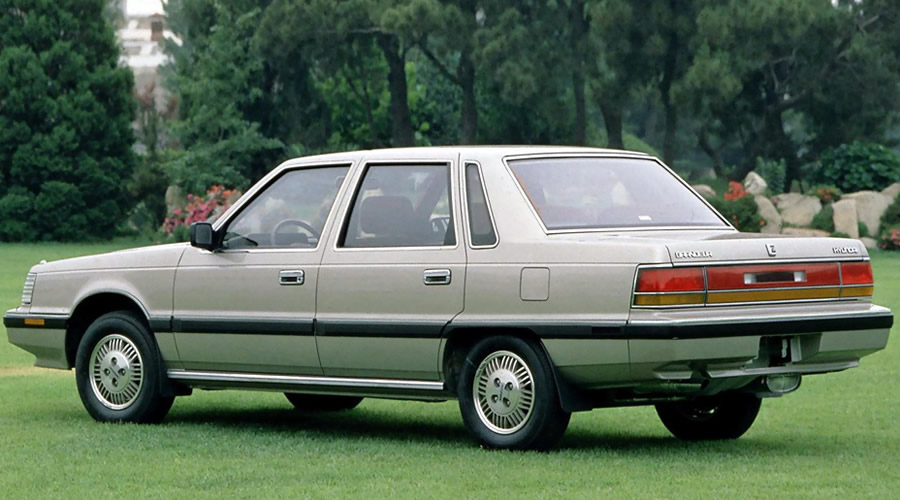
Hyundai Grandeur I (L) 
Hyundai Grandeur I (L)
Until 1986, the luxury car market in South Korea was completely under the control of Daewoo with its Royale. Since October 1978, Hyundai had been producing its business-class car Ford Granada Mark II in Korea, but it did not win the competition with Daewoo and production was stopped. But this did not stop Hyundai from entering the market for such cars. Instead of developing a car from scratch, they took the Japanese Mitsubishi Debonair, which was produced from 1964 to 1998, as a basis. They took everything from it - the platform, interior configuration, technology and engine. But they developed the design themselves.

First generation (L, 1986—1992)


Hyundai Grandeur I, back view 
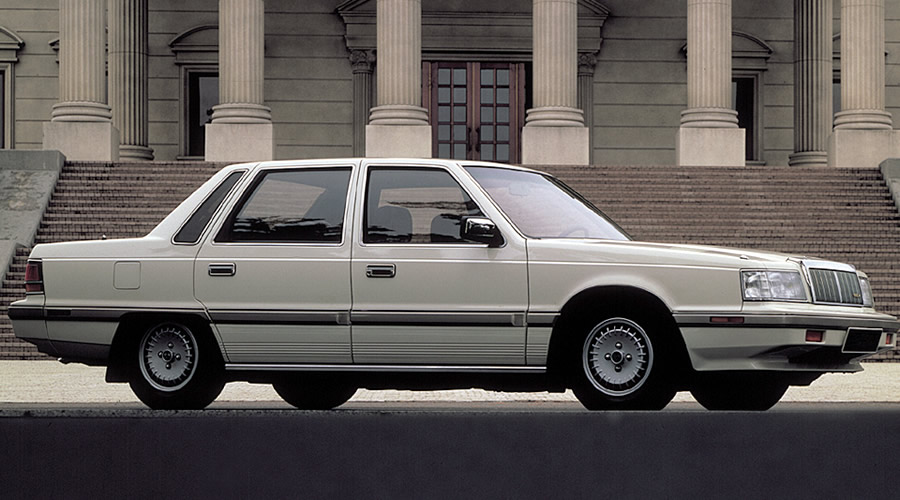
Hyundai Grandeur I, back view
The car was launched in 1986, 2 years before the 1988 Seoul Olympics. Since Hyundai was the official sponsor of the games, they used the event to promote the new car. Thanks to the successful Mitsubishi prototype and good quality, the Grandeur became very popular in South Korea. The first generation was produced only in Korea, in the city of Ulsan. A total of 122 thousand cars were produced.

Hyundai Grandeur I, side view 
Hyundai Grandeur I, side view
Initially, there was only a 2.0-liter in-line 4-cylinder gasoline engine (code 4G63, SOHC) with a capacity of 120 hp with a 5-speed manual transmission, and in 1987 a 2.4-liter engine (code 4G64, SOHC) with a capacity of 140 hp was added. In 1991, a 3.0-liter V-6 engine (code 6G72, SOHC) with a capacity of 185 hp with a 4-speed gearbox became available.

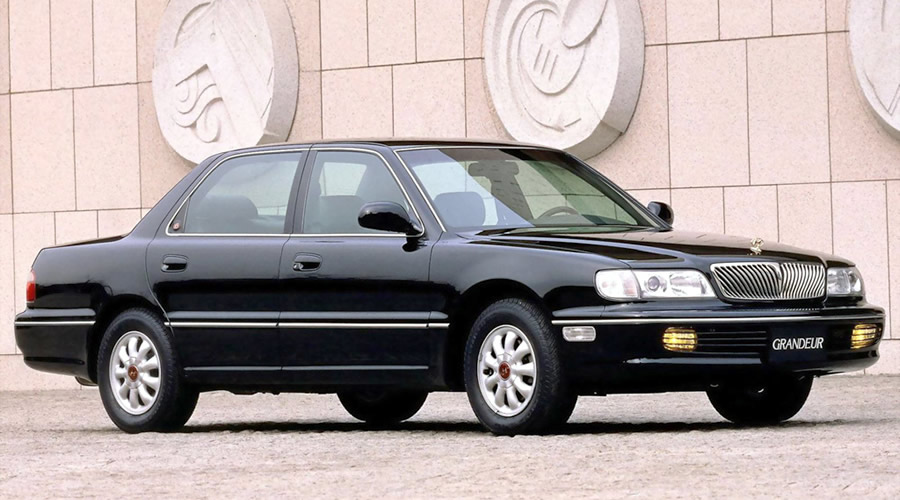
Second generation (LX, 1992—1998)


Hyundai Grandeur II (LX) 
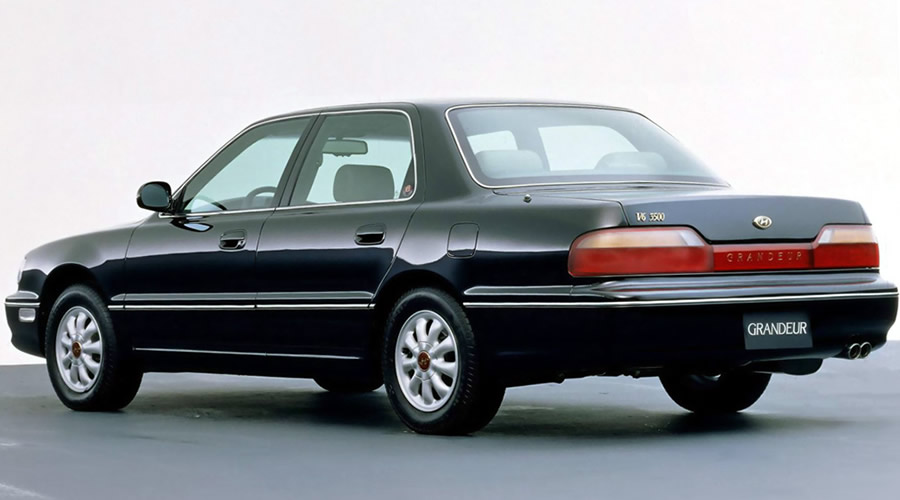
Hyundai Grandeur II (LX)
The first car of the next generation, codenamed "LX", rolled off the assembly line in September 1992. It was a joint product of the auto giants Mitsubishi (transmission, engines) and Hyundai (design, body, trim). Production was also limited to Ulsan, South Korea. The second generation achieved even greater popularity domestically and the car became a status symbol for many politicians, executives and wealthy businessmen.

Hyundai Grandeur II, back view 
Hyundai Grandeur II, back view
The car had different levels of trim and equipment. Also, only petrol 6-cylinder V-shaped engines with a volume of 2.0 remained (6G71), 2.5 (6G73), 3.0 (6G72) and 3.5 liters (6G74) with power from 118 to 186 hp. There are two gearbox options - a 4-speed automatic or a 5-speed manual.


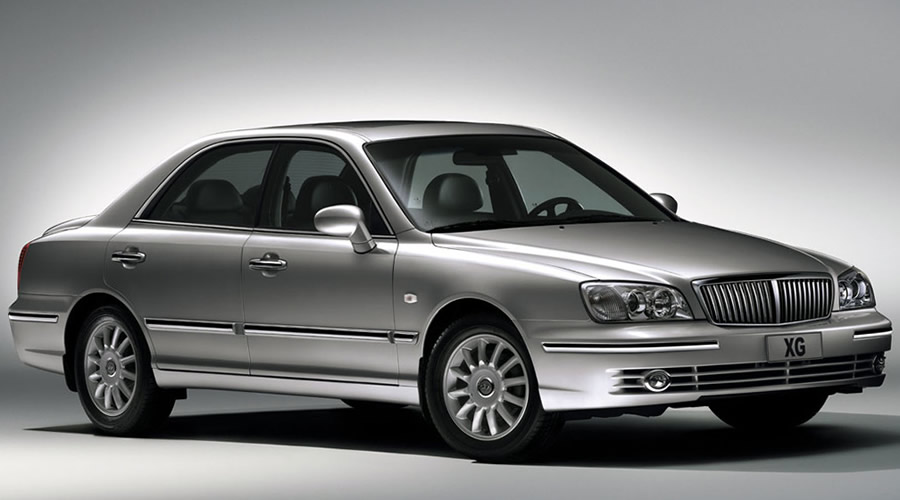
Third generation (XG, 1999—2005)


Hyundai Grandeur III (XG) 
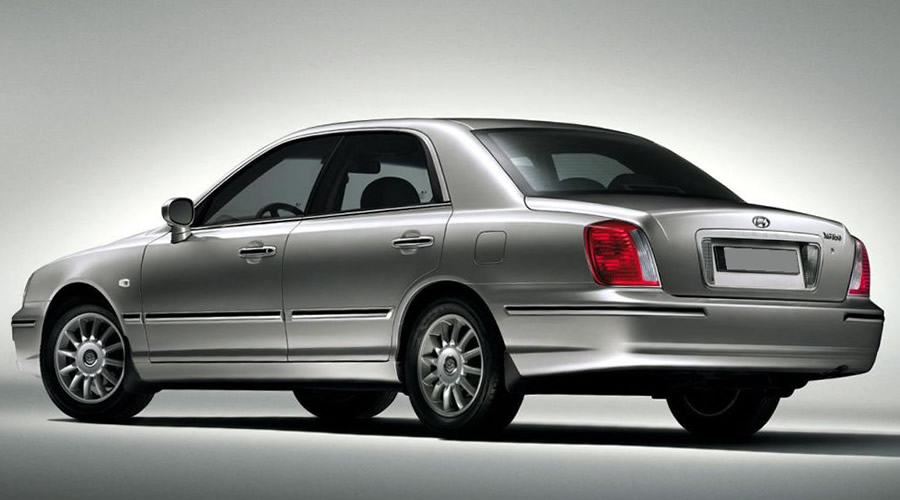
Hyundai Grandeur III (XG)
The next generation with the code "XG" appeared in 1999. In the USA, Japan and some other countries, the car was called Hyundai XG. The first two generations were successors of Mitsubishi Debonairs, and the third generation was completely developed by Hyundai, taking into account the experience gained from the first two generations and subsequently also developed independently. The car has the same platform and engines as the Kia Opirus (Amanti in North America).

Hyundai Grandeur III, back view 
Hyundai Grandeur III, back view
The car was equipped with only V-shaped 6-liter gasoline engines of the following volumes (and modifications) - 2.0, 2.5 and 2.7 liters (Δdelta) or 3.0 and 3.5 liters (ΣSigma) with a power of 135 to 194 hp. Delta engines with a volume of 2.0 and 2.5 liters were available in South Korea. Depending on the engine volume, the car had names in some markets XG20, XG25, XG30, XG35. Transmission only automatic 5-speed H-Matic with the ability to manually select the gear "Shiftronic".

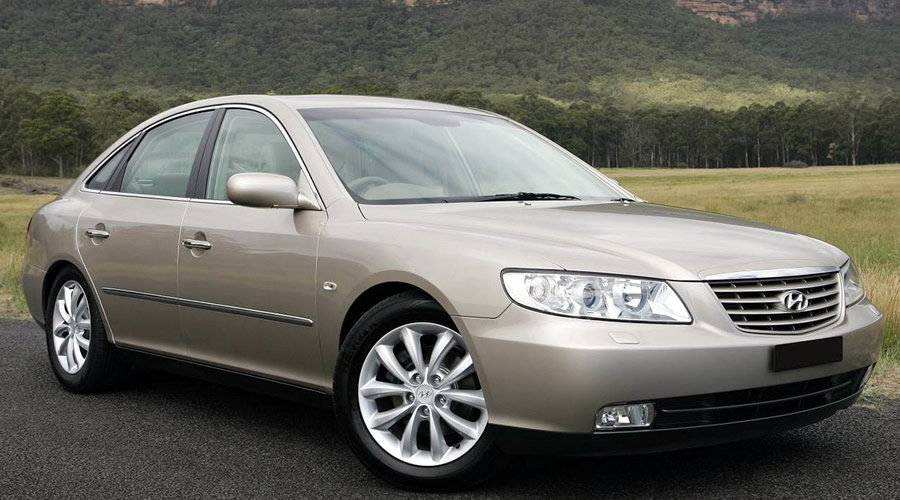
Fourth generation (TG, 2006—2011)


Hyundai Grandeur IV (TG) 
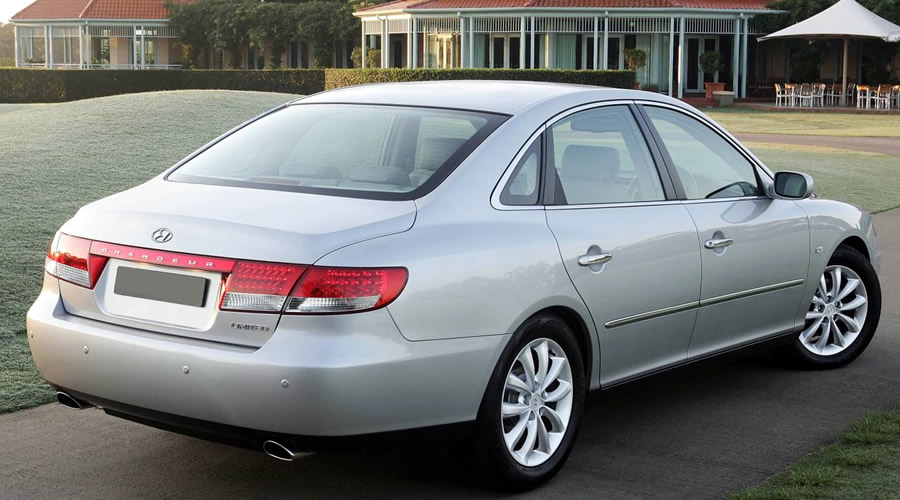
Hyundai Grandeur IV (TG)
This generation appeared in 2006 under the code name "TG". It shares a platform with the car Hyundai Sonata. In some countries (Brazil, Iran, China, Malaysia, USA, Chile, South Africa, etc.) it is sold under the name Azera. This car was the most expensive in the history of Hyundai before the Genesis model appeared. Assembly was carried out in South Korea and the Czech Republic. In 2007-2009, minor improvements were made to the model.

Hyundai Grandeur IV, back view 
Hyundai Grandeur IV, back view
The range of petrol engines includes the following volumes and modifications: 2.4 liters (Θ Theta II I4, 175 hp), 2.7 liters (μ Mu V6. 192 hp), 3.3 liters (Λ Lambda V6, 237-260 hp) and 3.8 liters (Λ Lambda V6, 265-283 hp). A 4-cylinder diesel engine with a volume of 2.2 liters also appeared for the first time (CRDI VGT) 155 hp. Torque is transmitted to the front wheels via an H-Matic automatic transmission with five or six speeds, with the option of manual gear selection "Shiftronic".

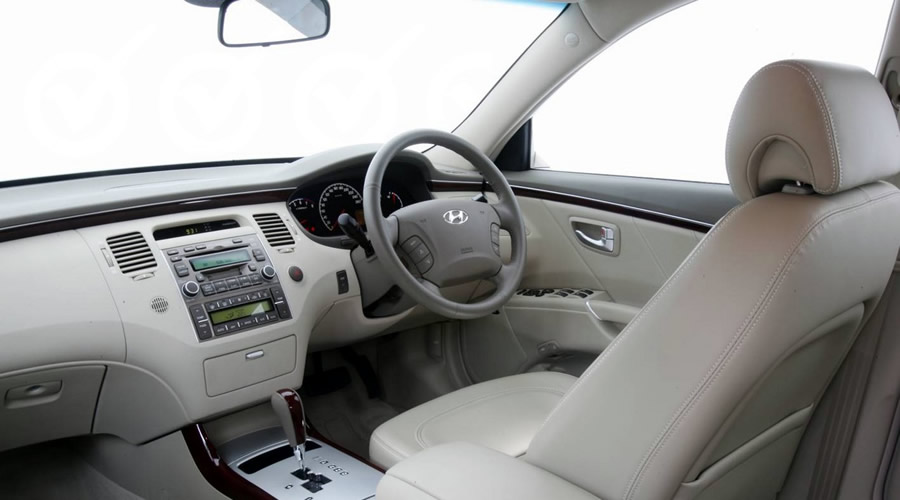
Hyundai Grandeur IV, driver's seat 
Hyundai Grandeur IV, driver's seat
The base Azera comes with front driver and passenger airbags, front and rear curtain head airbags, and the Insurance Institute for Highway Safety (IIHS) rated the car Good overall in frontal crashes and Acceptable in side crashes. The National Highway Traffic Safety Administration (NHTSA) rated its safety as follows:
  • Driver - 4/5 stars
  • Front Passenger - 4/5 stars
  • Rear Passengers - 5/5 Stars
  • Car Flip - 4/5 stars

Fifth generation (HG, 2011—2017)
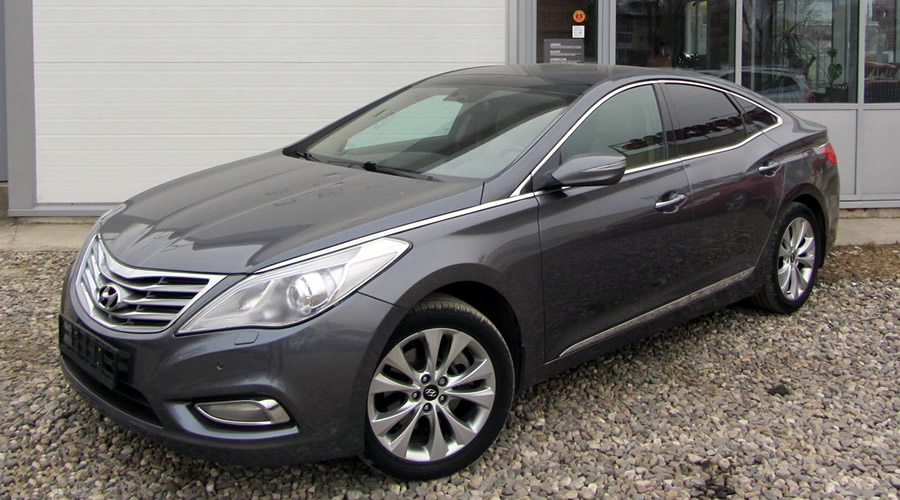


Hyundai Grandeur V (HG) 
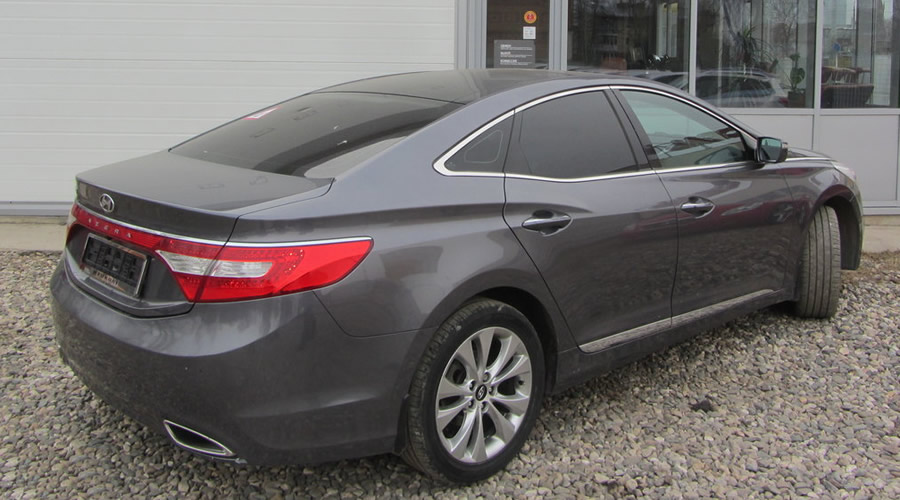
Hyundai Grandeur V (HG)
The fifth generation (code HG) was unveiled at the 2011 Los Angeles International Auto Show as a 2012 model. It took three and a half years and $450 million to develop. In terms of size, the fifth Grandeur sits between Sonata and Genesis. Competitors of this generation include such cars as Ford Taurus, Dodge Charger, Chevrolet Impala and cars class luxury Buick LaCrosse, Nissan Maxima, Toyota Avalon, Chrysler 300. In 2014, the model was updated and new options were added.

Hyundai Grandeur V, back view 
Hyundai Grandeur V, back view
Petrol engines have the following technical characteristics: 2.4 liters (Θ Theta II I4, 178 hp), 2.4 liters (Θ Theta II I4 GDI, 198 hp), 3.0 liters (Λ Lambda II V6, 247 hp.), 3.0 liters (Λ Lambda II V6 GDI, 266 hp), 3.3 liters (Λ Lambda II V6 GDI, 293 hp). One 4-cylinder diesel engine with a volume of 2.2 liters was also installed (Hyundai R engine) 202 hp, turbocharged. All cars were equipped with 6-speed automatic transmissions.

Sixth generation (IG, 2018–present)


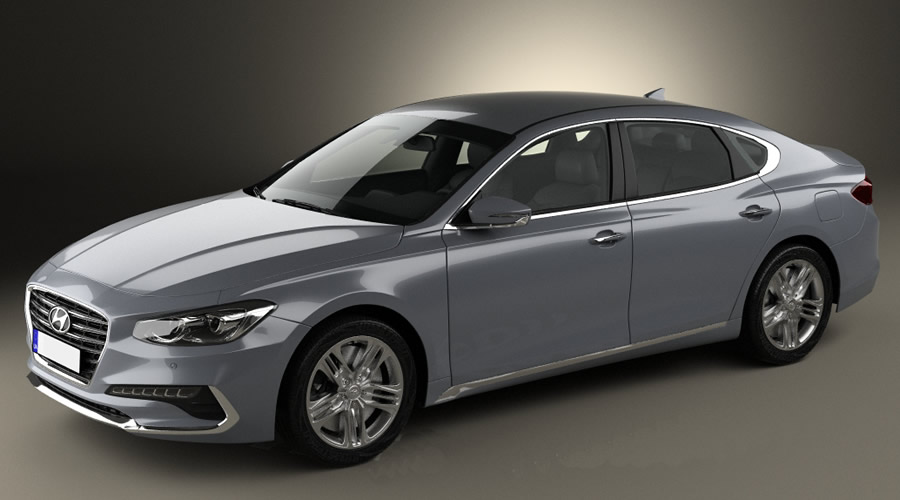
Hyundai Grandeur VI (IG) 
Hyundai Grandeur VI (IG)
On October 26, 2016, Hyundai introduced the sixth generation, codenamed "IG". Sales began in 2017 as a 2018 model year. It will not be sold in North America due to low demand. It is based on the Hyundai-Kia Y7 platform, which is also used for Sonata seventh generation. Assembled at a plant in Asan, South Korea.

Gasoline engines are offered in the following modifications - 2.0 liters (Θ Theta II I4 GDI, 190 hp), 3.0 liters (Λ Lambda II V6 MPI, 247 hp), 3.0 liters (Λ Lambda II V6 GDi, 257 hp. s.), 3.3 liters (Λ Lambda II V6 MPI, 270 hp) and 3.5 liters (Λ Lambda II V6 MPI, 286 hp). There is one diesel 6-cylinder V-shaped engine with turbocharging of 2.2 liters (E-VGT R2.2 I4) with a capacity of 198 hp. Cars with 2.0 (GDI) and 3.0 (MPI) engines are equipped with a 6-speed automatic transmission, and the rest - with an 8-speed automatic transmission.
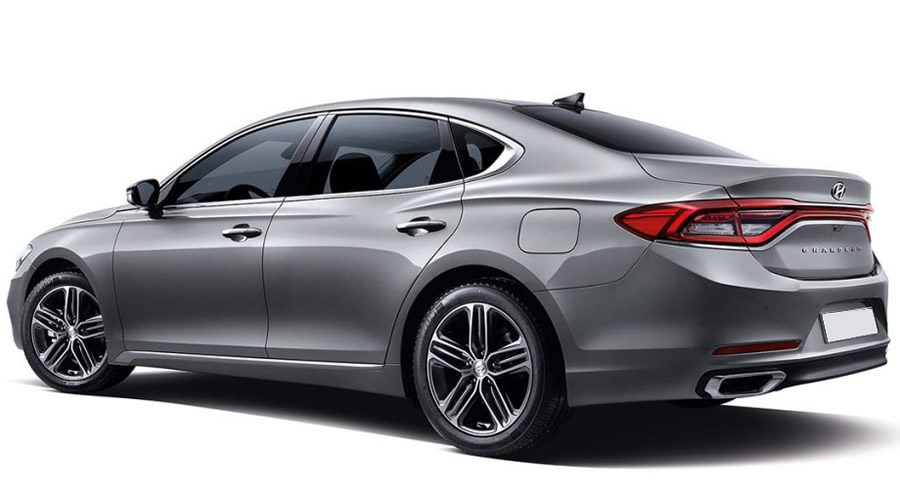
Hyundai Grandeur VI, back view 
Hyundai Grandeur VI, back view
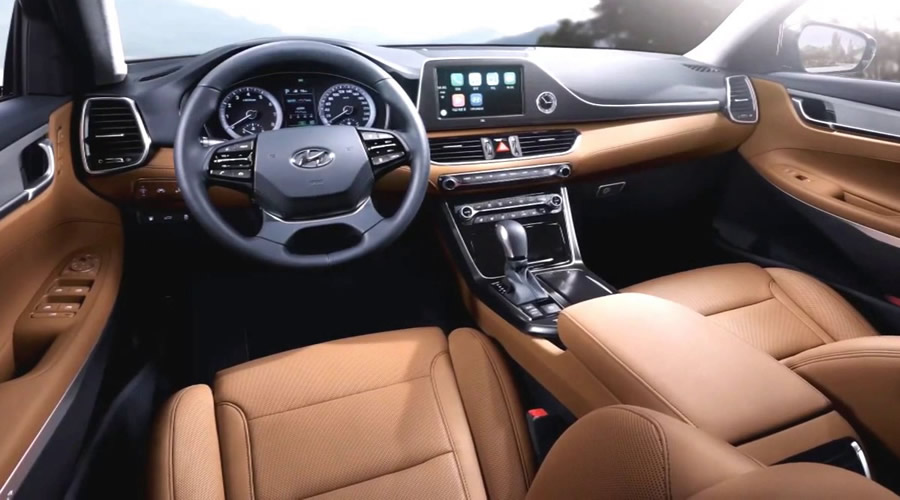
Hyundai Grandeur VI, driver's seat 
Hyundai Grandeur VI, driver's seat
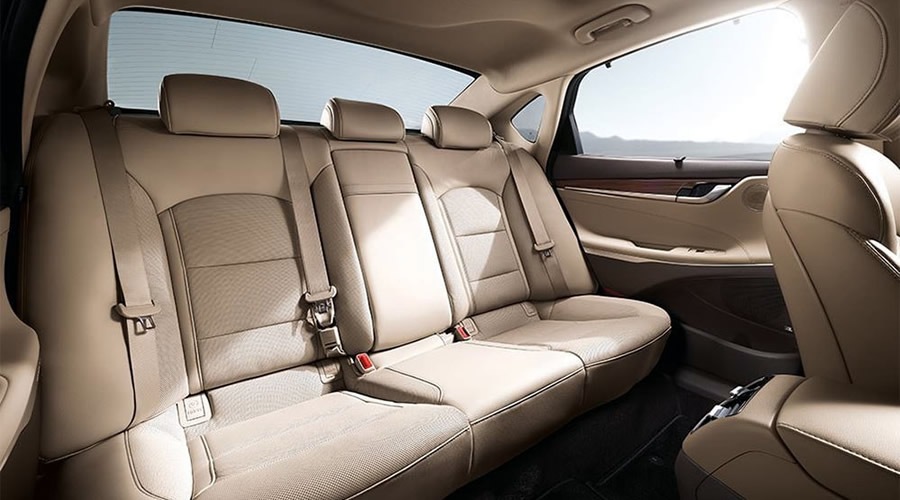
Hyundai Grandeur VI, rear seats 
Hyundai Grandeur VI, rear seats
Add to social network:
Link in different formats to this article
TextHTMLBB Code
HyundaiBook.ru © 2018-2025 · Mobile version · Sitemap: EN BG BY UA RS HR RO PL SK HU · Administration · Site search · Hyundai owners Accent 1 · Accent 2 · Accent 3 · Elantra 1 · Elantra 2 · Elantra 3 · Getz · Sonata 3 · Sonata 4 · Santa Fe 2 · Tucson 1 · Tucson 2 · Matrix ·