


Elements of the air conditioning system
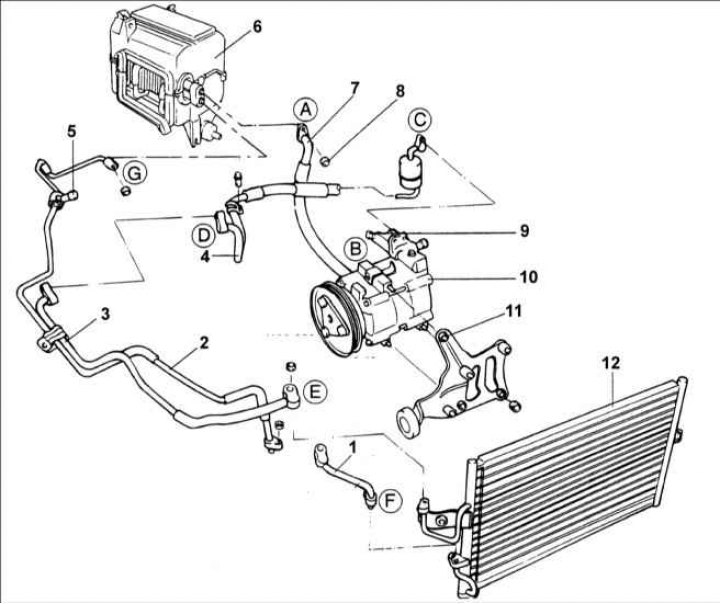
1 – tube (A); 2 – tube (B); 3 – outlet pipe; 4 – outlet pipe; 5 – port on the high pressure side; 6 – evaporator block; 7 – tube; 8 – nut, 5–7 N·m; 9 – port on the low pressure side; 10 – compressor; 11 – Compressor bracket; 12 – capacitor; A – evaporator to suction tube, 5–7 Nm; B – suction pipe to compressor, 8–12 Nm; C – compressor discharge hose, 17–26 Nm; D – discharge hose to outlet pipe, 19–28 Nm; E – outlet pipe to condenser, 19–28 Nm; F – tube (A) to the condenser, 7–11 N·m; G – tube (B) to the evaporator, 12–15 N·m.
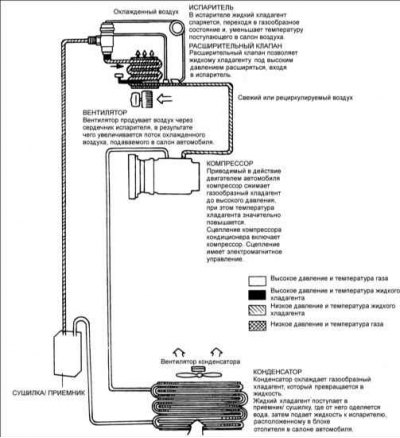
Air conditioning system circuit
Execution order
1. Install a pressure gauge on the line.
2. Start the engine, let it run at 2000 rpm⁻¹ and set the maximum cooling mode with high fan speed.
3. Open all windows or doors.
4. Install the thermometer in the air supply grille of the vehicle's interior.
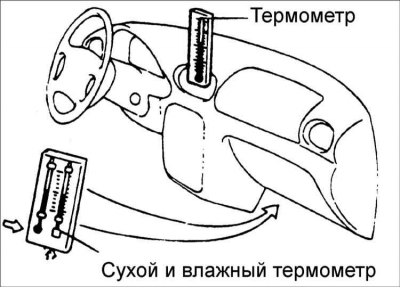
5. Install wet and dry bulb thermometers as close to the cooling unit inlet as possible.
6. Check that the pressure shown by the pressure gauge is between 1.373 and 1.575 kPa. If the pressure is too high, pour water onto the condenser. If the pressure is too low, close the front side of the condenser.
7. Check that the air temperature in the air supply grille into the vehicle interior is between 25–35°C.
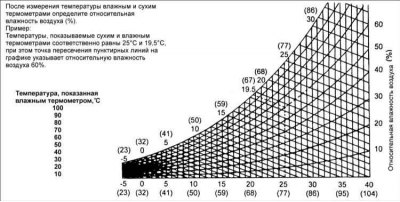
8. Use the graph to calculate the relative humidity by comparing the wet and dry bulb temperatures.
9. Measure the temperature in the air intake grille of the car interior and calculate the difference with a dry thermometer and a thermometer in the air intake grille.
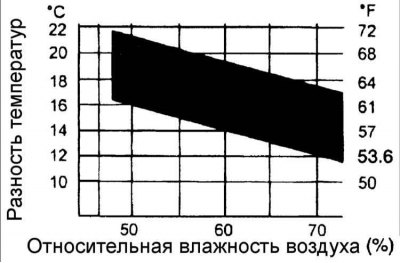
10. Check that if the intersection of relative humidity and temperature difference is within the tolerance range, then the air conditioning system is working normally.
[The full version is located on the website: HyundaiBook]