


Contents: Cleaning ⇓ Examination ⇓
A thorough cleaning of the cylinder head and associated valve train, followed by a detailed inspection, will help you decide what work needs to be done to the valves during an engine rebuild.
Caution: If the engine was severely overheated, the cylinder head will most likely be warped.
Cleaning
Remove all traces of old gasket material and sealant from the mating surfaces of the cylinder head and intake and exhaust manifolds. Be very careful: solvents are available from auto parts stores that will soften the gasket material and make it easier to remove.
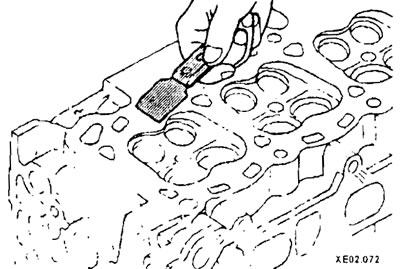
Remove dirt from the coolant passages.
Use a stiff brush to clean out the various openings to remove any sediment that may have formed in them.
Screw a bolt or stud of the appropriate diameter into each tapped hole to remove any corrosion and sealant that may be present. If you have a source of compressed air, use it to clear debris from the hole.
Caution: When working with compressed air, wear safety glasses.
Clean the head bolt holes with a stiff wire brush.
Wash the cylinder head with solvent and dry it thoroughly. Compressed air will speed up this process and ensure that all openings and holes are clean.
Note: Special deposit removers may be useful when cleaning. These compounds are highly alkaline and should be used with extreme caution. Please read the instructions on the package carefully before starting work.
Clean the camshafts and valve train components with solvent and dry thoroughly. Do not mix them up during the cleaning process. Compressed air will speed up the process and keep the oil passages clear.
Clean all valve springs, seats, keepers and tappets with solvent and dry thoroughly. Clean one valve at a time and do not mix up their associated parts.
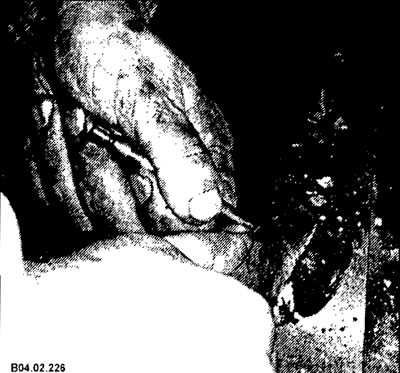
Remove any carbon deposits that have formed on the valves using a scraper and brush.
Examination
Note: Be sure to perform all of the following checks before determining whether or not processing (grinding) is necessary. Make a list of the parts that need attention.
Cylinder head
Check the head very carefully for cracks, signs of coolant leakage and other damage. If cracks are found, consult with specialists to determine whether repairs are possible. If repair is not possible, a new cylinder head should be purchased.
Using a straight edge and a feeler gauge, check the contact surface of the head for roughness. If the roughness exceeds the limit, the surface can be sanded in the workshop.
Check the valve seats in each combustion chamber. If they have dents, cracks or burnt areas, the seats need to be treated or replaced.
Measure the valve clearance in a direction perpendicular to its axis. In this case, the distance from the plate to the valve seat should be about 25 mm.
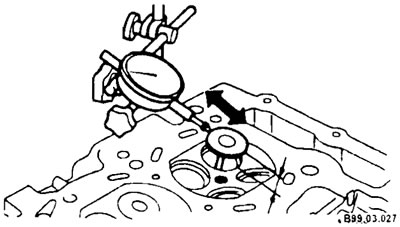
The maximum allowable clearance is 0.2 mm. If the clearance exceeds the specified limit, check the clearance between the valve and the guide sleeve by measuring the inner diameter of the sleeve and the outer diameter of the valve stem.
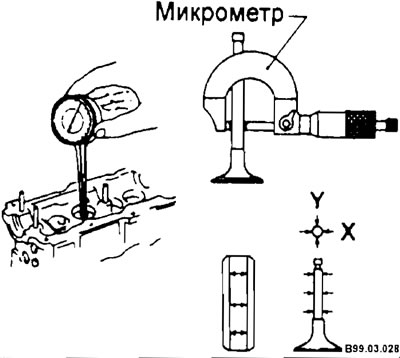
- Nominal clearance for intake valves: 0.020-0.050 mm.
- Nominal clearance for exhaust valves: 0.030-0.060 mm.
- Maximum permissible gap: 0.1-0.15 mm.
If the clearance exceeds the maximum allowable value, replace the valve or guide bushing.
Clean the mating surface of the cylinder head. Using a metal ruler and feeler gauge, check whether the flatness is within acceptable limits. The check should be performed in six directions as shown in the figure below.
Deviation from flatness: nominal - no more than 0.03 mm; maximum permissible - 0.1 mm. If the non-flatness in at least one direction exceeds the permissible limit, replace or regrind the cylinder head.
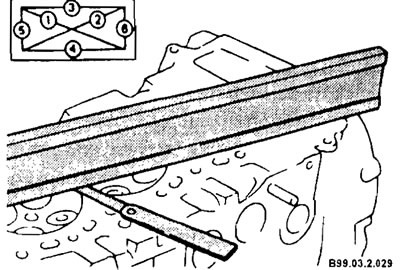
Camshaft Bearing Housings
Check the camshaft bearing housings for wear and damage.
If wear or cracks are detected, consult a specialist. If repair is not possible, a new cylinder head should be purchased, since the camshaft bearing housings and cylinder head are machined together.
Valves
Carefully inspect each valve for uneven wear, deformation, cracks, dents and burnt areas. Check the condition of the valve stem.
Turn the valve and see if it is bent. Check the end of the rod for dents or excessive wear. The presence of any of the damage described indicates the need for valve resurfacing.
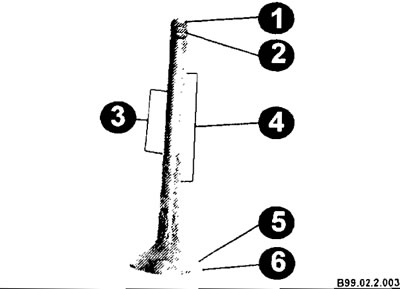
Typical check of valve wear at the indicated points
1 - end of valve;
2 - cracker groove;
3 - rod (least worn section);
4 - rod (the most worn out section);
5 - valve surface;
6 - edge.
Measure the width of the edge of each flap. If the valve edge width is less than the value specified in the technical data, the valve should be replaced with a new one.
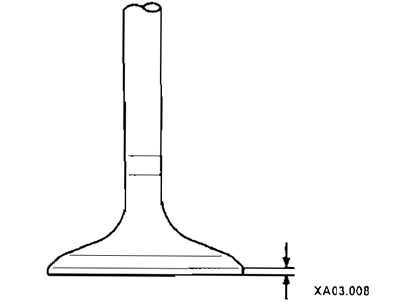
Valve elements
Check each valve spring (at the ends) for wear and dents. Measure the free length of the spring and compare the results with the control dimensions. Springs with a free length less than specified must be replaced. The tension of all springs should be measured using a special device before deciding whether they are suitable for further use in the rebuilt engine (to perform this check, the springs must be taken to a workshop).
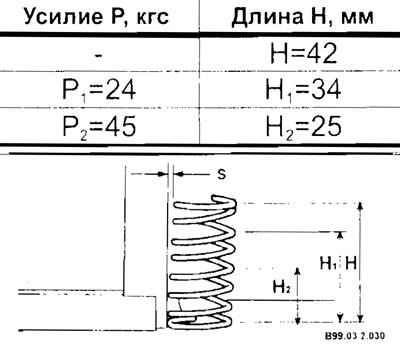
The maximum permissible value of S is 2 mm.
Place each spring on a flat surface, check that it is level and straight. If the springs are damaged or compressed, all springs in the set should be replaced.
Check the spring cotters for obvious wear or cracks. Any parts that are in doubt should be replaced with new ones, as if they fail while the engine is running, they can cause severe damage.
Rocker arms (1.6L and 1.8L engines)
Check the roller (1) and rocker arm housing (2) for wear and damage. Replace if necessary.
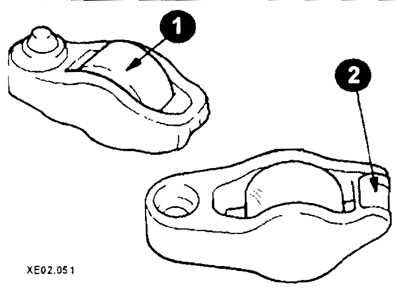
Clean the oil hole in the rocker arm housing.
Remove the hydraulic lifter from its socket. Check the socket surface for wear and damage.
Hydraulic valve lifters (hydraulic compensators)
Caution: Hydraulic tappets must be stored in a container with oil in an upright position.
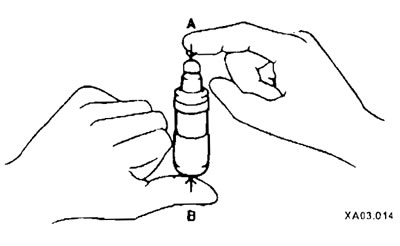
By pressing on the hydraulic tappet (A) and (B), check the resistance to movement - it should be rigid. Otherwise, it is necessary to bleed the hydraulic tappet.
Place the hydraulic lifter in a container with clean diesel fuel.
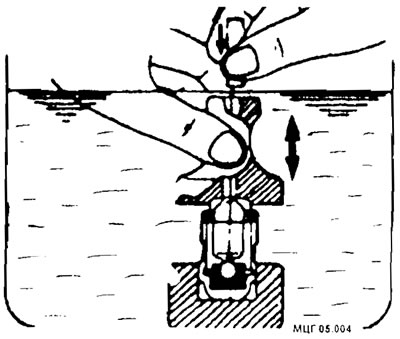
Using a special tube (to release air), press down on the steel ball and move the piston up and down several times. The air must come out.
Remove the tube and check the condition of the hydraulic tappet - it should be free. If the hydraulic lifter is compressed, it is necessary to repeat the air removal process.
After releasing the air, install the hydraulic tappet in a special device and check the hydraulic tappet for leaks.
If necessary, replace the hydraulic lifter with a new one.