


Gasoline car engines Hyundai Elantra 3

Technical data of petrol engines
Technical data of petrol engines 1.8 and 2.0 l General information Data Meaning Number of cylinders 4 Cylinder diameter (2.0/1.8 l), mm 82 Piston stroke, mm 2.0 l 93,5...
Technical data of petrol engines 1.8 and 2.0 l General information Data Meaning Number of cylinders 4 Cylinder diameter (2.0/1.8 l), mm 82 Piston stroke, mm 2.0 l 93,5...

Compression check
If the engine runs poorly or intermittently, check the ignition system and fuel system. If the reasons for poor engine performance cannot be found, perform a compression...
If the engine runs poorly or intermittently, check the ignition system and fuel system. If the reasons for poor engine performance cannot be found, perform a compression...

Timing belt — removal and installation
Removal 1.6L engines Engines 2.0/1.8 l 1. Loosen the water pump pulley mounting bolt. 2. Remove the generator mounting bolt. 3. Remove the water pump pulley and drive...
Removal 1.6L engines Engines 2.0/1.8 l 1. Loosen the water pump pulley mounting bolt. 2. Remove the generator mounting bolt. 3. Remove the water pump pulley and drive...

Adjusting the timing belt tension
Procedure 1. Raise the vehicle. 2. Turn the steering wheel fully counterclockwise. Caution: Do not apply too much force when turning the steering wheel. 3. Remove the...
Procedure 1. Raise the vehicle. 2. Turn the steering wheel fully counterclockwise. Caution: Do not apply too much force when turning the steering wheel. 3. Remove the...

Adjusting the tension of the poly V-belt
Procedure 1. Check the condition of the poly V-belt and its position on the pulleys. 2. Check the belt tension by applying 100 N of force to it at a location equidistant...
Procedure 1. Check the condition of the poly V-belt and its position on the pulleys. 2. Check the belt tension by applying 100 N of force to it at a location equidistant...

Adjusting the alternator drive belt tension
Procedure Warning! If the belt is not tensioned properly, it will make abnormal noise during operation and will be subject to premature wear. If the belt is too tight,...
Procedure Warning! If the belt is not tensioned properly, it will make abnormal noise during operation and will be subject to premature wear. If the belt is too tight,...

Camshafts
Removal 1. Disconnect the crankcase ventilation hose. 2. Remove the water pump pulley and crankshaft. 3. Remove the timing belt cover. 4. Move the timing belt tension...
Removal 1. Disconnect the crankcase ventilation hose. 2. Remove the water pump pulley and crankshaft. 3. Remove the timing belt cover. 4. Move the timing belt tension...

Checking and adjusting valve clearances on 1.8 and 2.0 L engines (MLA)
Procedure Caution! Check and adjust valve clearances on a cold engine (coolant temperature 21°C) and the cylinder head installed on the cylinder block. 1. Remove the...
Procedure Caution! Check and adjust valve clearances on a cold engine (coolant temperature 21°C) and the cylinder head installed on the cylinder block. 1. Remove the...

Hydraulic valve clearance compensators for 1.6L engine
Procedure 1. While the hydraulic valve lash adjuster is installed in the cylinder head, press it with maximum force at the point where the camshaft contacts the lash...
Procedure 1. While the hydraulic valve lash adjuster is installed in the cylinder head, press it with maximum force at the point where the camshaft contacts the lash...

Installing the cylinder head cover
Procedure 1. Remove any remaining gasket from the cylinder head cover and cylinder head. 2. Apply a thin layer of sealant (Loctite #5999) to the mating surface of the...
Procedure 1. Remove any remaining gasket from the cylinder head cover and cylinder head. 2. Apply a thin layer of sealant (Loctite #5999) to the mating surface of the...

Chain guide
Procedure 1. Check the chain guide for bending, cracks or damage and replace it if necessary. 2. Check the rubber element of the chain guide for abnormal wear and...
Procedure 1. Check the chain guide for bending, cracks or damage and replace it if necessary. 2. Check the rubber element of the chain guide for abnormal wear and...


Installing camshafts
Procedure 1. Install the tappets and adjusting shims. Caution! The tappets and adjusting shims must be installed in their original locations. 2. Install the chain on the...
Procedure 1. Install the tappets and adjusting shims. Caution! The tappets and adjusting shims must be installed in their original locations. 2. Install the chain on the...

Variable Valve Timing (CVVT) mechanism on 1.8 and 2.0 L engines
Removal 1. Remove the automatic chain tensioner mechanism. 2. Remove the camshaft bearing caps and chain. 3. Remove the camshafts. 4. Remove the valve opening and...
Removal 1. Remove the automatic chain tensioner mechanism. 2. Remove the camshaft bearing caps and chain. 3. Remove the camshafts. 4. Remove the valve opening and...

Cylinder head repair
Disassembly 1. Using special tool 09221–32001, 09221–11000 in the sequence shown in the figure, in 2–3 passes, unscrew the cylinder head mounting bolts. 2. Using special...
Disassembly 1. Using special tool 09221–32001, 09221–11000 in the sequence shown in the figure, in 2–3 passes, unscrew the cylinder head mounting bolts. 2. Using special...

Engine Mounts — Removal and Installation
Removal Attach the lifting gear clamps to the engine lugs and lift so that the engine weight is supported by the lifting gear. 1. Remove the engine mount mounting bolts....
Removal Attach the lifting gear clamps to the engine lugs and lift so that the engine weight is supported by the lifting gear. 1. Remove the engine mount mounting bolts....

Removal and installation of engine and gearbox
Removal 1. Remove the battery. 2. Remove the air filter. 3. Disconnect the electrical connectors from the reverse light switch and engine wire harnesses. 4. On a vehicle...
Removal 1. Remove the battery. 2. Remove the air filter. 3. Disconnect the electrical connectors from the reverse light switch and engine wire harnesses. 4. On a vehicle...

Cylinder Block — Removal and Inspection
Removal 1. Remove the cylinder head, timing belt, front cover, flywheel, pistons and crankshaft. 2. Using the special tool (09260–32000), unscrew the oil pressure...
Removal 1. Remove the cylinder head, timing belt, front cover, flywheel, pistons and crankshaft. 2. Using the special tool (09260–32000), unscrew the oil pressure...

Crankshaft — removal and installation
Engines 1.8/2.0 l Engine 1.6 l Removal 1. Remove the timing belt, front cover, flywheel and oil pan. 2. Remove the rear cover from the cylinder block and the rear...
Engines 1.8/2.0 l Engine 1.6 l Removal 1. Remove the timing belt, front cover, flywheel and oil pan. 2. Remove the rear cover from the cylinder block and the rear...

Flywheel — removal and installation
Removal 1. Remove the gearbox and clutch. 2. Unscrew the bolts and remove the flywheel. If your vehicle has an automatic transmission, remove the drive plate. When...
Removal 1. Remove the gearbox and clutch. 2. Unscrew the bolts and remove the flywheel. If your vehicle has an automatic transmission, remove the drive plate. When...

Piston — removal and installation
Engines 2.0/1.8 l 1.6L engines Removal Connecting rod cap Caution: Keep the connecting rod caps with the corresponding connecting rods for proper reinstallation into the...
Engines 2.0/1.8 l 1.6L engines Removal Connecting rod cap Caution: Keep the connecting rod caps with the corresponding connecting rods for proper reinstallation into the...

Air Filter (ACL)
Removal 1. Remove the air intake pipe connected to the air filter. 2. Disconnect the electrical connector from the air temperature sensor. 3. Remove the air intake hose...
Removal 1. Remove the air intake pipe connected to the air filter. 2. Disconnect the electrical connector from the air temperature sensor. 3. Remove the air intake hose...

Exhaust manifold
Removal 1. Remove the exhaust manifold heat shield. 2. Remove the exhaust manifold from the cylinder head. 3. Remove the exhaust manifold gasket. Examination 1. Check...
Removal 1. Remove the exhaust manifold heat shield. 2. Remove the exhaust manifold from the cylinder head. 3. Remove the exhaust manifold gasket. Examination 1. Check...
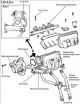
Intake manifold
Removal 1. Remove the engine cover. 2. Remove the air intake pipe connected to the throttle body. 3. Remove the accelerator cable. 4. Remove the crankcase ventilation...
Removal 1. Remove the engine cover. 2. Remove the air intake pipe connected to the throttle body. 3. Remove the accelerator cable. 4. Remove the crankcase ventilation...

Exhaust gas system
Removal Main muffler Warning: Make sure the exhaust system is sufficiently cool before removing or inspecting components. 1. Disconnect the muffler from the central...
Removal Main muffler Warning: Make sure the exhaust system is sufficiently cool before removing or inspecting components. 1. Disconnect the muffler from the central...
Troubleshooting issues
Sign Probable cause Method of elimination Low compression in engine cylinders The cylinder head gasket is blown Replace the gasket Piston rings are worn or damaged...
Sign Probable cause Method of elimination Low compression in engine cylinders The cylinder head gasket is blown Replace the gasket Piston rings are worn or damaged...
This section is available on russian, bulgarian, belarusian, ukrainian, serbian, croatian, romanian, polish, slovak, hungarian
We recommend other sections on the topic of Hyundai manuals:
Power unit: Gasoline engines Hyundai Tucson 2 (2009-2015)
Link in different formats to this section
TextHTMLBB Code
- User manual
- Control devices
- Audio system
- Starting the engine and driving
- Faults en route
- Maintenance and care
- Technical information
- Power unit
- Gasoline engines
- Diesel engines
- Lubrication system
- Cooling system
- Fuel system (gasoline)
- Fuel system (diesel)
- Decreased toxicity
- Ignition system
- Transmission
- Clutch
- Mechanical gearbox
- Automatic gearbox
- Drive shafts and axles
- Chassis
- Car suspension
- Steering
- Brake system
- Body
- Exterior (external elements)
- Interior (internal elements)
- Air conditioning system
- Electrical equipment
- Equipment and devices
- Headlights and lighting
- Power devices
- Electrical circuits
- General information
- Maintenance
- Power unit
- Engine repair
- Cooling system
- Intake and exhaust system
- Fuel system
- Transmission
- Clutch
- Manual gearbox
- Automatic gearbox
- Drive shafts and axles
- Chassis
- Front suspension
- Rear suspension
- Steering
- Brake system
- Body
- Body elements
- Electrical equipment
- Equipment and devices
- Electrical diagrams
- General information
- Introduction to the guide
- Maintenance
- Power unit
- Minor engine repair
- Engine overhaul
- Lubrication system
- Cooling system
- Fuel injection system
- Ignition system
- Exhaust system
- Transmission
- Clutch
- Manual gearbox
- Automatic gearbox
- Drive shafts
- Chassis
- Front suspension
- Rear suspension
- Steering
- Wheels and tires
- Troubleshooting
- Brake system
- Body
- Body elements
- Electrical equipment
- Equipment and devices
- Power devices
- Heating and air conditioning
- Electrical circuits