


Fuel system of the car engine Hyundai Elantra 2
.

Fuel supply system — general information
General information [1.6L/1.8L DOHC engine] Technical specifications Fuel tank Capacity - 55 l Fuel filter Type - High pressure Fuel pump Type - Electric, built-in tank...
General information [1.6L/1.8L DOHC engine] Technical specifications Fuel tank Capacity - 55 l Fuel filter Type - High pressure Fuel pump Type - Electric, built-in tank...
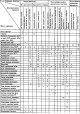
Troubleshooting Recommendations
When troubleshooting, it is important to start by checking the basic systems. If your engine is difficult to start, idles poorly, or does not accelerate quickly enough,...
When troubleshooting, it is important to start by checking the basic systems. If your engine is difficult to start, idles poorly, or does not accelerate quickly enough,...

Maintenance operations
Checking idle speed Note: Before servicing, make sure that the spark plugs, injectors, idle speed control mechanism, compression, etc. d. in normal condition....
Checking idle speed Note: Before servicing, make sure that the spark plugs, injectors, idle speed control mechanism, compression, etc. d. in normal condition....

Fuel injection system components
1. Air pressure sensor (MAP).; 2. Inlet air temperature (IAT) sensor.; 3. Coolant temperature sensor (ECT).; 4. Throttle position sensor. dampers (TR).; 5. Camshaft...
1. Air pressure sensor (MAP).; 2. Inlet air temperature (IAT) sensor.; 3. Coolant temperature sensor (ECT).; 4. Throttle position sensor. dampers (TR).; 5. Camshaft...

Injector — removal, inspection and installation
Tightening torque: Nm Removal 1. Release excess pressure from the fuel line to prevent fuel spillage. Warning. Plug the ends of the hoses with rags to prevent fuel...
Tightening torque: Nm Removal 1. Release excess pressure from the fuel line to prevent fuel spillage. Warning. Plug the ends of the hoses with rags to prevent fuel...

Throttle body
Tightening torque: Nm Removal Warning. The throttle valve must not be disassembled. 1. Remove the throttle position sensor. Note: The position sensor should only be...
Tightening torque: Nm Removal Warning. The throttle valve must not be disassembled. 1. Remove the throttle position sensor. Note: The position sensor should only be...

Fuel tank
Removal 1. Remove the rear seat cushion. 2. After relieving the pressure in the fuel line, first start the engine, then disconnect the electrical connector of the fuel...
Removal 1. Remove the rear seat cushion. 2. After relieving the pressure in the fuel line, first start the engine, then disconnect the electrical connector of the fuel...

Fuel line and vapor extraction
Removal 1. Disconnect the upper bolt and remove the high pressure hose. Warning: 1) Be sure to relieve the pressure before disconnecting the fuel line, otherwise fuel...
Removal 1. Disconnect the upper bolt and remove the high pressure hose. Warning: 1) Be sure to relieve the pressure before disconnecting the fuel line, otherwise fuel...

Fuel pump
Removal 1. Remove the rear seat cushion. 2. After reducing the internal pressure in the fuel line, first start the engine and then disconnect the electrical connector of...
Removal 1. Remove the rear seat cushion. 2. After reducing the internal pressure in the fuel line, first start the engine and then disconnect the electrical connector of...

Engine management
Removal 1. Remove the bushing and accelerator cable from the accelerator pedal side. 2. Loosen the accelerator lever bracket bolts and remove it. Examination 1. Check...
Removal 1. Remove the bushing and accelerator cable from the accelerator pedal side. 2. Loosen the accelerator lever bracket bolts and remove it. Examination 1. Check...
This section is available on russian, bulgarian, belarusian, ukrainian, serbian, croatian, romanian, polish, slovak, hungarian
We recommend other sections on the topic of Hyundai manuals:
Power unit: Fuel system Hyundai Accent 2 (1999-2005)
Power unit: Fuel system Hyundai Getz (2002-2011)
Power unit: Fuel system Hyundai Sonata 3 (1993-1998)
Engine 2.0 and 2.4 liters: Fuel system Hyundai Santa Fe 2 (2007-2012, petrol)
Power unit: Fuel system (gasoline) Hyundai Tucson 1 (2005-2010)
Power unit: Power and exhaust system Hyundai Matrix (2001-2010, petrol)
Link in different formats to this section
TextHTMLBB Code
- User manual
- Control devices
- Audio system
- Starting the engine and driving
- Faults en route
- Maintenance and care
- Technical information
- Power unit
- Gasoline engines
- Diesel engines
- Lubrication system
- Cooling system
- Fuel system (gasoline)
- Fuel system (diesel)
- Decreased toxicity
- Ignition system
- Transmission
- Clutch
- Mechanical gearbox
- Automatic gearbox
- Drive shafts and axles
- Chassis
- Car suspension
- Steering
- Brake system
- Body
- Exterior (external elements)
- Interior (internal elements)
- Air conditioning system
- Electrical equipment
- Equipment and devices
- Headlights and lighting
- Power devices
- Electrical circuits
- General information
- Maintenance
- Power unit
- Engine repair
- Cooling system
- Intake and exhaust system
- Fuel system
- Transmission
- Clutch
- Manual gearbox
- Automatic gearbox
- Drive shafts and axles
- Chassis
- Front suspension
- Rear suspension
- Steering
- Brake system
- Body
- Body elements
- Electrical equipment
- Equipment and devices
- Electrical diagrams
- General information
- Introduction to the guide
- Maintenance
- Power unit
- Minor engine repair
- Engine overhaul
- Lubrication system
- Cooling system
- Fuel injection system
- Ignition system
- Exhaust system
- Transmission
- Clutch
- Manual gearbox
- Automatic gearbox
- Drive shafts
- Chassis
- Front suspension
- Rear suspension
- Steering
- Wheels and tires
- Troubleshooting
- Brake system
- Body
- Body elements
- Electrical equipment
- Equipment and devices
- Power devices
- Heating and air conditioning
- Electrical circuits