


Contents: Removal and installation ⇓ Examination ⇓
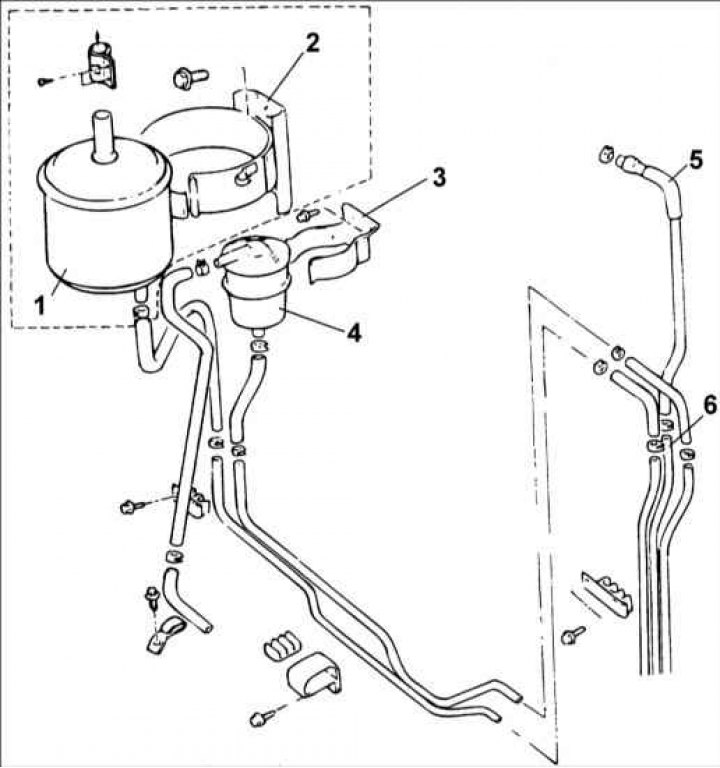
1 – canister; 2 – canister holder; 3 – fuel filter bracket; 4 – fuel filter; 5 – fuel return hose; 6 – fuel return pipe.
Removal and installation
1. The pipes must be securely fastened with clamps and clips to prevent fuel leaks.
2. After installing pipes and hoses, make sure they are not pinched.
3. Route hoses and pipes correctly and secure them.
4. Install the clamps and clips so that they do not touch any adjacent parts of the vehicle.
Examination
1. Check hoses and pipes for cracks, kinks, deformation, aging and clogging.
2. Check the fuel filter for clogging or damage.
3. Check the canister for blockages.
4. Check the operation of the overflow limiter (two-way valve) and the fuel control purge valve.
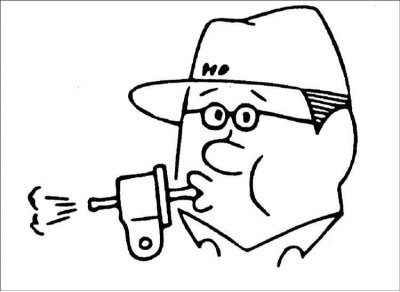
5. Check the functionality of the two-way valve by blowing through it from both sides. If air passes with difficulty, then the valve is working properly.
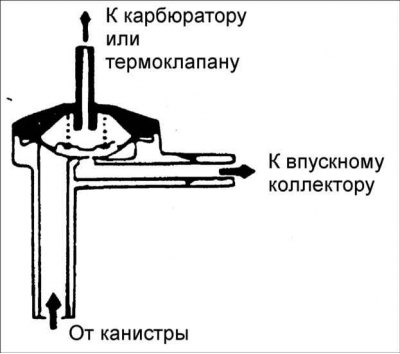
6. Check the purge control valve as follows:
- make sure the coolant temperature is 80-95°C;
- disconnect the cleaning hose from the carburetor and blow into it. If the valve is closed, it is operating normally. Start the engine and increase the crankshaft speed to 1500–2000 min⁻¹ and blow into the hose. If the valve is closed, check the condition of the vacuum hose or the operation of the thermostat valve.