


Caution: When performing operations to remove and install parts, refer to the "Fuel tank" figure.
Removal
1. Remove the fuel filler cap to relieve pressure inside the fuel tank. Raise the vehicle on a lift and disconnect the fuel pump connector.
Attention:
- To prevent fuel splashing, relieve any residual pressure in the fuel system before disconnecting fuel lines or hoses.
- Due to the presence of residual pressure in the high-pressure fuel line, cover the pipe connections with rags to prevent fuel from splashing.
2. Loosen the fuel pump mounting screws, then remove the fuel pump assembly from the fuel tank.
3. Disconnect the fuel return hose and pipe.
4. Disconnect the fuel vapor recovery system hose and tube.
Examination
1. Check fuel lines and hoses for cracks, kinks, deformations, damage and clogging.
2. Check the purge solenoid valve of the adsorber for blockage.
3. Check the fuel pump assembly for clogging or damage.
Installation
1. Connect the fuel vapor recovery system hose and the fuel return hose.
- a) If there is a flange on the fuel pipe, connect the fuel hose to the pipe until it stops against the flange, as shown in the figure.
- b) If there is no flange on the fuel pipe, securely connect the fuel hose to the pipe (connect so that there is sufficient distance between the edge of the hose and the edge of the pipe).
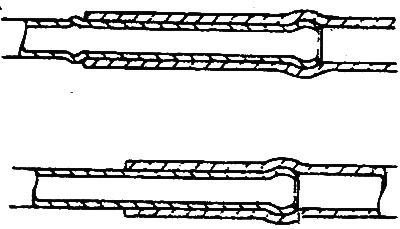
2. Install the fuel pump assembly and tighten its mounting screws.
- Tightening torque: 2-3 Nm
3. Connect the fuel hoses.
Tightening torque:
- High pressure fuel hose to main fuel supply pipe: 30-40 Nm
- High pressure fuel hose to fuel filter (modifications): 25-35 Nm