


Automatic transmission KM-175 Hyundai Sonata 3

Technical characteristics of automatic transmission
Type - Automatic, four-speed, with torque converter and differential KM-175 Torque converter: Type - With damper coupling Lock rotation frequency - 2500±300 rpm...
Type - Automatic, four-speed, with torque converter and differential KM-175 Torque converter: Type - With damper coupling Lock rotation frequency - 2500±300 rpm...

Tightening torque
Tightening torque, Nm Air filter bolt - 8-10 End of the pull to the fist - 24-35 Spherical joint of the lower arm to the fist - 60-72 Transmission Support Bracket to...
Tightening torque, Nm Air filter bolt - 8-10 End of the pull to the fist - 24-35 Spherical joint of the lower arm to the fist - 60-72 Transmission Support Bracket to...
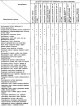
Possible malfunctions of automatic transmission
Troubleshooting Tips Note: x indicates the most likely cause when checking
Troubleshooting Tips Note: x indicates the most likely cause when checking
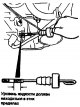
Checking the working fluid level
1. Place the vehicle on a level surface. 2. Before using the level indicator, wipe off any dirt from the area around it. 3. With the gear shift lever in position "P" and...
1. Place the vehicle on a level surface. 2. Before using the level indicator, wipe off any dirt from the area around it. 3. With the gear shift lever in position "P" and...
Adjusting the manual control cable
Make sure the manual control cable is adjusted correctly by doing the following: 1. Apply the parking and service brakes. 2. Set the gear shift lever to the "R"...
Make sure the manual control cable is adjusted correctly by doing the following: 1. Apply the parking and service brakes. 2. Set the gear shift lever to the "R"...

Displaying diagnostic trouble codes
1. Connect a voltmeter or scan tool to the diagnostic connector. 2. Read diagnostic trouble codes. Then perform troubleshooting work according to the "Diagnostic Trouble...
1. Connect a voltmeter or scan tool to the diagnostic connector. 2. Read diagnostic trouble codes. Then perform troubleshooting work according to the "Diagnostic Trouble...
Two vehicle movement programs
Two vehicle driving programs are stored in the control unit memory: in "powerful" mode and in "economical" mode. The driver can select the desired mode via the...
Two vehicle driving programs are stored in the control unit memory: in "powerful" mode and in "economical" mode. The driver can select the desired mode via the...

Checking oil pressure
1. Warm up the gearbox. 2. Raise the front of the vehicle so that the front wheels can turn. 3. Attach the engine tachometer and position it so that it is clearly...
1. Warm up the gearbox. 2. Raise the front of the vehicle so that the front wheels can turn. 3. Attach the engine tachometer and position it so that it is clearly...

Torque Converter Lockup Test
The lockup test consists of determining the critical (maximum) engine speed with the throttle fully open and the shift lever positions "D" and "R". This test checks the...
The lockup test consists of determining the critical (maximum) engine speed with the throttle fully open and the shift lever positions "D" and "R". This test checks the...

ELC 4-speed automatic transmission controls.
Name Symbol Pulse generator A, B A Throttle position sensor IN Four-speed transmission control solenoid valve connector WITH Fuel injection control oil temperature...
Name Symbol Pulse generator A, B A Throttle position sensor IN Four-speed transmission control solenoid valve connector WITH Fuel injection control oil temperature...
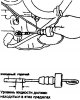
Checking the fluid level in the gearbox
1. Let the engine run until the fluid temperature reaches normal operating level (70-80°C). 2. Place the vehicle on a level surface. 3. Move the gearshift lever to each...
1. Let the engine run until the fluid temperature reaches normal operating level (70-80°C). 2. Place the vehicle on a level surface. 3. Move the gearshift lever to each...

Checking the operation of the gear shift lever
1. Move the gearshift lever to each position and make sure that the lever moves smoothly. Make sure that the lever positions are correctly locked. 2. Make sure that the...
1. Move the gearshift lever to each position and make sure that the lever moves smoothly. Make sure that the lever positions are correctly locked. 2. Make sure that the...

Adjusting the automatic transmission shift cable
1. Set the gear shift lever to position N (neutral). 2. Release the control cable fastening to the gear shift lever. Disconnect the cable and the lever. 3. Set the...
1. Set the gear shift lever to position N (neutral). 2. Release the control cable fastening to the gear shift lever. Disconnect the cable and the lever. 3. Set the...

Adjusting the downshift servo mechanism
1. Remove any dirt around the servo mechanism. 2. Remove the snap ring. 3. Remove the servo switch. 4. Loosen the lock nut. 5. Hold the servo piston from rotating with a...
1. Remove any dirt around the servo mechanism. 2. Remove the snap ring. 3. Remove the servo switch. 4. Loosen the lock nut. 5. Hold the servo piston from rotating with a...

Regulating the pressure in the system
1. Drain the automatic transmission fluid. 2. Remove the oil pan. 3. Remove the oil filter and oil temperature sensor. 4. Remove the valve body. The manual control valve...
1. Drain the automatic transmission fluid. 2. Remove the oil pan. 3. Remove the oil filter and oil temperature sensor. 4. Remove the valve body. The manual control valve...


Automatic transmission — removal and installation
Position Moment, Nm Diameter x length, mm A 43-55 10x40(1,6) IN 43-55 10x65(2,6) WITH 22-32 10x55(2,2) D 30-35 10x60(2,4) E 10-12 8x14(0,6) F 15-22 8x20(0,8) G 46-53...
Position Moment, Nm Diameter x length, mm A 43-55 10x40(1,6) IN 43-55 10x65(2,6) WITH 22-32 10x55(2,2) D 30-35 10x60(2,4) E 10-12 8x14(0,6) F 15-22 8x20(0,8) G 46-53...

Disassembly and assembly of automatic transmission
Disassembly Warning: Since the automatic transmission consists of a number of precision parts, these parts must be handled with extreme care during development and...
Disassembly Warning: Since the automatic transmission consists of a number of precision parts, these parts must be handled with extreme care during development and...


Valve body — design
1. Pressure reducing valve; 2. Pressure reducing valve spring; 3. Torque converter control valve; 4. Torque converter control valve spring; 5. Regulating valve; 6....
1. Pressure reducing valve; 2. Pressure reducing valve spring; 3. Torque converter control valve; 4. Torque converter control valve spring; 5. Regulating valve; 6....

This section is available on russian, bulgarian, belarusian, ukrainian, serbian, croatian, romanian, polish, slovak, hungarian
Link in different formats to this section
TextHTMLBB Code
- General information
- User manual
- Maintenance
- Power unit
- 2.0 and 2.4 liter engines
- 2.7 liter engines
- Engine overhaul
- Cooling system
- Intake and exhaust systems
- Lubrication system
- MFI fuel injection system
- Engine electrical equipment
- Transmission
- Clutch
- Mechanical gearbox
- Automatic gearbox
- Drive shafts
- Chassis
- Front suspension
- Rear suspension
- Steering
- Brake system
- Body
- Exterior
- Interior
- Heater and air conditioner
- Security systems
- Electrical equipment
- Troubleshooting
- Electrical circuits
- General information
- Maintenance
- Power unit
- Engine repair I4 DOHC
- Engine repair I4 SOHC
- Engine repair V6 SOHC
- Cooling system
- Intake and exhaust system
- Exhaust gas treatment
- Fuel system
- Transmission
- Clutch
- Mechanical gearbox
- Automatic transmission KM-175
- Automatic transmission F4A33
- Chassis
- Front suspension
- Rear suspension
- Steering
- Brake system
- Body
- Body elements
- Electrical equipment
- Equipment and devices