


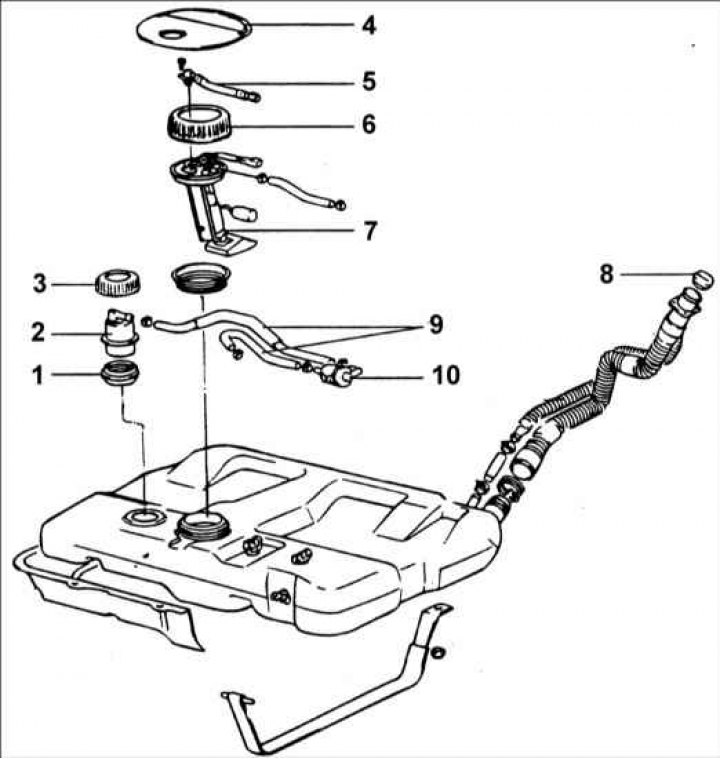
1 – bracket; 2 – fuel shut-off valve; 3 – fuel shut-off valve cover; 4 – lid; 5 – upper pressure hose; 6 – threaded cap; 7 – fuel pump; 8 – fuel filler cap; 9 – two-way valve hoses; 10 – two-way valve.
Removal
Warning! Gasoline is explosive, so when working with fuel system components, ensure proper ventilation of the work area, do not use fire, sparking devices, open fire-hazardous lighting devices, and do not smoke.
Warning! Before removing the fuel tank, drain the fuel from it. Clean the fuel tank from fuel vapors.
Warning: Remove the fuel filler cap from the fuel tank to equalize the pressure in the tank with atmospheric pressure.
1. Remove the rear seat cushion and disconnect the fuel pump connector.
Warning: Do not remove the fuel filter from the fuel tank except when replacing it.
2. Loosen the clamps and disconnect the fuel supply and return hoses from the fuel tank.
3. Disconnect the inlet hose and wide hose from the base of the inlet hose.
4. After removing the fuel tank guard and fastening straps, lower the fuel tank slightly and disconnect the connector from the fuel level sensor.
5. Remove the fuel tank.
Warning! Close all open fuel tank openings to prevent fuel vapors from escaping from the tank.
Warning! Even an empty fuel tank contains fuel vapors that are explosive, so be careful. Ensure adequate ventilation of the work area, do not use fire, sparking devices, open fire-hazardous lighting devices and do not smoke. Clean the fuel tank of fuel vapors as soon as possible.
Examination
Check the condition and replace the following items if there are any defects.
1. Damaged fuel tank. If there are fuel leaks from the tank, clean the tank and check it for rust, damage and cracks. A damaged or corroded fuel tank must be replaced.
Warning: When cleaning the inside of the fuel tank, do not use products that may damage the protective layer.
2. Internally contaminated, deformed, damaged or rusty fuel line.
3. Damaged gasket at the top of the fuel tank.
[The article is copied from this website: www.hyundaibook.ru]
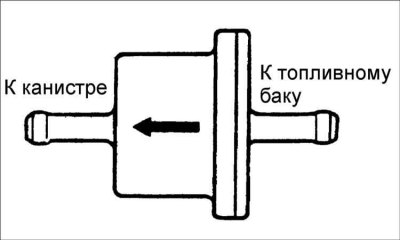
4. Check the functionality of the two-way valve by blowing through it from both sides. If air passes with difficulty, then the valve is working properly.
Installation
1. Install the fuel tank and secure it with straps until it touches the bottom of the car.
2. Connect all hoses and pipes to the fuel tank, being careful not to mix them up.
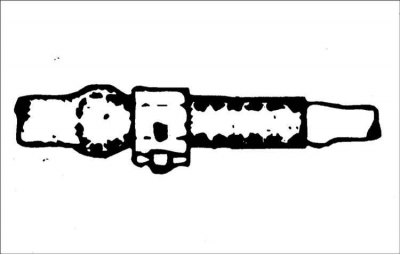
3. Slowly push the fuel supply tube onto the filter installed in the tank and tighten it securely.