


Raise the front of the vehicle.
Unscrew the drain plug and drain the liquid.
Screw the drain plug back into place.
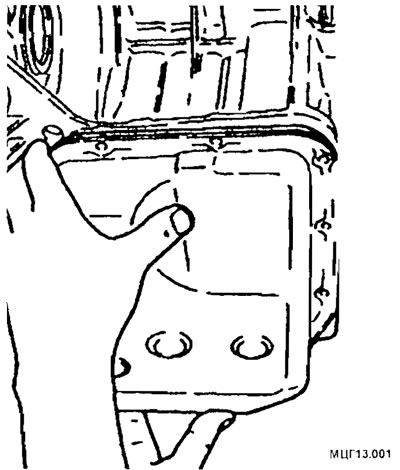
Loosen the oil pan mounting bolts and, tapping with a soft-faced hammer, separate it from the gearbox housing and remove it.
Note: Some liquid remains in the tray after draining.
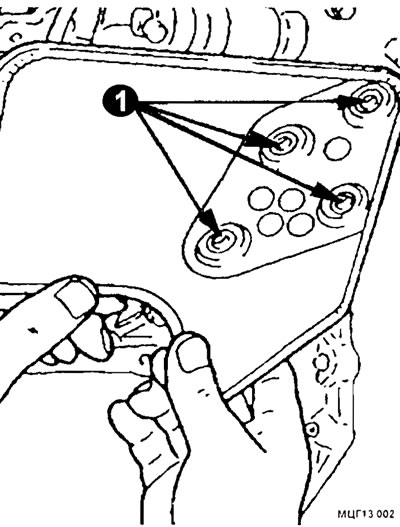
Unscrew the four bolts (1) and remove the filter, put a new one in its place and tighten the bolts with a force of 7 Nm.
Remove the old gasket from the pan and wash it thoroughly.
Clean any traces of gasket from the gearbox housing.
Install the pan with a new gasket in place and tighten the bolts evenly with a force of 10-12 Nm.
Slowly, in small portions, pour in new fluid through the hole in the oil dipstick.
Caution: Please ensure that the installation is absolutely clean.
Start the engine, press the brake pedal and, with the vehicle stationary, engage all gears.
Check the fluid level at idle and with the gearshift lever in position P. If necessary, drink up the liquid to the "20°C" mark.
Heat the liquid to operating temperature of approximately 60°C.
Note: After starting a cold engine, operating temperature is reached after driving approximately 10 km.
Check the fluid level. The fluid level should be between the minimum and maximum marks; add liquid if necessary.
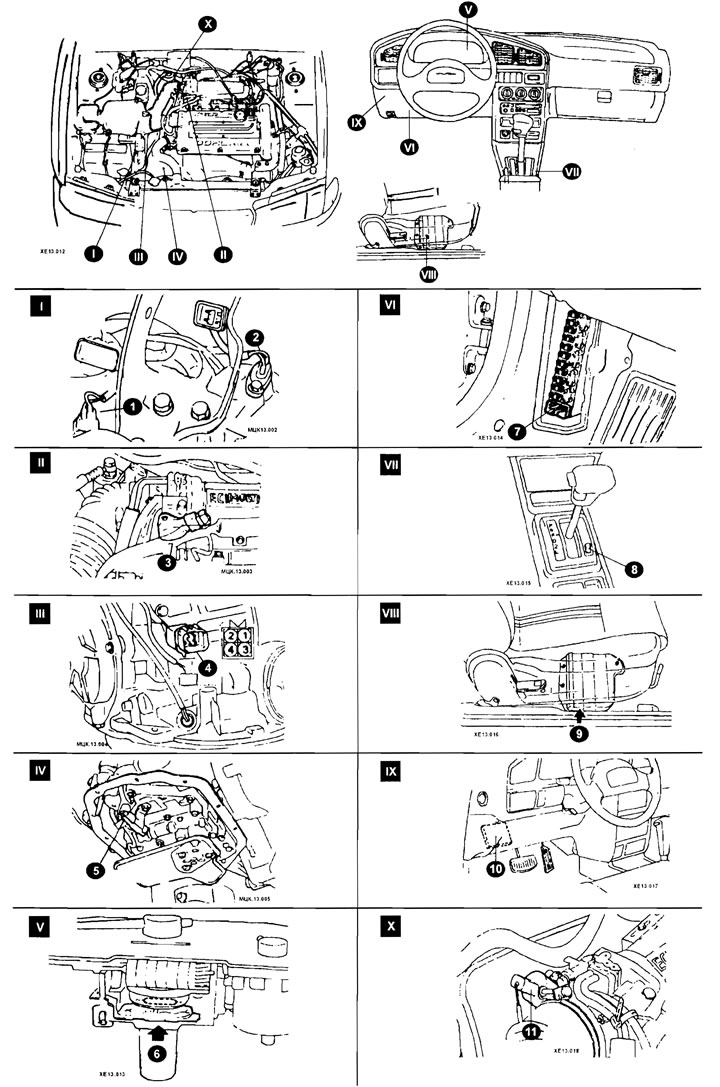
Typical layout of gearbox controls
1 - pulse generator (A);
2 - pulse generator (B);
3 - throttle position sensor;
4 - solenoid valve connector;
5 - oil temperature sensor;
6 - vehicle speed sensor;
7 - connector for connecting diagnostic equipment;
8 - Driving mode switch;
9 - Automatic transmission control module;
10 - injection system control module (MPI);
11 - idle switch.