


Recommended Automatic Transmission Fluid
Your Hyundai's automatic transmission is designed to use DIAMOND ATF SP-III or SK ATF SPIN fluid. Damage caused by using the wrong automatic transmission fluid is not covered by your new vehicle warranty.
Automatic transmission fluid capacity: Engine - 6.1 liters;
Warning: Automatic transmission fluid should be checked when the coolant is at normal operating temperature. This means that the engine, radiator, exhaust system, etc. will be very hot. Be especially careful when performing this operation.
Checking the fluid level in the automatic transmission
Park the vehicle on a level surface and set the parking brake. The automatic transmission fluid should be at normal operating temperature and the engine should be idling while checking the automatic transmission fluid level.
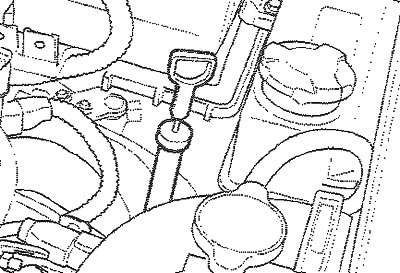
(Original version of the article on the website hyundaibook.ru)
With the engine idling, depress the brake pedal and move the selector alternately from the "P" position to each of the following positions - "FT, "N", "D", "2", "L" - and then return it to the "NX"position. Leave the engine running at idle and follow these steps:
1. Open the hood, being careful not to let your hands, long hair or clothing get caught in any moving parts.
2. Remove the automatic transmission dipstick, wipe it dry, insert it all the way and remove it again. Check the oil level on the dipstick, it should be in the "HOT" ("Hot") range on the dipstick.
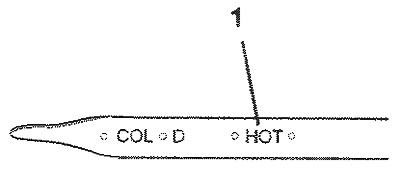
1 - The ATF level should be in the "HOT" ("Hot") range
3. If the fluid level is low, add fluid to the "HOT" mark on the dipstick through the dipstick hole using a funnel. Do not drink too much fluid.
Warning: The radiator fan of the cooling system turns on depending on the engine coolant temperature and may sometimes turn on even when the engine is not running. Be especially careful when working near the fan blades to avoid injury from the rotating blades. As the coolant temperature decreases, the fan turns off automatically. This is normal.
Warning: (Diesel engines only) Do not tamper with the injection system while the engine is running or for 30 seconds after the engine has stopped. The high-pressure fuel pump, manifold, injectors and high-pressure fuel pipes contain fuel under pressure even after the engine has stopped. Fuel spurting from a leak can cause serious injury if it comes into contact with the skin. People using a pacemaker should not come closer than 30 cm to the electronic control unit or wiring in the engine compartment while the engine is running, since the high-voltage current in the common rail system generates a strong electromagnetic field.