


Car exhaust system Hyundai Getz

Features of the exhaust system
Exhaust system: 1 - main muffler; 2 - rubber cushion; 3 - clamp; 4 - metal-reinforced gasket; 5 - cat collector; 6 - intermediate pipe with metal compensator; 7 -...
Exhaust system: 1 - main muffler; 2 - rubber cushion; 3 - clamp; 4 - metal-reinforced gasket; 5 - cat collector; 6 - intermediate pipe with metal compensator; 7 -...

Removal and installation of the exhaust system
Cars with engines with a working volume of 1.1 and 1.3 liters Exhaust system components located in the engine compartment of a 1.3L engine: 1 – exhaust manifold gasket;...
Cars with engines with a working volume of 1.1 and 1.3 liters Exhaust system components located in the engine compartment of a 1.3L engine: 1 – exhaust manifold gasket;...

Checking the exhaust system for leaks
On vehicles with a regulated catalytic converter, a lack of tightness in the exhaust system connections before the oxygen concentration sensor can lead to the following...
On vehicles with a regulated catalytic converter, a lack of tightness in the exhaust system connections before the oxygen concentration sensor can lead to the following...
Vehicles with a catalytic converter in the exhaust system
Hyundai cars are equipped with a catalytic converter as standard. If equipped, unleaded gasoline must be used. Cars with a controlled catalytic converter must also be...
Hyundai cars are equipped with a catalytic converter as standard. If equipped, unleaded gasoline must be used. Cars with a controlled catalytic converter must also be...
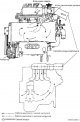
Emission control systems
Technical data Resistance of the fuel vapor recovery system valve, Ohm at 20°C - 26 Tightening torque, Nm: Crankcase ventilation valve - 8–12 General information The...
Technical data Resistance of the fuel vapor recovery system valve, Ohm at 20°C - 26 Tightening torque, Nm: Crankcase ventilation valve - 8–12 General information The...

Crankcase ventilation system
The crankcase ventilation valve is controlled by the vacuum created in the intake manifold when the engine is running. When the engine is running at idle speed, the...
The crankcase ventilation valve is controlled by the vacuum created in the intake manifold when the engine is running. When the engine is running at idle speed, the...

Crankcase Ventilation Valve (PCV) — Removal and Installation
Removal 1. Disconnect the hose from the positive crankcase ventilation valve. Remove the valve from the cylinder head cover and connect it to the crankcase ventilation...
Removal 1. Disconnect the hose from the positive crankcase ventilation valve. Remove the valve from the cylinder head cover and connect it to the crankcase ventilation...

Fuel vapor recovery system
The fuel vapor recovery system prevents fuel vapor from evaporating into the atmosphere from the fuel tank, thereby preventing the formation of photochemical smog. Fuel...
The fuel vapor recovery system prevents fuel vapor from evaporating into the atmosphere from the fuel tank, thereby preventing the formation of photochemical smog. Fuel...

Electromagnetic valve for cleaning activated carbon canister
Note: Before disconnecting, label the vacuum hoses so that they can be reinstalled in their proper locations. 1. Disconnect the vacuum hose from the solenoid valve. 2....
Note: Before disconnecting, label the vacuum hoses so that they can be reinstalled in their proper locations. 1. Disconnect the vacuum hose from the solenoid valve. 2....

Canister with activated carbon
Examination 1. Check that all connections are secure and that there is no damage to the fuel vapor recovery tubes. 2. Check the tightness of the tubes. 3. After removing...
Examination 1. Check that all connections are secure and that there is no damage to the fuel vapor recovery tubes. 2. Check the tightness of the tubes. 3. After removing...

Exhaust gas toxicity reduction system
Operating principle To reduce emissions of harmful substances (CO, HC, NOx) with exhaust gases, the engine control system has been modified with the addition of special...
Operating principle To reduce emissions of harmful substances (CO, HC, NOx) with exhaust gases, the engine control system has been modified with the addition of special...
This section is available on russian, bulgarian, belarusian, ukrainian, serbian, croatian, romanian, polish, slovak, hungarian
We recommend other sections on the topic of Hyundai manuals:
Power unit: Intake and exhaust systems Hyundai Accent 1 (1994-1999)
Power unit: Intake and exhaust system Hyundai Elantra 2 (1995-2000, petrol)
Power unit: Intake and exhaust systems Hyundai Sonata 4 (2001-2012, petrol)
Engine 2.0 and 2.4 liters: Intake and exhaust system Hyundai Santa Fe 2 (2007-2012, petrol)
Power unit: Intake and exhaust systems Hyundai Tucson 2 (2009-2015)
Link in different formats to this section
TextHTMLBB Code
- User manual
- Control devices
- Heating and ventilation
- Audio system
- Car driving
- Faults en route
- Maintenance
- Technical information
- Power unit
- Engine repair 1.1/1.3 l
- Engine repair 1.5/1.6 l
- Lubrication system
- Cooling system
- Fuel system
- Exhaust system
- Ignition system
- Transmission
- Clutch
- Mechanical gearbox
- Automatic gearbox
- Drive shafts and axles
- Chassis
- Suspension and wheels
- Steering
- Brake system
- Body
- Exterior (external elements)
- Interior (internal elements)
- Air conditioning and heater
- Electrical equipment
- Equipment and devices
- Power devices
- Electrical circuits