


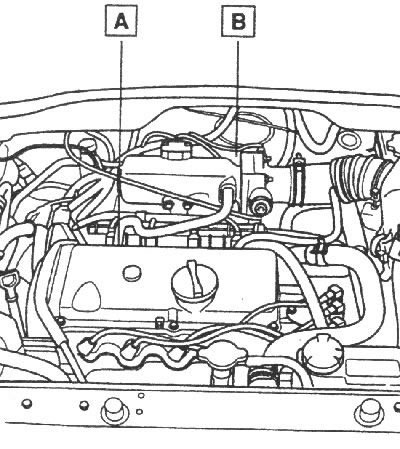
The crankcase ventilation valve is controlled by the vacuum created in the intake manifold when the engine is running. When the engine is running at idle speed, the valve is slightly open, causing a small amount of crankcase gases to be diverted to the resonance chamber and subsequently burned in the engine cylinders.
Location of exhaust gas toxicity reduction system components in the engine compartment of vehicles with a 1.1 L SOHC engine: A — Positive crankcase ventilation valve (PCV); B — Fuel vapor recovery system valve (PCSV).
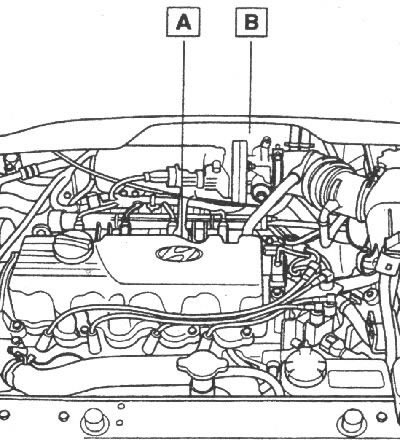
As the engine speed increases, the degree of valve opening increases, resulting in an increase in the amount of crankcase gases that are diverted into the resonance chamber and subsequently burned in the engine cylinders.
Location of exhaust gas toxicity reduction system components in the engine compartment of vehicles with a 1.3 L SOHC engine: A — Positive crankcase ventilation (PCV) valve; B — Fuel vapor recovery system valve (PCSV).
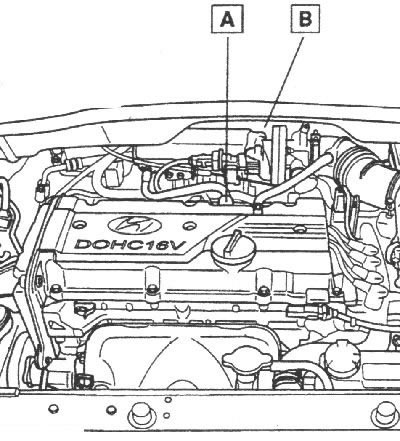
Location of exhaust gas toxicity reduction system components in the engine compartment of vehicles with a 1.5/1.6 L DOHC engine: A — positive crankcase ventilation valve (PCV); B — Fuel vapor recovery system valve (PCSV).
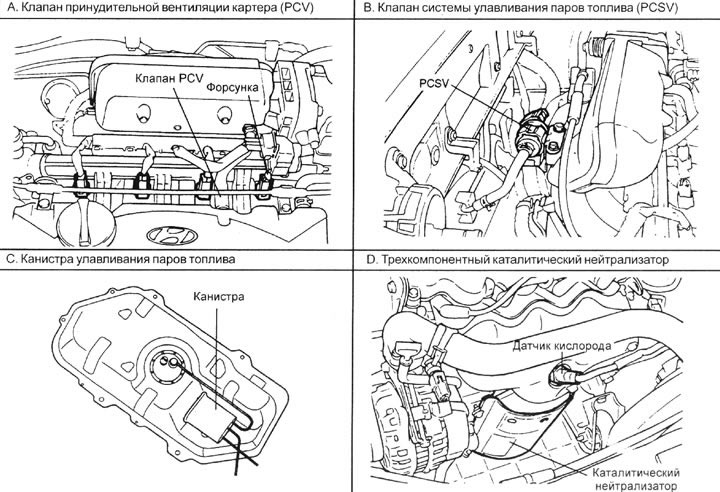
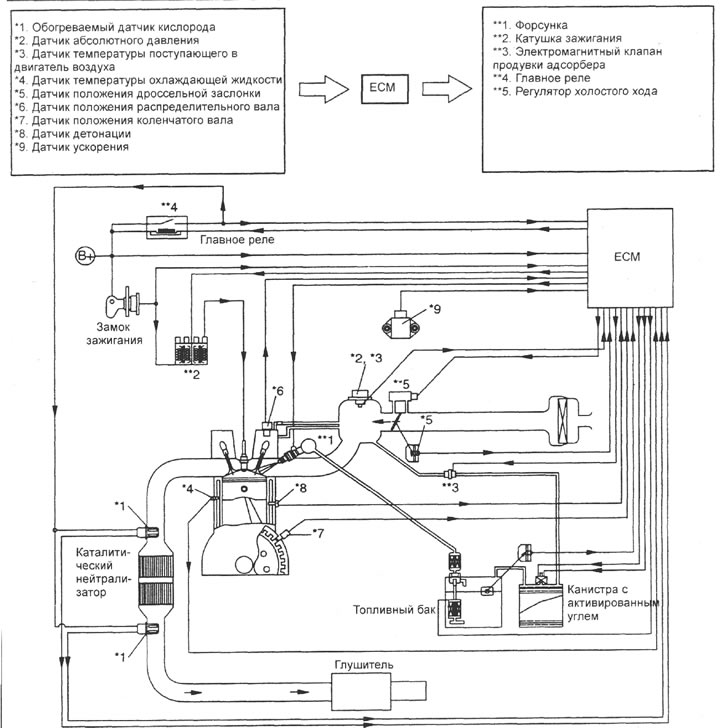
Schematic diagram of the exhaust gas toxicity reduction and fuel vapor recovery system for vehicles with on-board diagnostics
The article is borrowed from the website (HYUNDAIBOOK.RU)