


- Extraneous noise caused by a faulty hydraulic tappet occurs immediately after starting the engine and changes in accordance with the engine speed. However, this noise does not depend on the actual load on the engine. Therefore, if the noise does not occur immediately after engine start-up, if it does not change according to engine speed, or if it changes according to engine load, then the hydraulic tappets are not the cause of the noise,
- When a hydraulic tappet malfunction occurs, the noise almost never disappears, even when the engine is idling after it has warmed up. The only time the noise may disappear is when the engine oil is changed (the knocking sound of the hydraulic lifters in this case is caused by the formation of sediment in the engine oil).
Start the engine.
Make sure that the noise appears immediately after the engine starts and that the noise changes in accordance with changes in engine speed.
If the noise does not appear immediately after starting the engine, or if it does not change in accordance with changes in engine speed, the malfunction is not caused by a malfunction of the hydraulic tappets, look for another cause of the malfunction.
When the engine is idling, make sure that the noise level does not change as the engine load changes.
If the noise level changes, the cause may be collision of parts due to wear of the crankshaft bearings or connecting rod bearing shells.
After warming up the engine, let it idle and check for any extraneous noise. If the noise has decreased or disappeared, the knocking of the hydraulic lifters may be caused by contaminated engine oil. Flush the hydraulic lifters.
•Bleed air from the hydraulic lifters.
If the noise does not go away even after bleeding the air, clean the hydraulic lifters.
Removal air from hydraulic lifters
If the vehicle has been on a slope for a long time or has not been used for a long period of time, the amount of oil in the hydraulic lifters will decrease and air may enter the plunger cavity (1) when the engine is started.
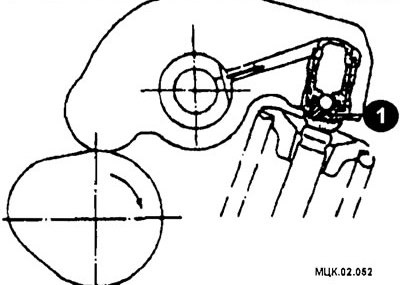
If any of the above situations occur, the extraneous noise can be eliminated by removing air from the hydraulic lifters.
•Check the condition of the engine oil and top up or replace it if necessary.
- If the oil level is insufficient, air will be sucked in through the oil intake with a mesh and will enter the oil channel.
- If the oil level is higher than required, the oil will be mixed with air by the crankshaft and there will be a lot of air in the oil.
- If the oil is old, the air will not separate from the oil quickly and the proportion of air in the oil will increase.
- If air with oil gets into the above-plunger cavity of the hydraulic tappets, the air inside the above-plunger cavity will be compressed when the valve opens, and the hydraulic tappet will not be pressed enough, which will lead to the appearance of extraneous noise when the valve closes. If the air is removed from the oil, the operation of the hydraulic lifters returns to normal.
•Let the engine idle for 1-3 minutes to warm up.
Within 15 seconds, increase the engine speed to 3000 rpm, then quickly reduce the speed to idle and let the engine idle for 15 seconds, then repeat the cycle and check if the extraneous noise disappears. During normal operation, the sound will disappear after 10-30 repetitions, but if the sound level has not changed after 30 repetitions or more, the likely cause of the extraneous sound is not air inside the hydraulic lifters.
After the extraneous sound disappears, repeat the cycle 5 more times.
•Let the engine idle for 1-3 minutes and check that the sound disappears.