


Charging the battery
In winter, when the battery is subject to heavy loads, such as starting the engine in cold weather, and many electrical consumers are constantly running, it is recommended to occasionally recharge the battery from an external source with a current of 3.5 to 4.0 A. The charging duration should be such that there is no increase in the electrolyte density value within 4 hours.
Another method would be to charge at 1.5A overnight.
The special fast charging method, which is used to restore the battery capacity in 1.5-2 hours, is not recommended, as it can seriously damage the battery plates due to overheating.
When charging the battery, ensure that the electrolyte temperature does not exceed 38°C.
Sulfation
When the battery is completely discharged (the reduced density of the electrolyte is below 1.100) sulfation of the plates may occur.
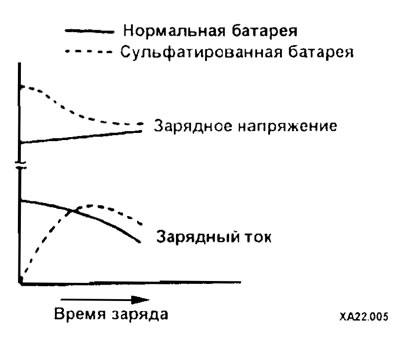
To determine the condition of the plates, pay attention to the change in current and voltage during the charging process. A sulfated battery is characterized by low current and high voltage at the beginning of charging.