


Contents: Checking the battery ⇓ Checking the specific gravity of…⇓ Some indications for charging ⇓ Safety when charging the battery ⇓ Placing the charger ⇓ Battery Types and Settings ⇓ Charger ⇓
A battery is a device for storing energy in chemical form, which can then be used as electricity.
The battery works because two different metals, when placed in an acidic solution, create a potential difference, resulting in the generation of an electric current.
1. Maintenance-free batteries are installed on vehicles.
2. There is no need to add distilled water to the battery.
3. The battery is completely sealed except for small ventilation holes in the lid.
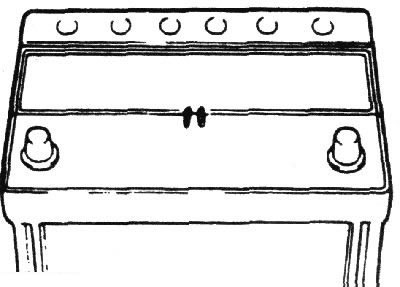
Checking the battery
1. Turn off the ignition and all electrical consumers.
2. Disconnect the wires from the battery terminals. The negative wire should be disconnected first and reconnected last.
3. Remove the battery from the vehicle.
Warning: If the battery case is damaged, remove the battery wearing rubber gloves to protect your skin from the electrolyte.
4. Check the battery fastening elements, as they may be damaged by electrolyte that has come into contact with them. If necessary, clean them with a warm soda solution.
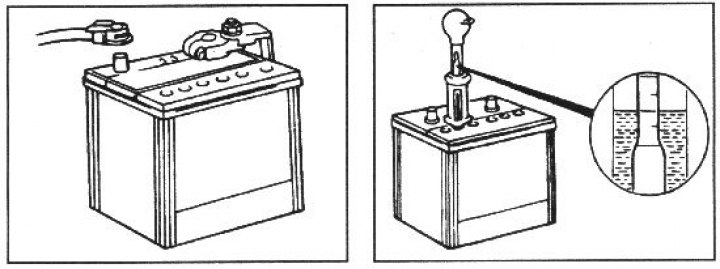
5. Clean the top of the battery with the same solution.
6. Inspect the battery for cracks. If there are cracks, replace the battery.
7. Clean the battery terminals.
8. Clean the inside surface of the wire clamps connected to the battery terminals. Replace the wires with damage, traces of friction and broken clamps.
9. Install the battery into the vehicle.
10. Connect the wires to the battery terminals so that the top ends of the wire clamps are level with the ends of the battery terminals.
11. Securely tighten the wire clamps to the battery terminals.
12. Apply a thin layer of petroleum jelly to the battery terminals.
Warning! When charging batteries, an explosive gas mixture is released.
When working with wires and electrical devices, it is prohibited to use fire, sparking devices, open fire-hazardous lighting devices, and smoking. During charging, do not disconnect live wires from the battery terminals, as this may cause a spark. Do not allow flames to be present near an open battery.
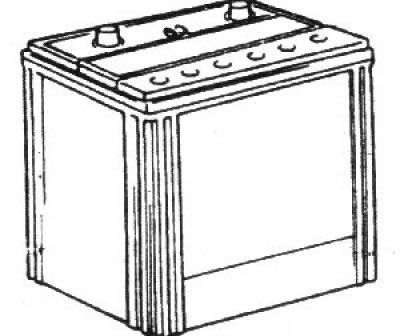
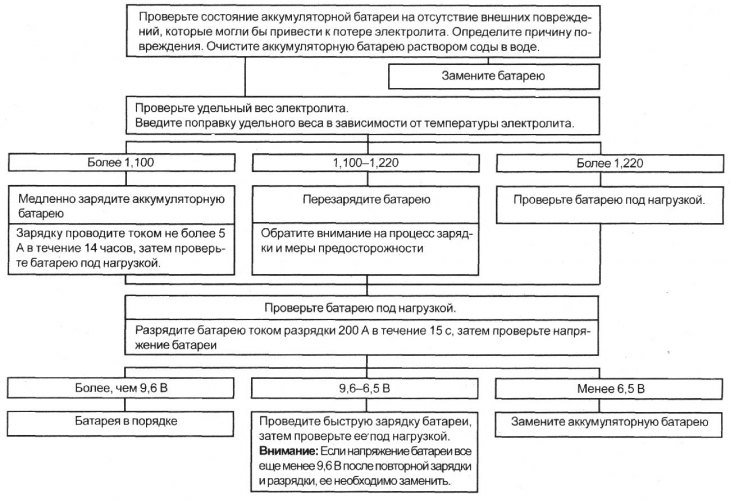
Checking the specific gravity of battery electrolyte
The specific gravity of battery electrolyte changes with temperature. An increase in temperature leads to a decrease in specific gravity and vice versa.
The specific gravity of the electrolyte of a fully charged battery should be between 1.260 and 1.280, at a temperature of 26.7°C.
The specific gravity adjustment shall be made by adding 0.04 points for every 5.56°C above 26.7°C or by subtracting 0.04 points for every 5.56°C below 26.7°C.
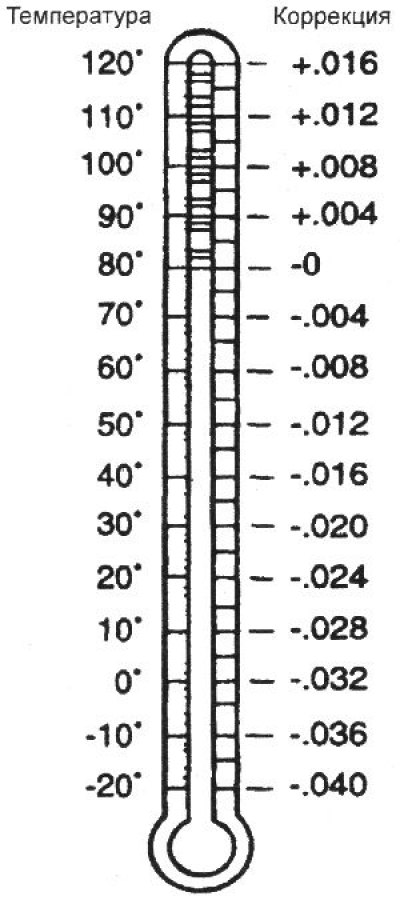
For example: The hydrometer reading is -1.280 at a temperature of 5.56°C. In accordance with the temperature difference, it is necessary to correct the specific gravity by 0.028 points. The true specific gravity is 1.252.
1,280–0,028=1,252
Do not measure the specific gravity of the electrolyte immediately after adding distilled water.
Attention! A difference in the specific gravity of the electrolyte of 50 or more points between the banks of the battery indicates that the battery is faulty and must be replaced.
Some indications for charging
| Specific gravity | Charging method | |
| Slow charging (5A) | Fast charging (20A) | |
| Less than 1,000 | 14 h | 4 h |
| 1,000–1,300 | 12h | 3 h |
| 1,300–1,600 | 10 h | 2.5 h |
| 1,600–1,900 | 8 h | 2.0 h |
| 1,900–1,220 | 6 h | 1.5 h |
| Over 1,220 | 4 h | 1.0 h |
Safety when charging the battery
The normal chargers are designed to charge 12V sealed lead acid batteries 1.2-120 amp-hour. Do not use it for other purposes. It may cause an explosion.
The charger is not intended for use by small children or the elderly.
Avoid danger to life and personal injury! Do not use the charger with a damaged cable.
It must be repaired by an authorized technician.
Always wear safety glasses, gloves, protective clothing and face protection when charging - do not lean too close to the battery.
Explosion hazard! The battery being charged may emit explosive gases. Do not smoke or allow sparks or fire near the battery.
Risk of explosion and fire! During charging, explosive and flammable substances such as fuel or solvents must not be present in the vicinity of the charger or battery.
Do not cover the charger while charging.
Risk of chemical burns! Battery acid is highly corrosive. If acid comes into contact with your skin or eyes, rinse the affected area immediately with plenty of water and seek medical attention.
Material was obtained from an official resource HyundaiBook
Do not charge frozen batteries.
Do not charge damaged batteries.
Before charging, please make sure that the power consumption is within the specified rating, otherwise the charging process may be seriously affected.
When connecting the charger to the battery, observe the correct polarity and avoid short circuits.
Disconnect the battery from the charger when the charger is not connected to a power source. This will reduce reverse current leakage.
Charging should be stopped immediately if the battery overheats or if fluid leakage is detected during charging.
In case of malfunction or damage, immediately disconnect the charger from the power source.
Do not operate the vehicle while charging a permanently installed battery.
Placing the charger
Place the charger as far away from the battery as the power cord allows.
When charging, do not place the charger directly above or below the battery. Battery gases or liquid may corrode and damage the charger.
Do not allow battery acid to come into contact with the charger.
Charging should take place in a well-ventilated, closed area.
Battery Types and Settings
The following instructions serve as guidelines. For more precise information, you should refer to the manufacturer's instructions.
Mode - 14.4V/0.8A
This mode is usually suitable for batteries less than 14 Ah
Mode - 14.4V/3.8A
This mode is usually used for WET, MF and most GEL batteries
Mode - 14.7V/3.8A
This mode is recommended for some AMG type batteries. This mode is also suitable for charging batteries below zero.
Charger
1) Charging a battery permanently installed in a vehicle:
- a) Before connecting or disconnecting the battery terminals, disconnect the power cord from the power source.
- b) Check the polarity of the battery terminals. The positive ("+") battery terminal usually has a larger diameter than the negative ("-") terminal.
- c) Identify the battery terminal connected to the chassis (ground). This is usually the negative terminal.
- d) Charging a battery with the negative terminal grounded:
- Make sure that the black wire 15 (connection to the terminal) does not contact the fuel supply line or the battery.
- Connect red wire 14 (V) to the positive ("+") battery terminal and black wire 15 ("-") to the vehicle chassis.
- e) Charging a battery with the positive terminal grounded:
- Make sure that red wire 14 (connection to V terminal) does not contact the fuel supply line or battery.
- Connect black wire 15 ("-") to the negative ("-") battery terminal and red wire 14 ("+") to the vehicle's chassis.
2) Charging a battery not connected to a vehicle:
- a) Before connecting or disconnecting the battery terminals, the power cord must be disconnected from the power source.
- b) Connect the red wire 14 (V) to the positive ("+") battery terminal and the black wire 15 ("-") to the negative ("-") terminal.