


The main components of the generator are the rotor, stator, rectifier unit, brushes, bearings and drive belt pulley. The electronic voltage regulator is built into the brush holder.
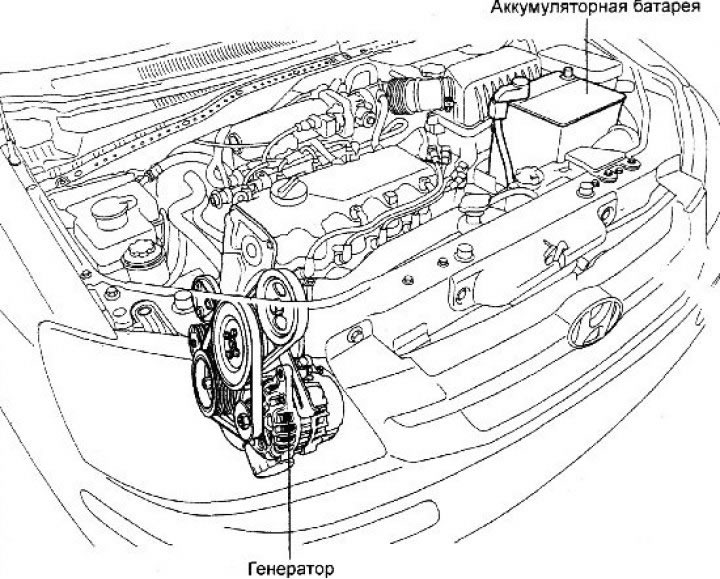
Generator
The generator is a three-phase synchronous electric machine with electromagnetic excitation. The voltage is regulated by a built-in voltage regulator.
When the generator is running, the electric current flowing through the excitation winding creates a magnetic flux around the rotor poles. When the rotor rotates, the south and north poles of the rotor pass under each stator tooth, and the working magnetic flux passing through the stator teeth changes in magnitude and voltage. This variable magnetic flux creates an electromotive force in the stator winding.
At a high generator rotor speed, when the generator voltage becomes higher than 13.6–14.6 V, the voltage regulator located in the brush holder is locked and the current does not pass through the excitation winding. The generator voltage drops, the regulator is unlocked and again passes the current through the excitation winding. The higher the generator rotor speed, the longer the regulator is locked, and therefore the more the voltage at the generator output decreases. The process of locking and unlocking the regulator occurs with a high frequency, so the voltage fluctuations at the generator output are unnoticeable and can practically be considered constant, maintained at a level of 13.6–14.6 V.