


Contents: Duty cycle ⇓ Temperature control ⇓
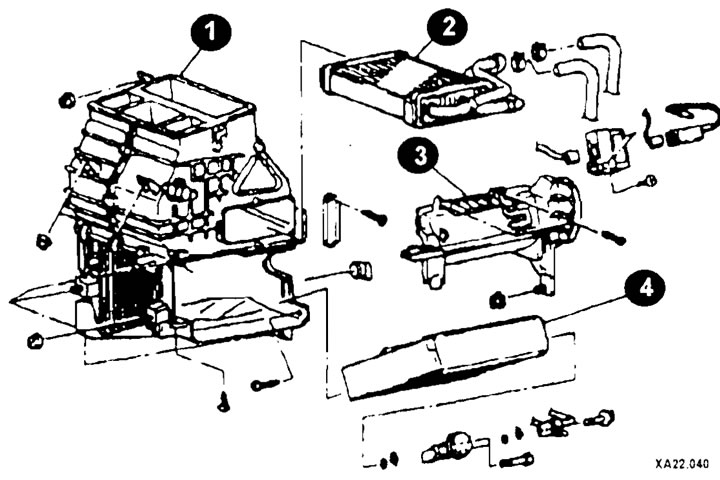
Typical components of the air conditioning system of a late model car
1 - heater;
2 - capacitor;
3 - lid;
4 - evaporator.
Duty cycle
The circulation of the refrigerant is carried out according to the standard scheme. The compressor forces refrigerant vapor into the condenser, where it condenses, releasing heat to the condenser walls. From the condenser, the liquid refrigerant flows into the tank, from where it enters the evaporator under the action of the vacuum created by the compressor. As the refrigerant evaporates, it lowers the temperature of the evaporator walls. The refrigerant vapor flows back to the compressor. The flow of refrigerant through the evaporator is regulated by an expansion valve located in the evaporator body.
Temperature control
The compressor operates intermittently, maintaining the evaporator temperature within a certain range. When the temperature drops below the set value, the thermostat stops the compressor. When the temperature rises, the thermostat turns the compressor on again.
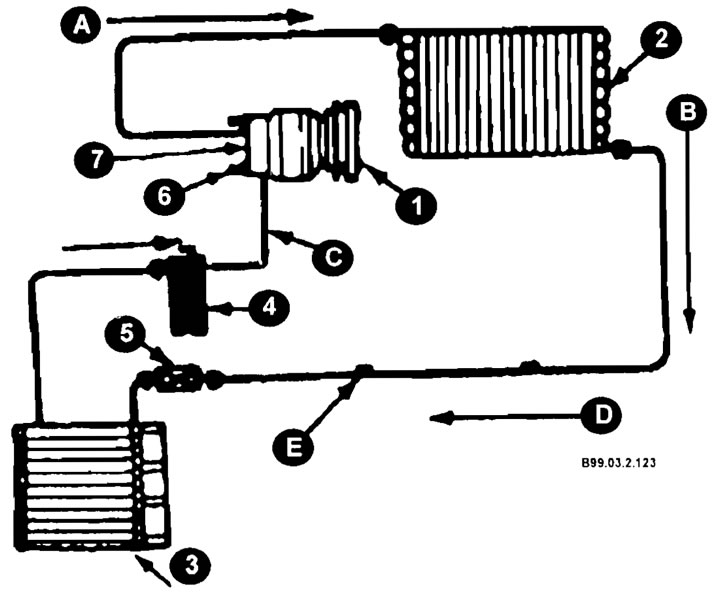
Functional units of the air conditioning system
A - discharge line - hot, high pressure steam;
B - refrigerant flow;
C - suction line - cold, low pressure steam;
D - liquid pipeline - warm, liquid under high pressure;
E - high pressure side working fitting;
F - low pressure side working fitting;
1 - compressor;
2 - capacitor;
3 - evaporator;
4 - battery;
5 - expansion tube - outlet;
6 - bypass valve;
7 - low pressure switch.
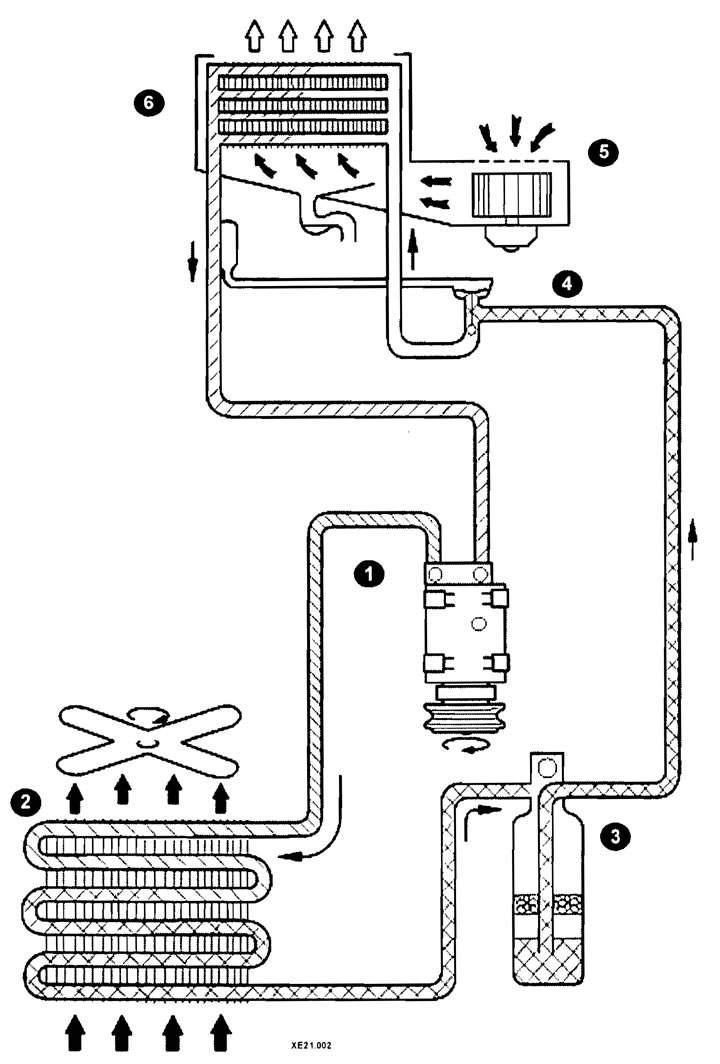
Air conditioning system operation diagram
1 - compressor;
2 - capacitor;
3 - battery (receiver);
4 - expansion tube;
5 - Fan block;
6 - evaporator.