
HyundaiBook.ru
Repair Chevrolet Repair Honda Repair Toyota Repair Land Rover Repair VAZ Repair Renault Repair Nissan
English Русский
Български
Беларускі
Український
Српски
Hrvatski
Română
Polski
Slovenský
Magyar
ArticlesSitemapContacts  


  Accent   Elantra   Getz   Grandeur   Sonata   Santa Fe   Tucson   Others
Accent 1 (1994-1999) Accent 2 (1999-2005) Accent 3 (2005-2010)
  • Main
  • Accent
  • X3 (1994-1999)
  • Power unit
  • Fuel supply (carburetor)
  • Checking the carburetor

Checking the carburetor (Hyundai Accent X3)

0
Contents: Shut-off solenoid valve (SCSV) ⇓ Open throttle device ⇓ Opening the throttle valve at fast…⇓
Check the following and repair or replace parts as necessary.

1. Check the fuel (jet) and air (jet and channel) passages for clogging. If they are clogged, thoroughly wash them with cleaning and washing agents and blow them out with compressed air. Do not use metal wire or other metal parts for cleaning.

2. Check the diaphragms for cracks and damage.

3. Make sure the needle valve operates easily. If the valve is difficult to move or is bent, replace it. If there is overflow, the valve is not seated tightly. Check carefully.

4. Check the fuel inlet filter (located above the needle valve) for blockages or damage.

5. Check the operation of the counter. Check the float and lever for deformation and damage and replace if necessary.

6. Check the operation of the throttle valve, check valve and drive. If they are jammed, wash them well and lubricate the drive with engine oil.

7. Check the float chamber cover and main body for cracks and damage.

Shut-off solenoid valve (SCSV)


1. Connect battery power directly to the shut-off solenoid valve terminals.
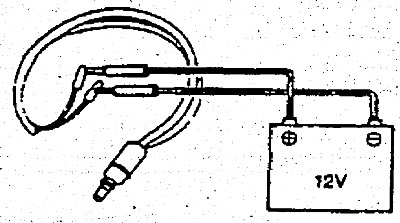
1. Connect battery power directly to…


2. Make sure that the valve operates with a characteristic sound.


3. Use a tester to check for contact between the terminals and the valve body.

4. Measure the resistance between the terminals.
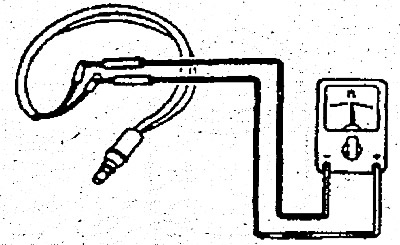
4. Measure the resistance between the…

  • Valve coil resistance is 48-60 Ohm (at 20°C)

Open throttle device


Make sure the device is working properly. When the flow rises, resistance should be felt. When the rod is released, it should quickly return to its initial position. If resistance is not felt when rising, the diaphragm or relief valve is faulty. If the rod returns slowly, the valve is stuck. In all such cases, replace the defective unit.

Opening the throttle valve at fast idle speed
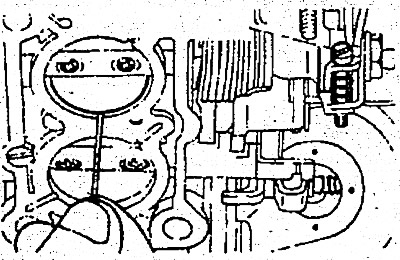


Opening the throttle valve at fast idle…


1. Measure the gap between the wall and the throttle valve (with a calibrated drill bit).
  • Gap - 0.93 mm

2. If the clearance is not within specification, adjust it with the idle speed adjustment screw to the standard value.

Rotation of the screwOpening the damperIdle speed
ClockwiseMoreIt is increasing
CounterclockwiseLessDecreases
This article is available at russian, bulgarian, belarusian, ukrainian, serbian, croatian, romanian, polish, slovak, hungarian
This article has been reviewed by: Konstantin Smirnov
Add to social network:

Previous
Accent 1: Fuel supply (carburetor)
Next

Assembling the carburetor
Disassembling the carburetor
Removal the carburetor
The structure and components of the carburetor
Replacing the fuel filter
Installing a carburetor
Engine control — removal, inspection and installation
We recommend other articles on the topic of Hyundai manuals:

2.0L Engine Timing Belt — Checking Tension/Adjusting Hyundai Elantra 1 (1990-1995, petrol)
Checking engine oil Hyundai Getz (2002-2011)
Checking the engine oil level Hyundai Sonata 3 (1993-1998)
Checking and replacing engine coolant Hyundai Santa Fe 2 (2007-2012, petrol)
Checking and adjusting valve clearances Hyundai Tucson 1 (2005-2010)
Checking the technical condition of the car Hyundai Matrix (2001-2010, petrol)

Link in different formats to this article

Visitor comments
No comments yet


How much will 27 + 34 ?


Accent 3 (2005-2010) 
  • General information
  • User manual
  • Maintenance
  • Power unit
  • Engine repair
  • Cooling and lubrication system
  • Power and exhaust system
  • Engine electrical equipment
  • Engine management
  • Transmission
  • Clutch
  • Mechanical gearbox
  • Automatic gearbox
  • Chassis
  • Front suspension
  • Rear suspension
  • Wheels and tires
  • Steering
  • Brake system
  • Body
  • Exterior (external elements)
  • Interior (internal elements)
  • Heating and ventilation
  • Electrical equipment
  • Equipment and devices
  • Electrical circuits
Accent 2 (1999-2005) 
  • User manual
  • Control devices
  • Starting engine and driving
  • Troubleshooting
  • Power unit
  • SOHC engines
  • DOHC engines
  • Lubrication system
  • Cooling system
  • Decreased toxicity
  • Fuel system
  • Ignition system
  • Transmission
  • Clutch
  • Mechanical gearbox
  • Automatic gearbox
  • Axles and drive shafts
  • Chassis
  • Car suspension
  • Steering
  • Brake system
  • Body
  • Exterior (external elements)
  • Interior (internal elements)
  • Air conditioning system
  • Electrical equipment
  • Equipment and devices
  • Power devices
Accent 1 (1994-1999) 
  • General information
  • Maintenance
  • Power unit
  • SOHC engines
  • DOHC engines
  • Cooling system
  • Intake and exhaust systems
  • Fuel supply (1.3 l, injection)
  • Fuel supply (1.5 l, injection)
  • Fuel supply (carburetor)
  • Transmission
  • Clutch
  • Manual gearbox
  • Automatic gearbox
  • Drive shafts
  • Chassis
  • Car suspension
  • Steering
  • Brake system
  • Body
  • Body elements
  • Electrical equipment
  • Equipment and devices
  • Electrical circuits
HyundaiBook.ru © 2018-2026 · Mobile version · Sitemap: EN BG BY UA RS HR RO PL SK HU · Administration · Site search · Hyundai owners Accent 1 · Accent 2 · Accent 3 · Elantra 1 · Elantra 2 · Elantra 3 · Getz · Sonata 3 · Sonata 4 · Santa Fe 2 · Tucson 1 · Tucson 2 · Matrix ·
This site uses cookies to optimize its functionality. By continuing, you agree to our terms.