


2. Check the fluid level using the marks on the outside of the tank. At normal temperature (21-27°C), the fluid level in the tank should be between the "MAX" and "MIN" marks.
3. If the level in the tank is low, add fluid up to the "MAX" mark.
Caution: Do not add too much liquid.
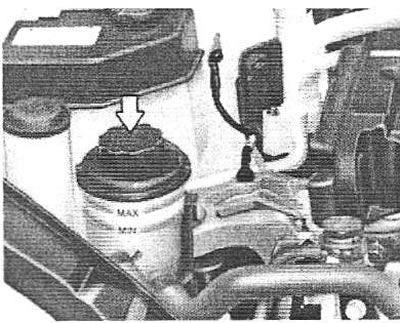
4. Start the engine and turn the steering wheel several times from one extreme position to the other until the release of air bubbles in the hydraulic drive supply tank stops. To perform this operation, the front wheels should be raised so as not to create excessive loads in the steering gear elements.
Note: To ensure the durability and reliability of the steering wheel, do not rotate the steering wheel when the vehicle is stationary. Minimal movement of the vehicle when rotating the steering wheel significantly reduces the load on the steering gear parts.
5. Stop the engine and check the change in the fluid level. The fluid temperature should be 50-60°C. The fluid level on the running and stopped engine should not differ by more than 15 mm.
Note: If the fluid level has changed by more than 15 mm, bleed the system by turning the steering wheel from one extreme position to the other with the engine running.