


A battery works because two different metals, when placed in an acidic solution, create a potential difference, resulting in the generation of an electric current.
Execution order
1. The cars are equipped with maintenance-free batteries.
2. There is no need to add distilled water to the battery.
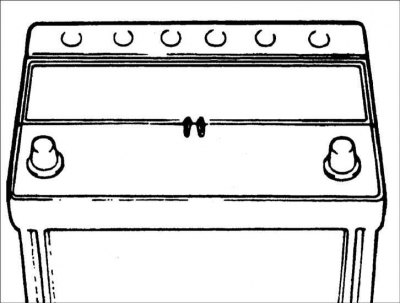
3. The battery is completely sealed except for small ventilation holes in the lid.
Testing the battery
1. Check the battery for external damage that could lead to electrolyte loss. Determine the cause of the damage. Clean the battery with a solution of soda and water.
2. Replace the battery
3. Check the specific gravity of the electrolyte.
4. Enter the specific gravity correction depending on the electrolyte temperature.
5. Over 1,100
Charge the battery slowly.
Charge the battery with a current of no more than 5 A for 14 hours, then check the battery under load.
6. 1,100–1,220
Recharge the battery.
Please pay attention to the charging process and precautions.
7. Over 1,220
Check the battery under load.
8. Check the battery under load.
9. Discharge the battery with a discharge current of 200A for 15s, then check the battery voltage
10. More than 9.6 V
The battery is fine.
11. 9.6–6.5 V
Perform a quick charge of the battery, then test it under load.
Warning: If the battery voltage is still less than 9.6V after repeated charging and discharging, the battery must be replaced.
12. Less than 6.5 V
Replace the battery.