


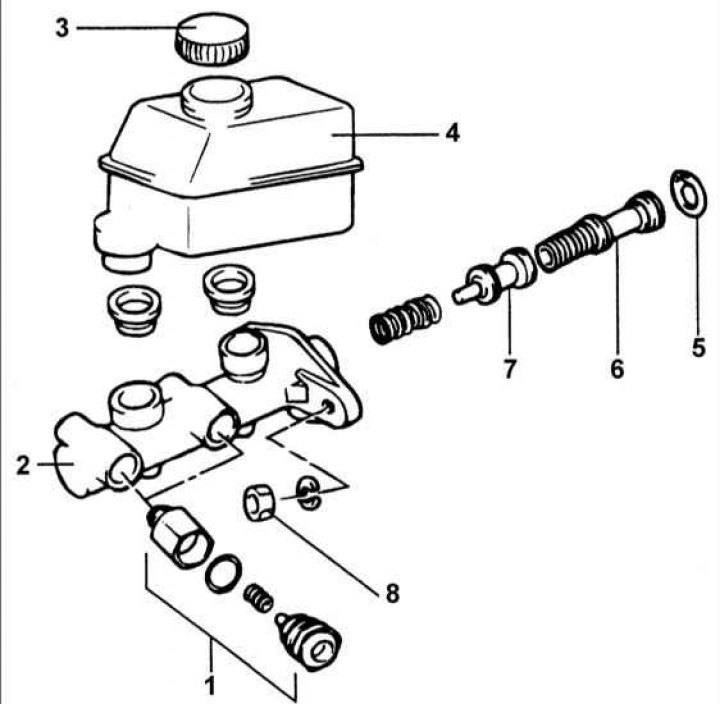
1 – pressure regulator; 2 – main brake cylinder; 3 – cork; 4 – expansion tank; 5 – retaining ring; 6 – primary piston; 7 – secondary piston; 8 – nut, 8–12 Nm.
Removal
1. Disconnect the electrical connector from the brake fluid level sensor.
2. Disconnect the brake pipes from the master cylinder and close the open holes with suitable plugs.
Warning! Brake fluid dissolves paint, plastic and wire insulation, so if the fluid accidentally comes into contact with the vehicle's paintwork or components, rinse them with plenty of water.
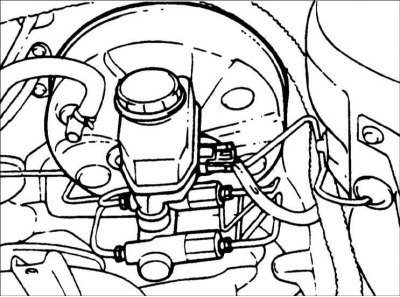
3. Disconnect the pressure regulator bracket and remove the master brake cylinder. Unscrew the nuts securing the master brake cylinder.
Disassembly
1. Remove the plug and drain the brake fluid from the reservoir.
2. Remove the reservoir from the master cylinder.
Warning: If necessary, secure the master cylinder in a vice, clamping the main body portion of the master cylinder, not the flange.
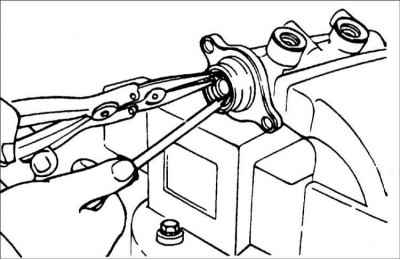
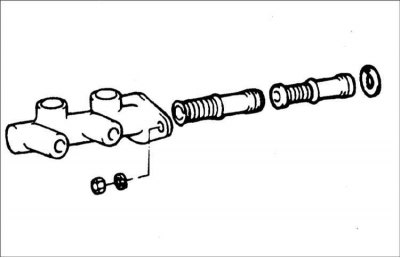
3. Remove the primary and secondary pistons from the master cylinder housing.
Warning: Be careful not to damage the master cylinder bore diameter.
Warning! Do not disassemble the primary and secondary pistons.
Examination
1. Check the inside surface of the master cylinder housing for rust and wear.
2. Inspect the primary and secondary pistons for rust, scoring or wear.
3. Check the primary and secondary pistons for deterioration.
Assembly
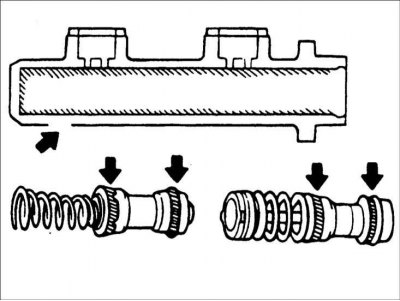
1. Lubricate the inside surface of the master cylinder and the outside surfaces of the primary and secondary pistons with the recommended brake fluid.
Recommended brake fluid: DOT3
2. Carefully insert the spring and secondary piston into the master cylinder bore.
3. Carefully insert the primary piston into the master cylinder bore.
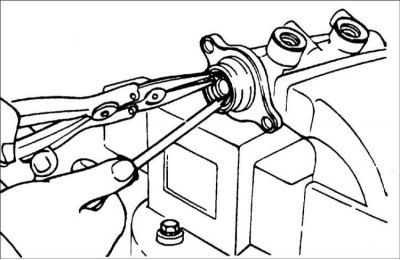
4. Press the primary piston and install the snap ring into the master cylinder bore diameter groove.
5. Install the cap on the tank.
6. Lubricate the two O-rings (inside and outside) with brake fluid and insert them into the master cylinder body.
Warning: Each time the tank is replaced, the sealing rings must be replaced.
7. Press the reservoir firmly into the master cylinder seals.
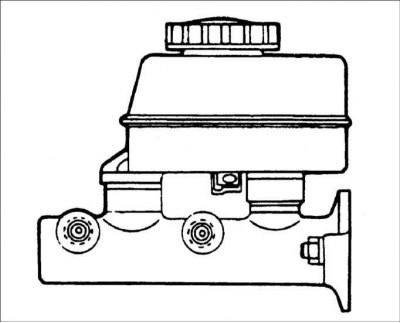
8. Connect the electrical connector to the brake fluid level sensor.
Installation
1. Install the master cylinder on the brake booster and screw on the two nuts. Tighten the two master cylinder mounting nuts.
[The original article is posted on the portal hyundaibook]
Tightening torque: 8–12 Nm
2. Connect the two brake pipes and the electrical connector to the brake fluid level sensor.
Tightening torque of tubes: 13–17 N·m
3. Fill the brake fluid and bleed air from the hydraulic circuit of the brake system.