


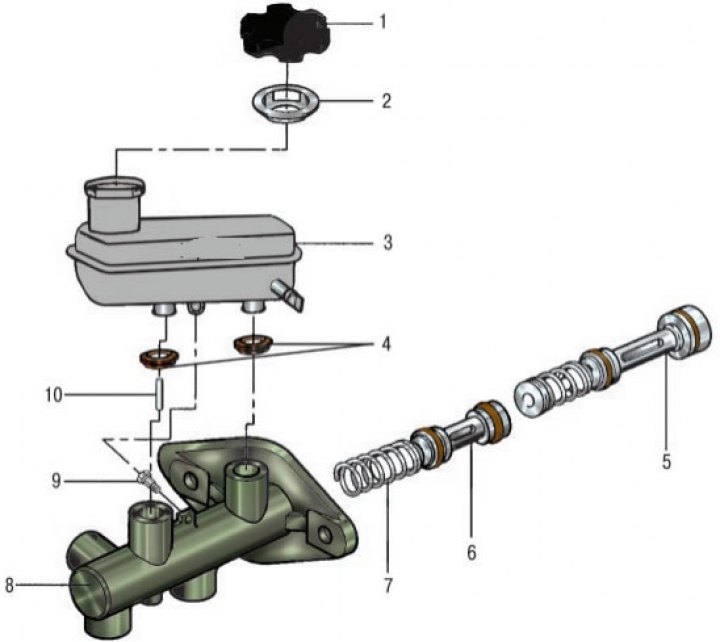
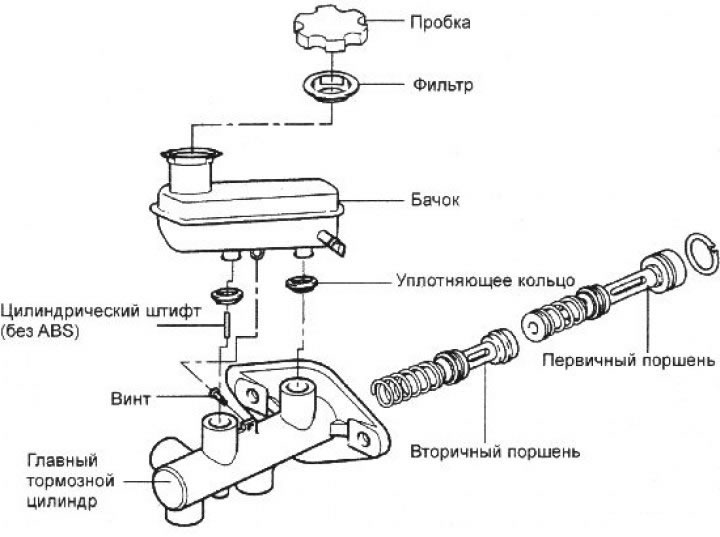
Master Brake Cylinder: 1 - brake and clutch hydraulic fluid reservoir cap; 2 - filter; 3 - brake and clutch hydraulic fluid reservoir; 4 - sealing gasket; 5 - piston of the front cavity of the main brake cylinder; b - piston of the rear cavity of the main brake cylinder; 7 - spring; 8 - master brake cylinder; 9 - screw for fastening the tank; 10 - cylindrical pin (on vehicles equipped with ABS)
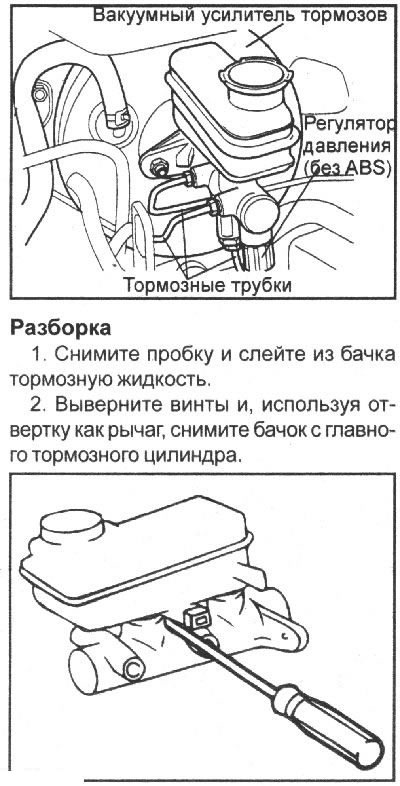
3. Disconnect the brake pipes from the master cylinder and close the open holes with suitable plugs.
Attention!
- When removing the master cylinder, avoid bending or damaging the brake pipes.
- To prevent brake fluid leakage, wrap the hose connections with rags or napkins.
4. Loosen the nuts and remove the master brake cylinder.
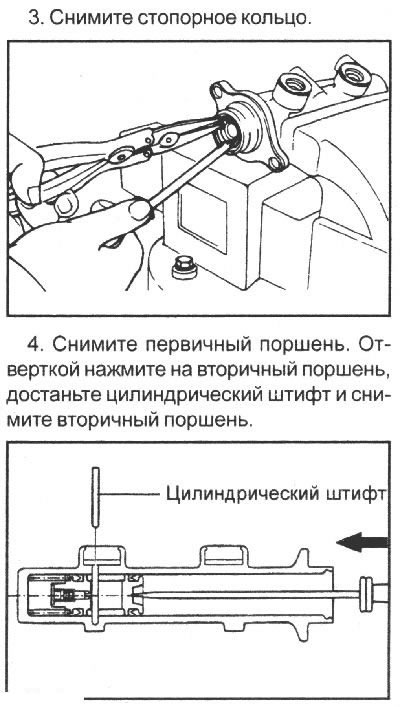
Note: Do not disassemble the primary and secondary pistons.
Examination
1. Check the inner surface of the master cylinder housing for rust and wear.
2. Check the brake master cylinder for wear or damage. Clean or replace the brake master cylinder if necessary.
Note.
- 1) If the hole in the brake master cylinder housing is damaged, replace the brake master cylinder assembly.
- 2) To remove dirt, clean the master cylinder body with isopropyl alcohol.
Assembly
1. Lubricate the inside surface of the master cylinder and the outside surfaces of the primary and secondary pistons with the recommended brake fluid.
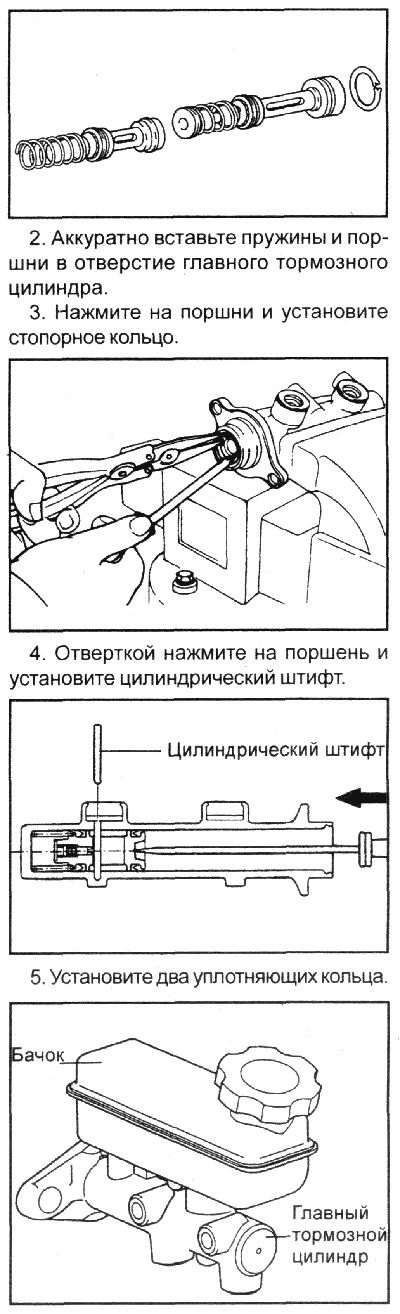
6. Firmly insert the reservoir into the sealing rings of the master cylinder.
Installation
1. Install the brake master cylinder to the brake booster.
2. Connect the brake pipes to the master cylinder.
Attention! Check the brake pipes for kinks and twists.
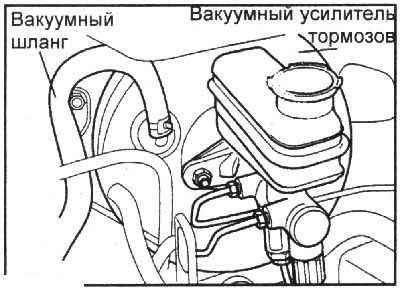
3. Fill the brake fluid and bleed air from the hydraulic circuit of the brake system.