


Removal
Caution! Brake fluid dissolves paint, plastic and wire insulation, so if the fluid accidentally gets on the car's paintwork or its components, wash them with plenty of water.
Note: Before assembly, make sure that all parts are free of dust and foreign particles.
1. Replace brake hoses with signs of twisting, cracks and signs of fluid leakage.
2. Using a wrench, disconnect the brake hose from the brake pipe.
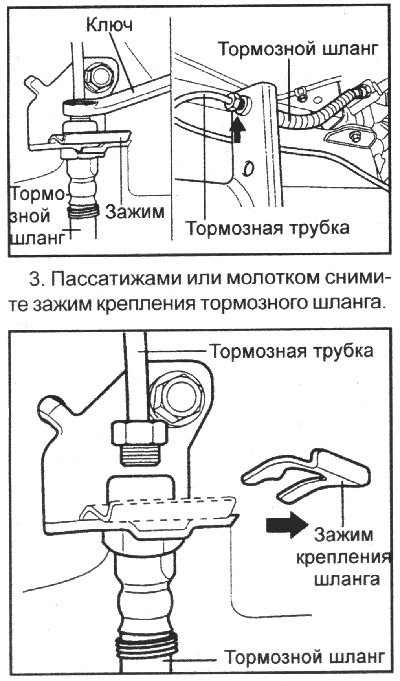
4. Remove the brake hose.
Examination
1. Check the brake pipes for cracks, damage and corrosion.
2. Check the brake hoses for cracks and local swelling. Replace the brake hose if necessary.
3. Check the brake hose union nuts for damage and leaks.
Installation
1. Install the brake hose without twisting it.
2. Brake hoses should be installed as far as possible from welds, edges or moving parts of the vehicle.
- 1) Align the brake hose tip with the bracket groove.
- 2) Install the hose clamp.
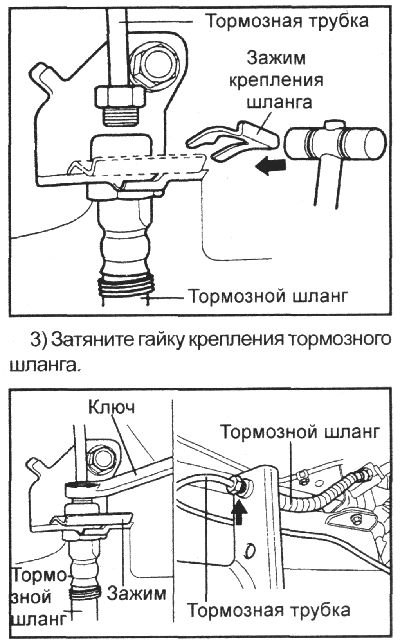
3. Tighten all connections to the specified torques.
- Tightening torque of connecting nuts: 13–17 N·m
- Tightening torque of brake hoses to front wheel calipers: 25-30 Nm
4. After connecting the brake hoses, bleed the air from the hydraulic brake drive.