Removal
1. Release the parking brake.
2. Remove the wheel, unscrew the screw and remove the brake drum.
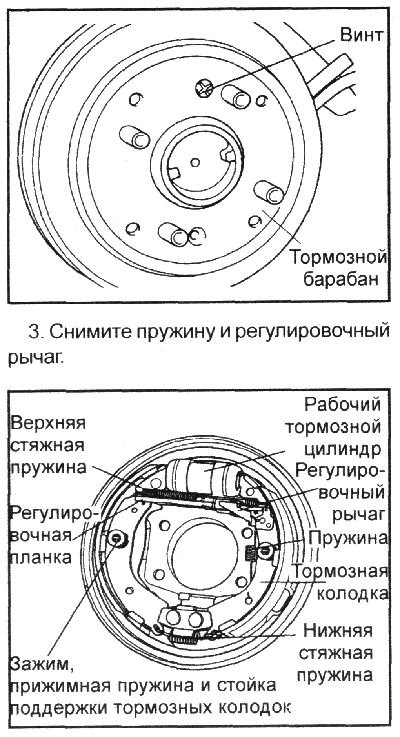
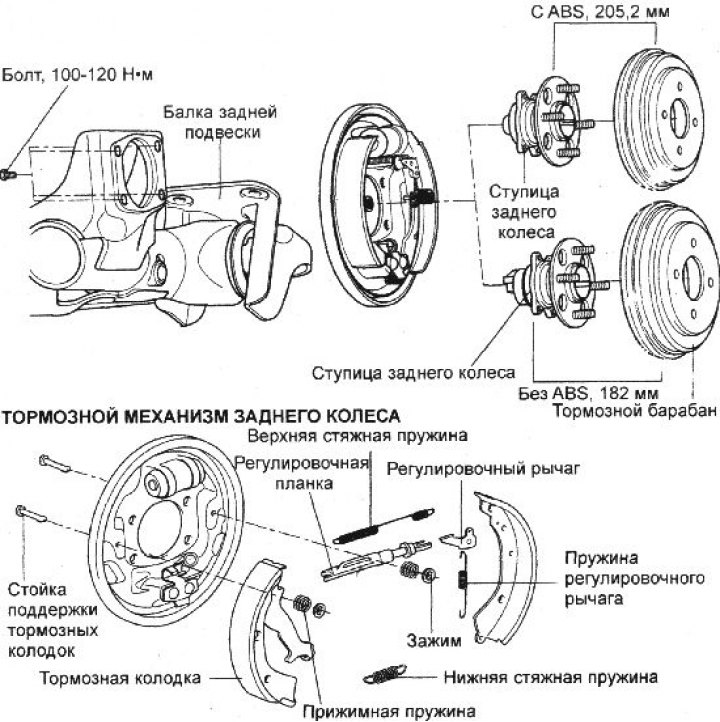
4. Remove the brake shoe support bracket clamps, hold-down springs and brake shoe support brackets.
5. Press the pads and remove the pad adjuster.
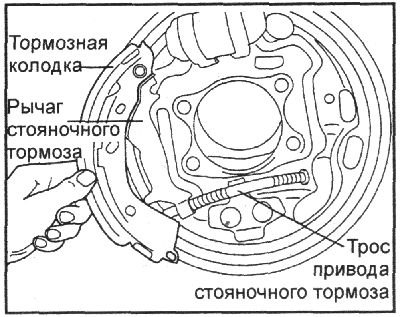
6. Remove the lower and upper brake shoe tension springs and disconnect the cable from the parking brake actuator lever.
Examination
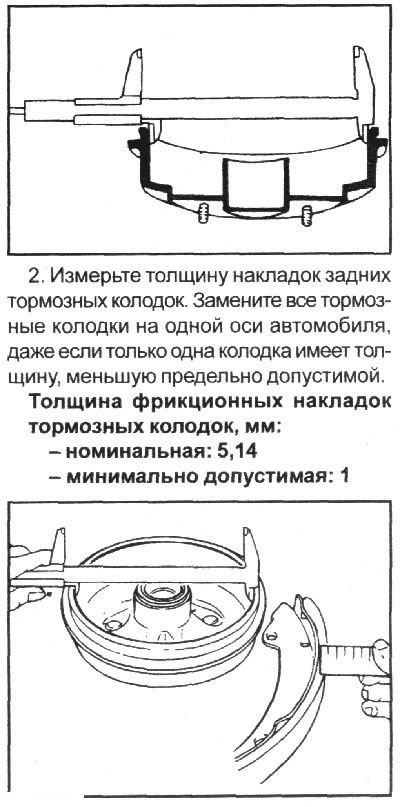
1. Measure the inner diameter of the brake drum. Use a dial indicator to check the runout of the brake drum. Replace the brake drum if the inner diameter of the drum exceeds the maximum allowable value.
Nominal diameter of brake drum, mm:
- 6eZ ABS: 180
- with ABS: 203.2
Maximum permissible runout of the brake drum: 0.005 mm
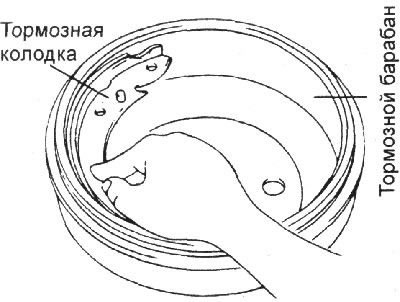
3. Check that the brake shoe fits evenly against the brake drum.
4. Inspect the wheel brake cylinders for brake fluid leaks.
5. Inspect the brake shield for wear or damage.
Installation
1. Lubricate the following contact points of the brake pads with grease:
- Contact points of the brake pads with the brake shield.
- Contact points of the brake pads with the backing plate.
Recommended lubricant: SAE J310, NLGI No.2
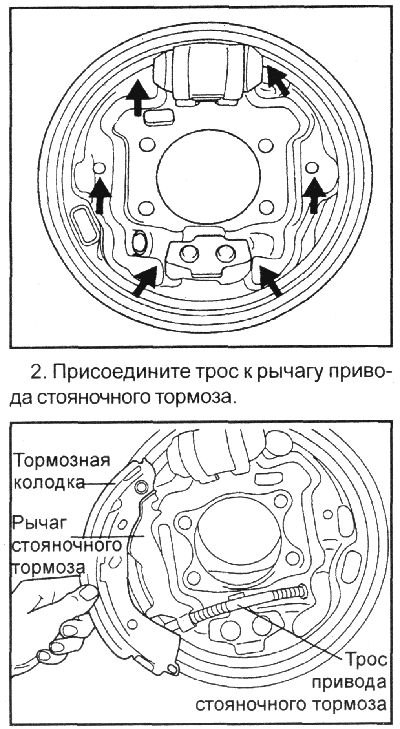
3. Install the brake shoes and pressure springs.
4. Install the adjusting bar and brake shoe tension springs.
5. Install the adjusting lever and adjusting lever spring.
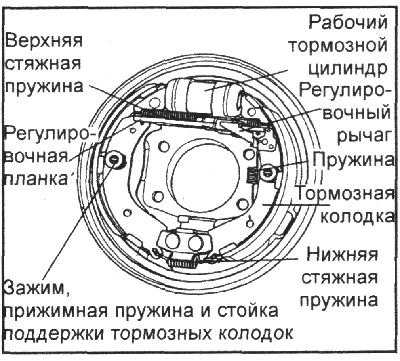
6. After installing the brake drum, tighten the parking brake lever several times.
Caution! Do not allow grease or other contaminants to come into contact with the working surface of the brake drum.
Note.
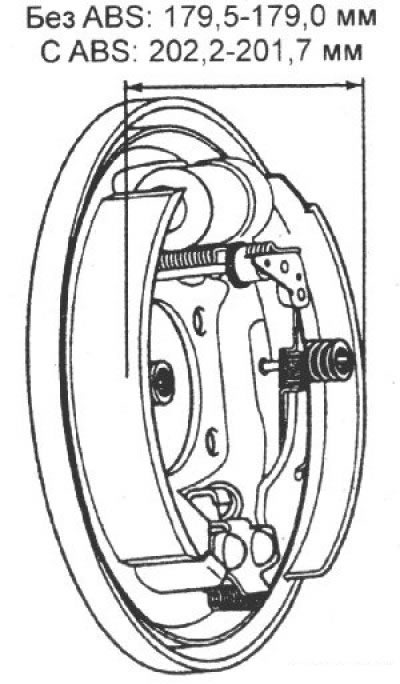
- 1. Before installing the brake drum, check the outside diameter of the brake shoes.
- 2. Adjust the clearance between the brake shoes and the drum by pressing the brake pedal more than 20 times with a force of 10 kg.
Outer diameter of brake pads, mm:
- without ABS: 179.5–179.0
- with ABS: 202.2–201.7