


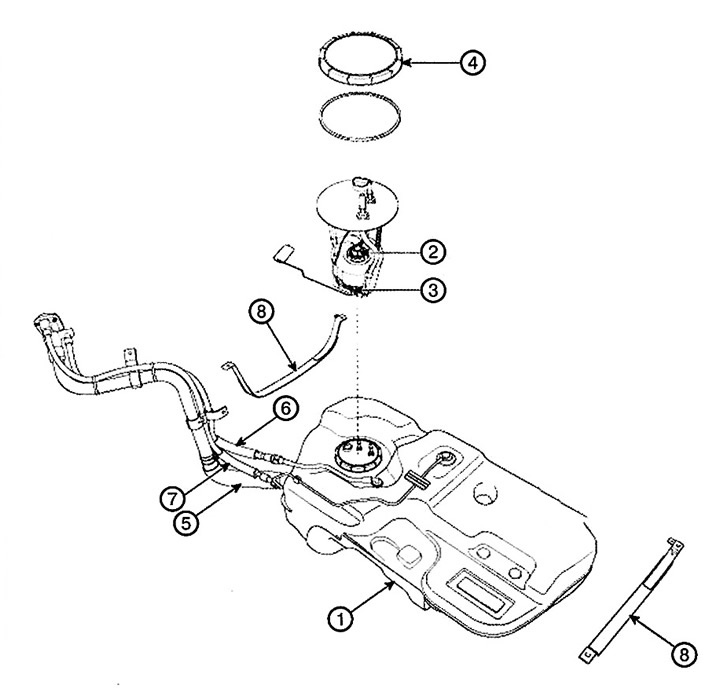
1. Fuel tank
2. Low pressure fuel pump
3. Fuel sensor
4. Fuel pump cover
5. Filler neck hose
6. Breather hose
7. Ventilation hose
8. Fuel tank mounting clamp
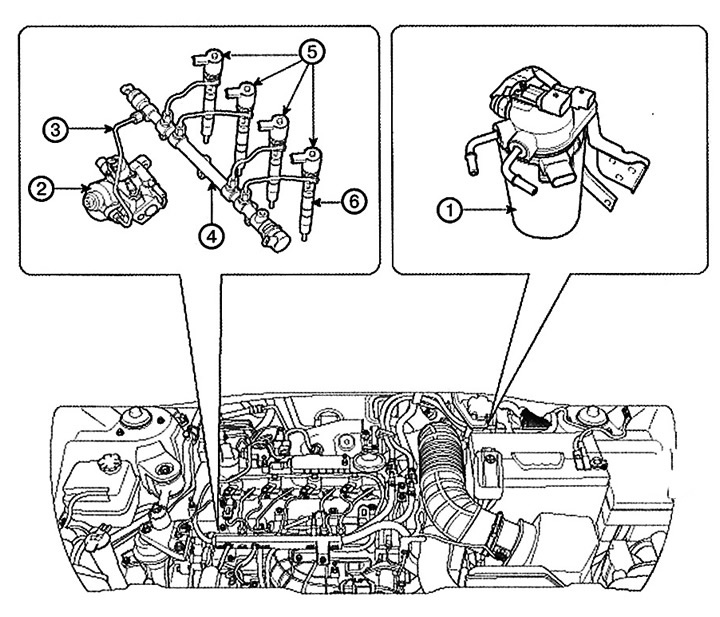
1. Fuel filter
2. High pressure fuel pump
3. High pressure fuel line (between the fuel pump and the fuel rail)
4. Fuel rail
5. High pressure fuel line (between the fuel rail and the injector)
6. Nozzle
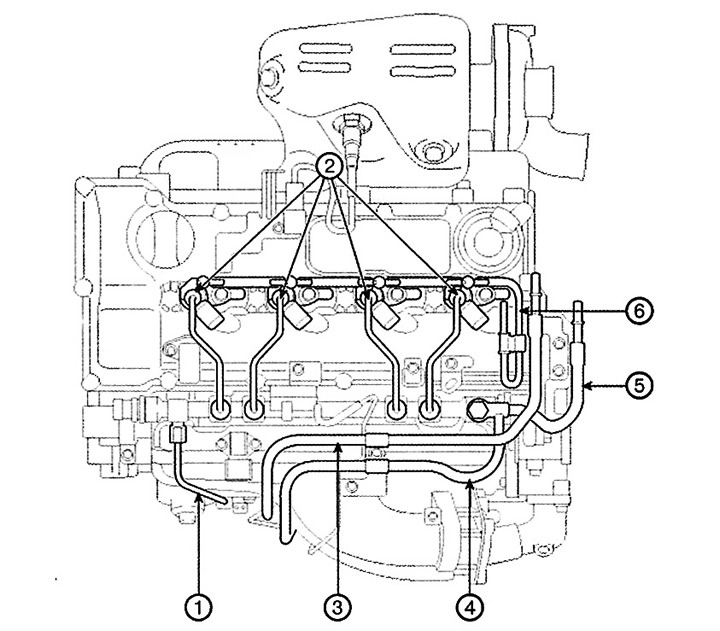
1. High pressure fuel line (between the high pressure fuel pump and the fuel rail)
2. High pressure fuel line (between the fuel rail and the injector)
3. Fuel supply line (between the fuel filter and the high-pressure fuel pump)
4. Return fuel line (between the high pressure fuel pump and the fuel tank)
5. Return fuel line (between the fuel rail and the fuel tank)
6. Return fuel line (between the injector and the fuel filter)
Attention.
The fuel injection system with a fuel rail operates at very high pressure (approximately 1800 bar). Therefore, it is prohibited to carry out work on the injection system with the engine running and for 30 seconds after the engine has stopped.
It is necessary to keep the system parts and the work area clean.
Pay attention to foreign substances.
The protective cover of the nozzle, tube or hose must be removed immediately before installation.
Do not remove the injector unless necessary.
When installing the injector:
- Wash the contact surface of the injector and replace the washer (gasket) with a new one.
- Apply oil to the injector seal ring.
- To avoid impact damage, insert the injector into the cylinder head vertically.
When installing the high pressure fuel line:
- Reuse of the high pressure fuel line is not permitted.
- How to tighten a flange nut correctly.