HyundaiBook.ru
Repair Chevrolet Repair Honda Repair Toyota Repair Land Rover Repair VAZ Repair Renault Repair Nissan
English Русский
Български
Беларускі
Український
Српски
Hrvatski
Română
Polski
Slovenský
Magyar
ArticlesSitemapContacts  


  Accent   Elantra   Getz   Grandeur   Sonata   Santa Fe   Tucson   Others
Tucson 1 (2005-2010) Tucson 2 (2009-2015)
  • Main
  • Tucson
  • LM (2009-2015)
  • Power unit
  • Engine power system
  • Fuel system of gasoline engines

Fuel system of gasoline engines (Hyundai Tucson LM)

0
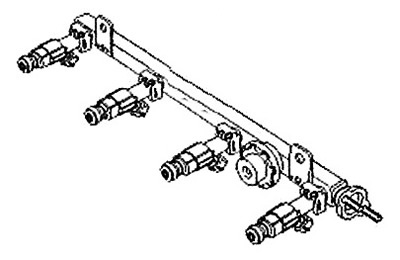
Contents: Fuel tank ⇓ Fuel pump ⇓ Fuel filter ⇓ Filler neck assembly ⇓ Fuel rail ⇓
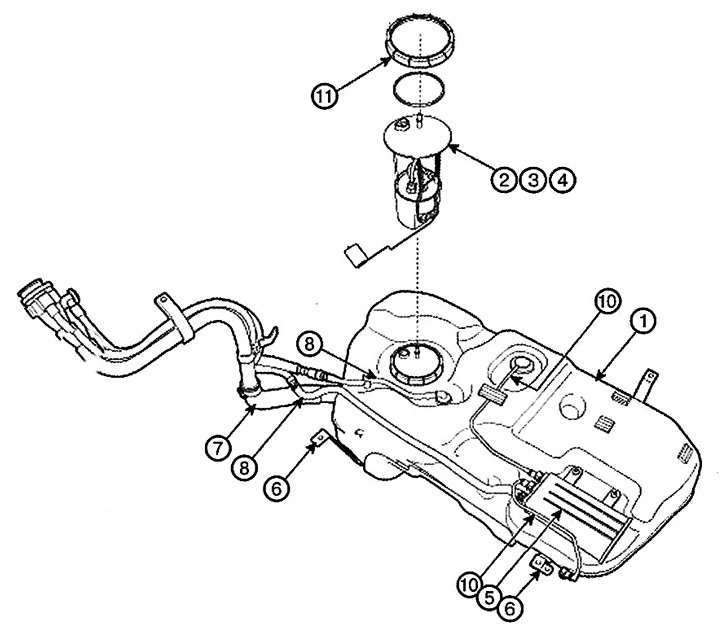
1. Fuel tank

1. Fuel tank
2. Fuel pump
3. Fuel filter
4. Fuel pressure regulator
5. Carbon filter
6. Fuel tank mounting clamp
7. Filler neck hose
8. Breather hose
9. Ventilation hose
10. Steam pipeline
11. Fuel pump cover


Fuel tank


Removal


1. Release any residual pressure in the fuel line (see section "Relief of residual pressure in the fuel line").

2. Remove the rear left seat.

3. Remove the fuel pump servicing hatch (A).
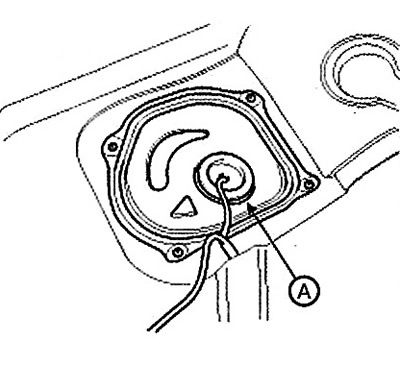
3. Remove the fuel pump servicing hatch…


4. Disconnect the fuel pump connector (A).

5. Disconnect the quick-release coupling (B) of the fuel supply line.
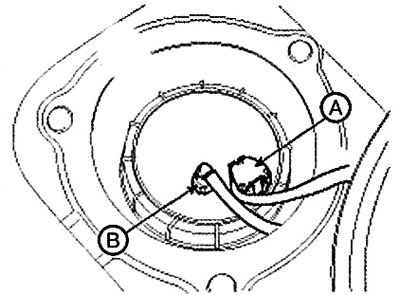
5. Disconnect the quick-release…


6. Remove the rear left wheel.


7. Raise the vehicle and support the fuel tank with a jack.

8. Remove the center muffler assembly.

9. Remove the driveshaft.

10. Disconnect the filler neck hose (A).
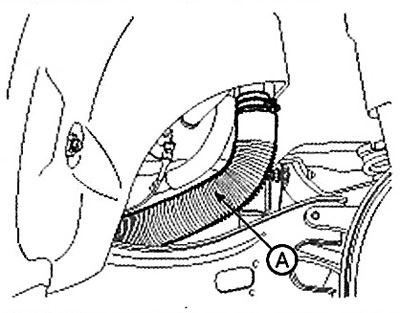
10. Disconnect the filler neck hose (A).


11. Disconnect the quick-release connection (A) of the breather hose and the quick-release connection (B) of the ventilation hose.
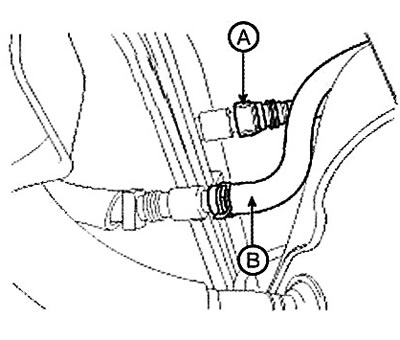
11. Disconnect the quick-release…


12. Disconnect the quick-release coupling (A) of the steam pipe.
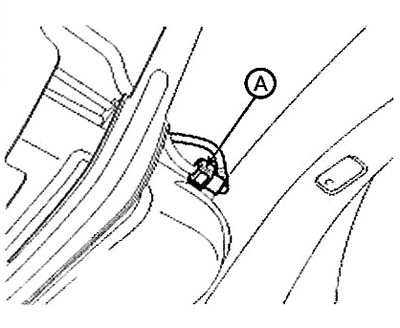
12. Disconnect the quick-release…


13. Remove the fuel tank mounting strap (A) and the fuel tank.
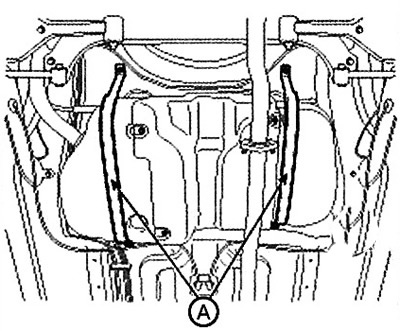


13. Remove the fuel tank mounting strap…


(This publication is based on information from the portal: www.hyundaibook.ru)

Installation


Installation is carried out in reverse order.

Note: Tightening torque: Fuel tank clamp mounting nuts: 39.2-54.0 Nm.


Fuel pump


Removal


1. Release residual pressure in the fuel line.

2. Remove the rear left seat.

3. Remove the fuel pump service hatch (A).
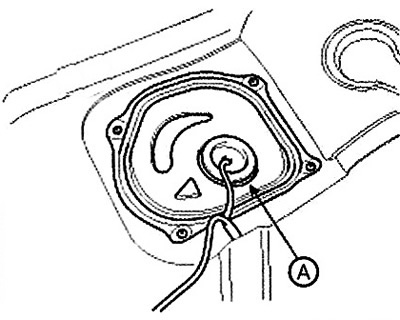
3. Remove the fuel pump service hatch…


4. Disconnect the fuel pump connector (A).

5. Disconnect the quick-release coupling (B) of the fuel supply line.

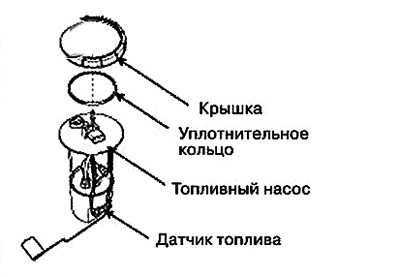
6. Remove the cover (C) using the special tool (№: 09310-2S100), then remove the fuel pump from the fuel tank.
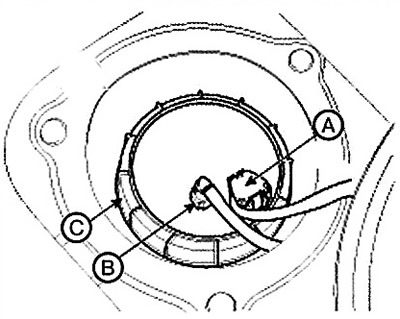
6. Remove the cover (C) using the…


Installation


Installation is carried out in reverse order.


Note:
  • Fuel pump cover fastening: 58.9 - 68.7 Nm.
  • Ensure that the fuel pump is installed correctly (pay attention to the groove (A) on the fuel tank).
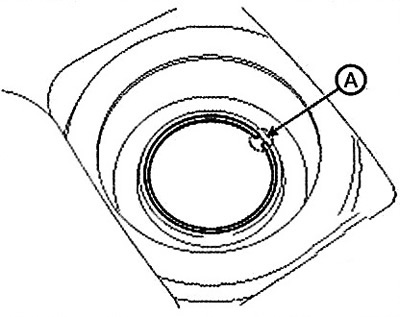

Ensure that the fuel pump is installed…


Fuel filter


Replacement


1. Remove the fuel pump.

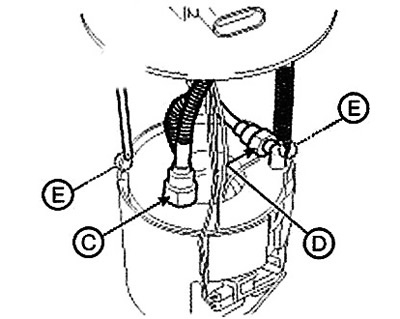
2. Disconnect the electric pump wiring connector (A) and the fuel sensor wiring connector (B).

3. Disconnect the quick-release couplings (C, D) of the fuel line.

4. Remove the head (F) assembly by releasing the fasteners (E).
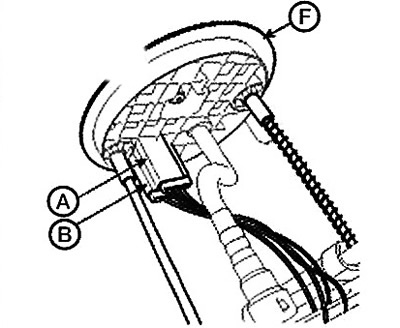
4. Remove the head (F) assembly by…


5. Remove the housing (B) by releasing the fasteners.
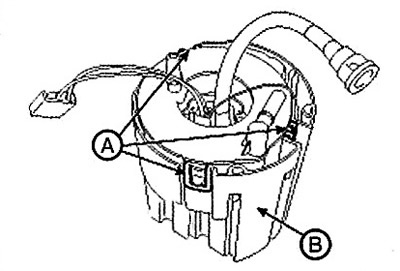


5. Remove the housing (B) by releasing…


6. Disconnect the ground wire (A).

7. Release the clamps, remove the fuel pressure regulator (B), then remove the auxiliary pump (C).
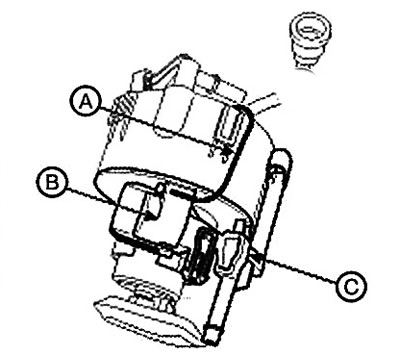
7. Release the clamps, remove the fuel…


Caution: Do not damage the sealing ring.


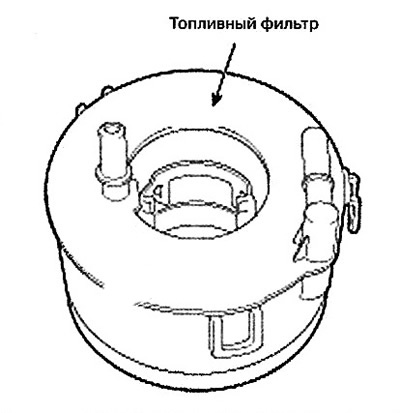
8. Separate the electric pump (A) from the fuel filter.
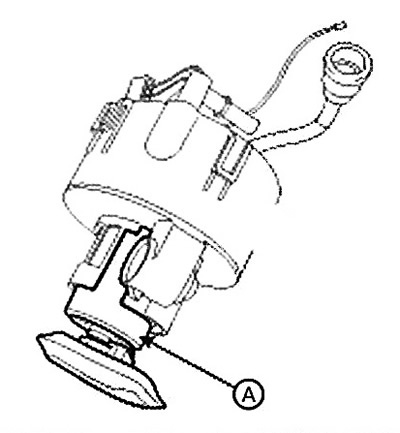
8. Separate the electric pump (A) from…


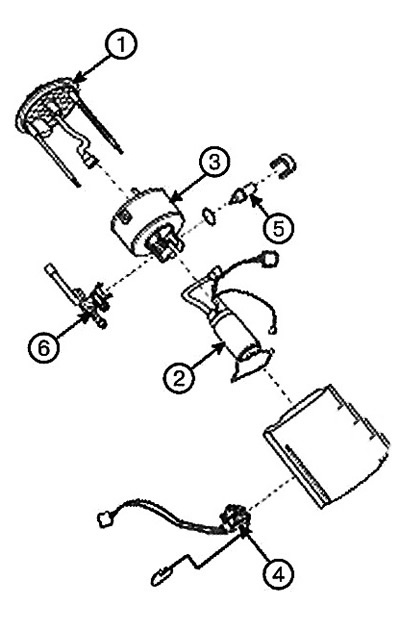
1. Head assembly

1. Head assembly
2. Electric pump
3. Fuel filter
4. Fuel sensor
5. Fuel pressure regulator
6. Additional pump


Filler neck assembly


Removal


1. Open the filler cap and remove the screws (A) securing the filler cap assembly.
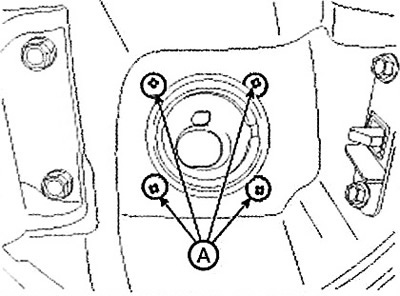
1. Open the filler cap and remove the…


2. Remove the left rear wheel and wheel arch protection.

3. Disconnect the filler neck hose (A).
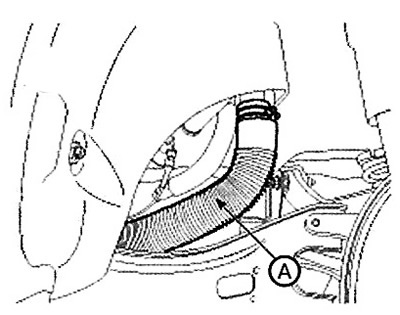
3. Disconnect the filler neck hose (A).


4. Disconnect the quick-release coupling (A) of the breather hose and the ventilation hose (B).
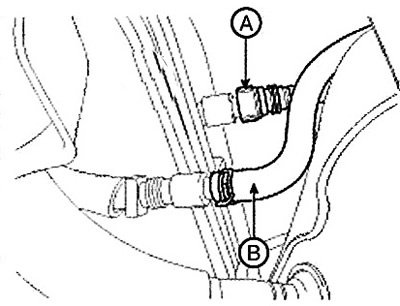
4. Disconnect the quick-release…


5. Loosen the bracket mounting nut (A) and remove the filler neck assembly.
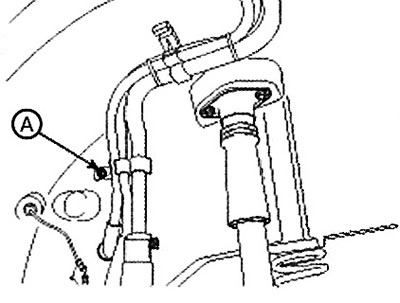


5. Loosen the bracket mounting nut (A)…


Installation


Installation is carried out in reverse order.

Note: Tightening torque: Filler neck bracket mounting nuts: 3.9 - 5.9 Nm.


Fuel rail


Removal


1. Turn the ignition key to the OFF position and disconnect the negative (-) cable from the battery.

2. Relieve residual pressure in the fuel line (see section "Relieving residual pressure in the fuel line").

Caution: A diagnostic trouble code (DTC) may be displayed after removing the fuel pump relay. Clear this code using a scanner (GDS) after completing the work to relieve residual pressure in the fuel line.


3. Disconnect the injector connector (A).

4. Loosen the mounting bolt (B) of the harness bracket.

5. Loosen the fastening nut and disconnect the fuel supply line (C).

6. Loosen the mounting bolt (D) and remove the fuel rail and injectors as an assembly.
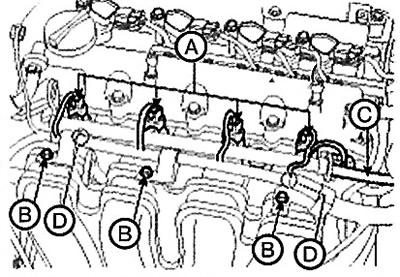
6. Loosen the mounting bolt (D) and…


Installation


Installation is carried out in reverse order.


Note: Tightening torque:
  • Fuel rail mounting bolt: 18.6 - 23.5 Nm.
  • Fuel rail and fuel supply line fastening nut: 7.8 - 9.8 Nm.
This article is available at russian, bulgarian, belarusian, ukrainian, serbian, croatian, romanian, polish, slovak, hungarian
This article has been reviewed by: Konstantin Smirnov
Add to social network:

Previous
Tucson 2: Engine power system
Next

On-car service
Diesel engine fuel system — device
Removal and installation of fuel tank of diesel engines
Fuel pump for diesel engines
Filler neck assembly for diesel engines
Fuel filter for diesel engines
High pressure fuel pump for diesel engines
We recommend other articles on the topic of Hyundai manuals:

Fuel system Hyundai Accent 1 (1994-1999)
Technical data of the fuel system of gasoline engines Hyundai Elantra 3 (2000-2006)
Fuel system specifications for gasoline engines Hyundai Getz (2002-2011)
Fuel delivery system — tank, fuel lines and connections Hyundai Sonata 3 (1993-1998)
Distributed fuel injection system Hyundai Santa Fe 2 (2007-2012, petrol)
Table 2.19. Troubleshooting the Fuel Supply System Hyundai Matrix (2001-2010, petrol)
Link in different formats to this article

Visitor comments
No comments yet


How much will 31 + 15 ?


Tucson 2 (2009-2015) 
  • General information
  • Faults en route
  • User manual
  • Maintenance
  • Power unit
  • Gasoline engines
  • Diesel engines
  • Engine cooling system
  • Engine lubrication system
  • Engine power system
  • Control system
  • Intake and exhaust systems
  • Engine electrical equipment
  • Transmission
  • Clutch
  • Mechanical gearbox
  • Automatic gearbox
  • Drive shafts
  • Chassis
  • Suspension and wheels
  • Brake system
  • Steering
  • Body
  • Exterior (external elements)
  • Interior (internal elements)
  • Security systems
  • Air conditioning and heater
  • Electrical equipment
  • Electrical circuits
Tucson 1 (2005-2010) 
  • General information
  • User manual
  • Maintenance
  • Power unit
  • Gasoline engine G6BA
  • Gasoline engine G4GC
  • Diesel engine D4EA
  • Fuel system (gasoline)
  • Fuel system (diesel)
  • Engine lubrication system
  • Engine cooling system
  • Engine electrical equipment
  • Transmission
  • Clutch
  • Car gearbox
  • Drive shafts and cardan
  • Chassis
  • Car suspension
  • Steering
  • Brake system
  • Body
  • Exterior (external elements)
  • Interior (internal elements)
  • Air conditioning and heater
  • Airbags
  • Electrical equipment
  • Equipment and devices
  • Electrical circuits
HyundaiBook.ru © 2018-2026 · Mobile version · Sitemap: EN BG BY UA RS HR RO PL SK HU · Administration · Site search · Hyundai owners Accent 1 · Accent 2 · Accent 3 · Elantra 1 · Elantra 2 · Elantra 3 · Getz · Sonata 3 · Sonata 4 · Santa Fe 2 · Tucson 1 · Tucson 2 · Matrix ·
This site uses cookies to optimize its functionality. By continuing, you agree to our terms.