


The combustion efficiency of fuel can be improved and the following effects can be achieved:
- the compression pressure is insufficient to initiate the reaction and incomplete combustion of the fuel, which in turn leads to:
- main fuel injection ignition delay;
- reducing pressure during fuel combustion and smoothing out pressure peaks (softer combustion).
These effects reduce combustion noise, improve fuel economy and in many cases reduce exhaust emissions. In the case of unloading speed without control fuel injection in accordance with compression, only a slight increase in pressure before TDC occurs, which reaches a maximum relatively sharply at the point of maximum pressure.
The sharp increase in pressure together with the steep peak makes a significant contribution to the creation of combustion noise in a diesel engine. As shown in the unloading rate curve with control injection, the pressure near TDC reaches a slightly higher value and the pressure increases at a slower rate. Since it reduces ignition delay, pilot injection makes an indirect contribution to engine torque generation. Specific fuel consumption may increase or decrease as a function of the main injection and the time between the pilot and main fuel injection.
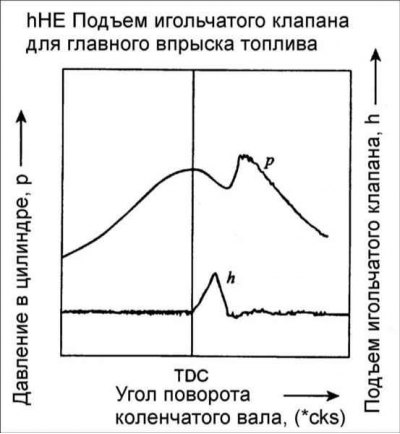
Injector needle valve lift and unloading speed without pilot injection
(Material was obtained from an official resource: hyundaibook.ru)