


Contents: Devices used to install piston…⇓ Connecting rod bearings -…⇓ Final installation of the connecting…⇓
Place the pistons and connecting rods in the correct order. The numbers on the connecting rods correspond to the cylinder number.
Remember that the mark (arrow) on the piston head should face the front of the engine (camshaft drive).
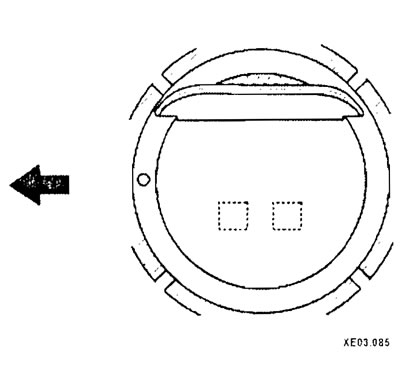
Wipe the cylinders clean with a lint-free cloth.
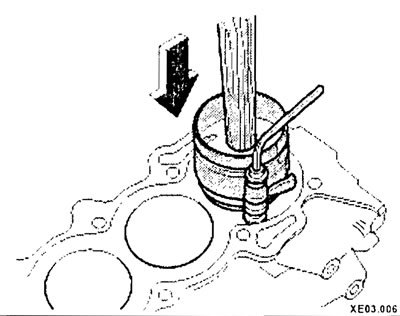
Apply lubricant to the piston rings and then install the ring compressor onto the first piston to be installed. If you don't have a squeezer, you can use a hose clamp of a suitable size.
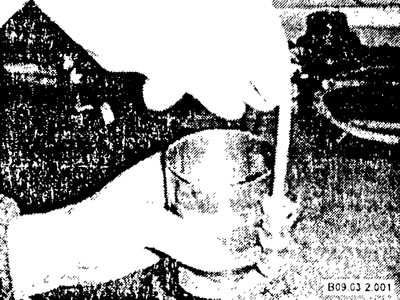
Devices used to install piston assemblies with rings into engine cylinders
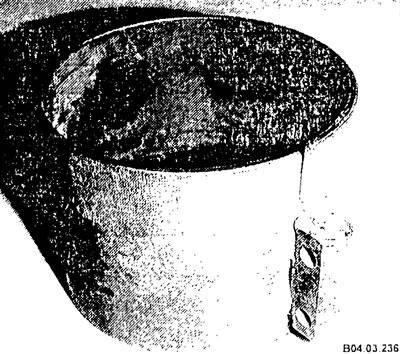
Universal (adjustable) bushing - general view
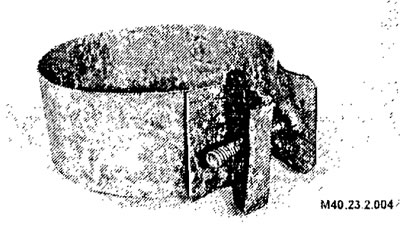
The simplest device made from a strip of metal (by type of clamp)
Connecting rod bearings - installation on the crankshaft
Before installing the pistons with connecting rods, the walls of the block grooves must be thoroughly cleaned and the crankshaft installed in place.
Remove the cover from connecting rod number 1 (they should have marks made during removal).
Clean the back of the new upper bearing shell, then place it into place in the connecting rod. Make sure the key on the bearing fits into the recess in the connecting rod. Do not hammer the bearing shell or scratch the bearing surface. Do not lubricate the bearing yet.
Clean the back of the second bearing and install it into the connecting rod cap. Make sure the liner key fits into the cover recess, but do not apply grease yet.
Place a piece of plastic or rubber tubing over each connecting rod cap bolt.
Orient the piston so that the arrow on its top points forward (in the direction of the camshaft drive), carefully insert the piston with the connecting rod into the first cylinder.
Gently push down on the top of the piston with a wooden block while guiding the end of the connecting rod into place on the crankshaft journal. Work slowly and if you feel resistance, stop immediately. Find out the cause and eliminate it. Do not press hard on the piston under any circumstances - you may damage the seating surfaces.
After the piston and connecting rod have been installed, it is necessary to check the size of the connecting rod bearing oil clearance before the connecting rod is finally screwed into place.
Cut a piece of appropriately sized plastic clearance gauge slightly shorter than the width of the connecting rod bearing and place it on the number 1 crankpin parallel to its axis.
Clean the surface of the connecting rod bearing cap, remove the protective tubes from the connecting rod bolts and install the connecting rod cap.
Install the nuts and tighten them to the required torque value in three stages. Do not rotate the crankshaft while doing this.
Unscrew the nuts and remove the connecting rod cover, being careful not to damage the plastic.
Compare the width of the crushed plastic to measure the gap with the scale on its package to determine the gap. Compare the obtained value with the technical data.
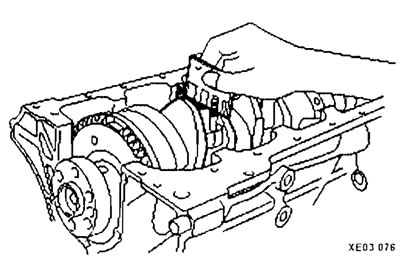
If the clearance is not within specification, the bearing shells may be the wrong size. But before replacing the shells, check to make sure that no dirt or oil has gotten between the shells and the connecting rod or cap. Also check the journal diameter of the shaft. If the width of the gap measuring plastic is different at each end of the strip, the shaft journal may be tapered and will need to be reground.
Final installation of the connecting rod
Carefully clean all traces of clearance measuring plastic from the surface of the shaft journal and bearing, being careful not to scratch the bearing.
Make sure the bearing surfaces are completely clean and apply a uniform coat of grease to both bearings. You will have to push the piston into the cylinder bore to gain access to the connecting rod bearing - remember to pull the protective tubes over the connecting rod bolts first.
Place the connecting rod on the shaft journal, remove the protective tubes from the connecting rod cap bolts, install the cap and tighten the nuts in three stages to the required tightening torque.
Repeat the above procedure for the remaining pistons and connecting rods.
Check the piston group assembly.
Once all pistons and connecting rods are installed, turn the crankshaft by hand several times and check for binding.
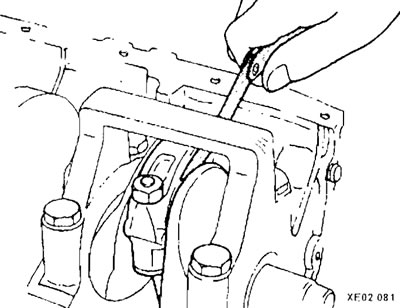
Check the play of the connecting rods.
Compare the measured clearance with the technical data. If the clearance was within the norm before disassembly, and the old connecting rods and crankshaft were used, then it should remain within the norm. If new connecting rods or a new crankshaft have been installed, the GOL may not be within specification. In this case, it is necessary to remove the connecting rods and take them to a workshop for mechanical processing.