


Note: Belt replacement and tension adjustment are described in the Engine chapter.
1. Check the belt surface for dirt and oil. Wipe off minor contamination with a dry cloth or paper without using solvents.
Note: Do not allow the belt to come into contact with operating fluids, oils or lubricants.
2. Carefully check the belt for the following damage:
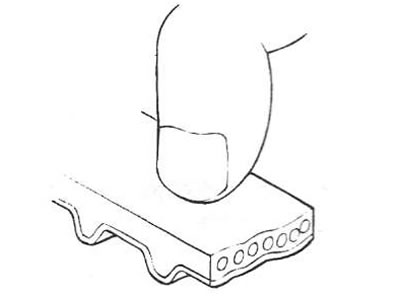
- hardening of the outer surface of the belt. If the belt surface is shiny, inelastic and so hard that it does not leave marks when pressed with a fingernail, replace the belt;
- cracking of the rubber surface of the back side of the belt;
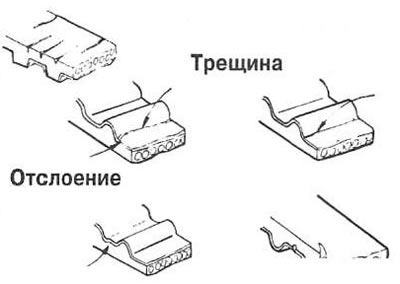
- the presence of cracks or delamination of the cord, cracks at the base of the teeth and cuts on the side of the belt;
- severe wear on the side surface of the belt. A normal belt should have clearly defined side ribs (no rounding or wear);
- severe wear or missing belt teeth
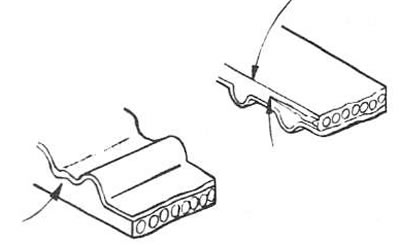
Note: at the initial stage of belt wear, the fabric at the base of the tooth on the working side is worn out (fabric fibers are exposed, the rubber layer is chipped, the belt color changes to white). At the last stage of belt wear, the fabric on the working surface of the tooth is completely worn out to the point of exposing the rubber layer (the tooth width is reduced).