


Contents: Adjusting the gear clearance ⇓ Checking the starter traction relay ⇓ Checking the holding winding of the…⇓ Checking the return of the traction…⇓ Operational tests (idle) ⇓ Overrunning clutch gear ⇓ Checking the rotor winding ⇓ Checking the stator coils ⇓ Checking the brushes ⇓ Checking the brush holder ⇓ Checking the overrunning clutch ⇓ Replacing brushes ⇓ Replacing the rear bushing ⇓ Assembling the starter ⇓
Adjusting the gear clearance
1. Disconnect the wire from terminal M.
2. Using additional wires, connect the battery terminals to terminals S and M.
3. Turn on the ignition, this will cause the starter gear to move forward.
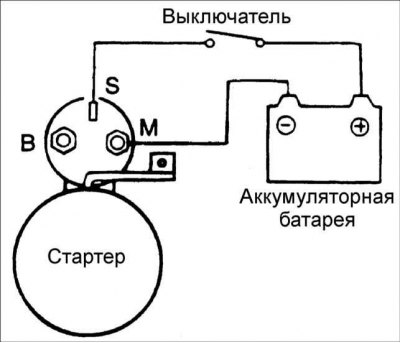
Warning! This test must be performed within 10 seconds, otherwise the traction relay coil may burn out.
[Original version of the article on the website HyundaiBook]
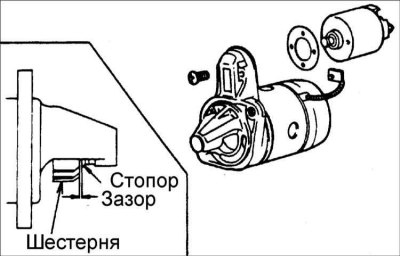
4. Use a feeler gauge to check the clearance between the pinion and the stopper. If the clearance is different from the required value, adjust it by adding or removing spacers between the traction relay and the front cover.
Gear clearance: 0.5-0.2 mm
Checking the starter traction relay
1. Disconnect the wire from terminal M.
2. Using additional wires, connect the battery terminals to terminals S and M.
3. Turn on the ignition, the starter pinion will move forward. If the pinion does not move forward, replace the solenoid relay.
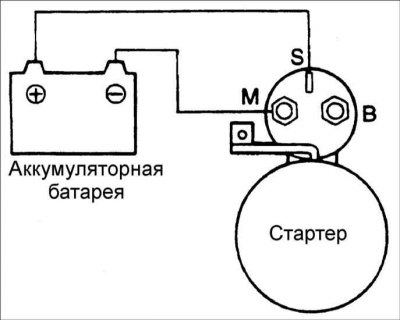
Warning! This test must be performed within 10 seconds, otherwise the traction relay coil may burn out.
Checking the holding winding of the traction relay
1. Disconnect the wire from terminal M.
2. Using additional wires, connect the battery terminals to the S terminal and the traction relay housing.
Warning! This test must be performed within 10 seconds, otherwise the traction relay coil may burn out.
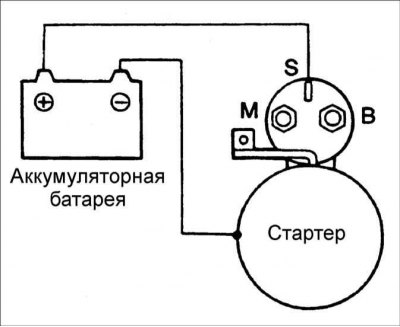
3. If the gear remains in place, then the holding winding of the traction relay is damaged and the traction relay must be replaced.
Checking the return of the traction relay plunger
1. Disconnect the wire from terminal M.
2. Using additional wires, connect the battery terminals to terminal M and the traction relay housing.
Warning! This test must be performed within 10 seconds, otherwise the traction relay coil may burn out.
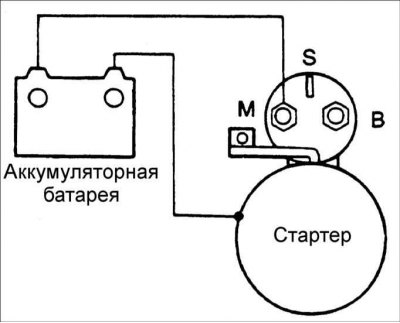
3. The starter pinion should move forward. Once the wires are disconnected, the starter pinion should quickly return to its original position.
Operational tests (idle)
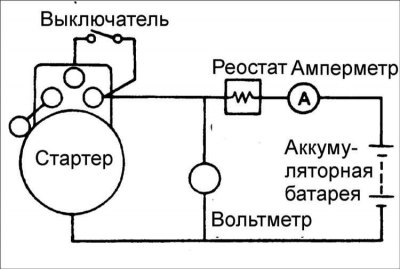
1. To perform the idle test, assemble the circuit shown in the figure.
2. Set the rheostat slider to a position where the voltmeter shows 11.5 V, while checking the current consumed by the starter and making sure that the starter shaft turns easily and smoothly.
Current: no more than 60 A
Overrunning clutch gear
1. To remove the overrunning clutch from the rotor shaft, it is necessary to first remove the thrust ring.
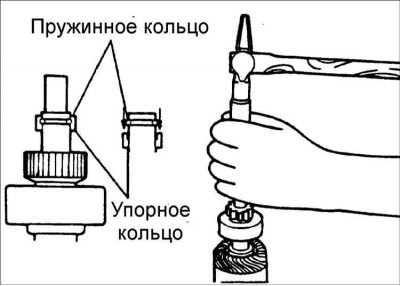
2.Move the thrust ring towards the pinion and remove the snap ring. The thrust ring can now be removed from the shaft.
Checking the rotor winding
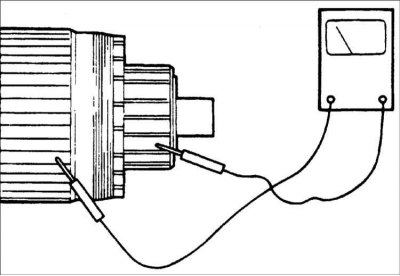
1.Use an ohmmeter to check the continuity between the collector and the rotor. If there is continuity, replace the rotor.
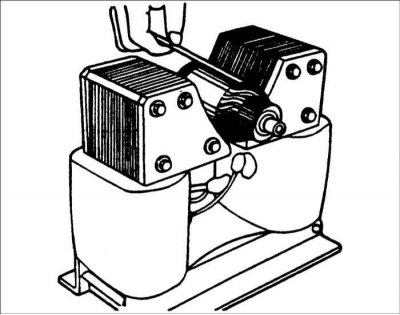
2.Check the rotor winding using a special device.
If there are short circuits, replace the rotor. If a steel strip applied to the rotor vibrates, there are short circuits in the rotor windings.
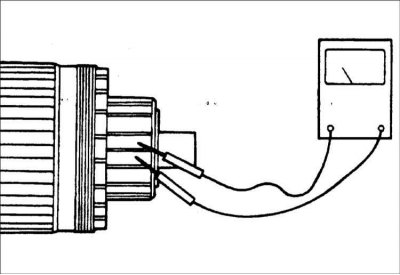
3.Use an ohmmeter to check the conductivity between the collector segments. If there is no conductivity, replace the rotor.
Checking the stator coils
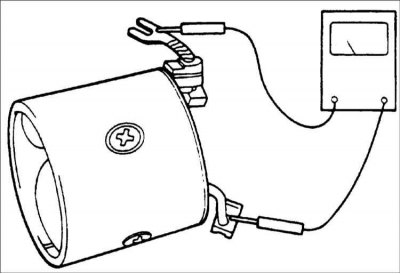
1.Use an ohmmeter to check the conductivity of the stator coils. If there is no conductivity, replace the stator coils.
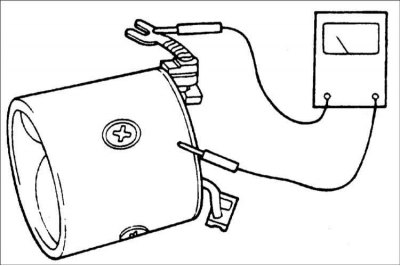
2.With the coil installed in the housing, check for continuity between the coil terminal and the starter housing. If there is continuity, replace the stator coils.
Checking the brushes
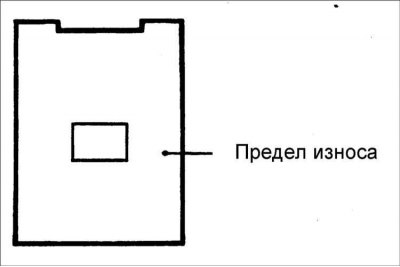
If the brush is worn to the specified limit, replace it.
Checking the brush holder
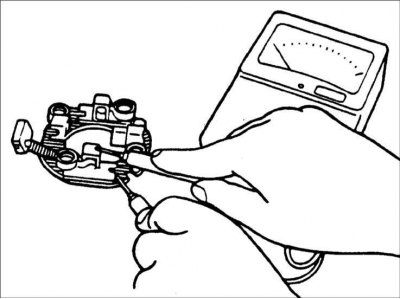
Use an ohmmeter to check the continuity between each insulated brush and the plate. If there is continuity, replace the brush holder.
Checking the overrunning clutch
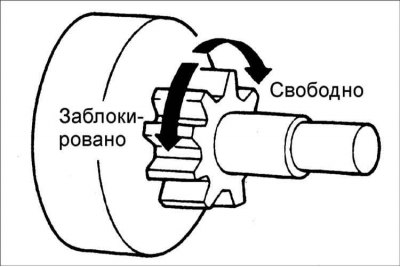
Check the condition of the teeth of the overrunning clutch gear and, if damaged, replace it. Also check the condition of the teeth of the flywheel ring gear.
Rotate the gear. The gear should turn freely clockwise and lock when turned counterclockwise
Replacing brushes
1. Remove the worn brush, being careful not to damage the braided wire.
2. Use sandpaper to smooth the end of the braided lead to ensure good contact with the new brush.
3. Solder the braided wire.
Replacing the rear bushing
1. Before removing the bushing, it is necessary to measure its installation depth.
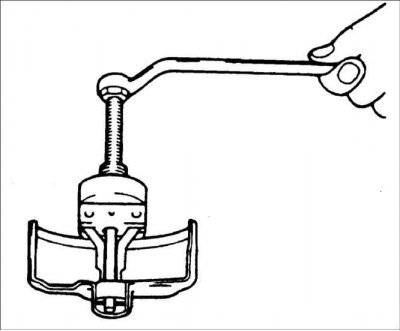
2. The bushing can be removed using a puller as shown in the figure.
3. Install the new bushing to the pre-measured depth.
Assembling the starter
1. Install the overrunning clutch onto the front end of the rotor shaft.
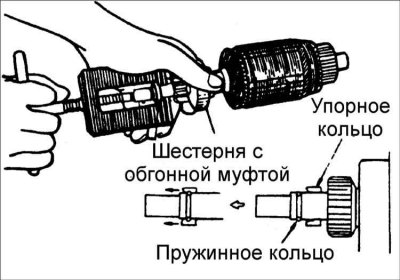
2. Install the thrust washer and snap ring onto the front side of the rotor shaft, then move the thrust washer all the way to the snap ring.
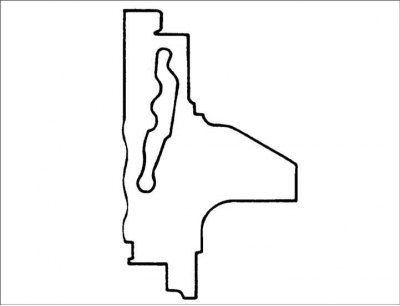
3. When installing the lever into the front cover, pay attention to its position. If the lever is installed in the opposite direction, the gear will be constantly pushed out and will not work properly.