


Contents: Oil used in gasoline engines ⇓ Oil used in diesel engines ⇓ Checking the oil level ⇓ Topping up oil ⇓
Oil used in gasoline engines
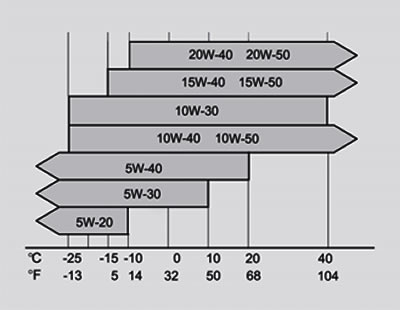
It is recommended to use all-season energy-saving oils of quality classes SH, SG or SG/CD (API).
It is recommended to use all-season energy-saving oils of quality classes not lower than SH (API) or GF-1 (ILSAC).
The level and quality of engine oil have a decisive influence on the performance and durability of the engine. It is recommended to check the oil level at least once a week under normal vehicle operating conditions and at shorter intervals during long trips or under severe operating conditions.
Note:
- When operating the vehicle for a long time at high speeds, the use of 5W-20 oil is not recommended.
- When changing or adding oil, it is recommended to use oil of a class not higher than SAE 10W-30. Using oil of class SAE 15W-40 or higher will cause malfunction of a cold 16-valve engine with two overhead camshafts and intake phase regulator.
Oil used in diesel engines
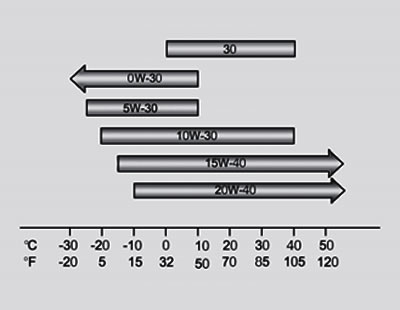
The level and quality of engine oil have a decisive influence on the performance and durability of the engine. It is recommended to check the oil level every 500 km or before a long trip under normal vehicle operating conditions and at shorter intervals under severe operating conditions.
The following classes of oil should be used:
- API class: not lower than CF-4
- ACEA class: not lower than B4
Note: SAE 0W-30 grade oil is intended for use in very low ambient temperatures and should not be used under normal operating conditions (especially not recommended for engines operating for long periods under heavy loads and at high speeds).
Checking the oil level
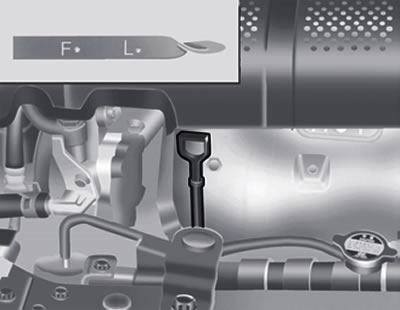
Gasoline engine |
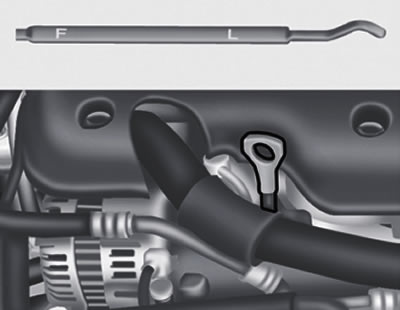
Diesel engine |
Before checking the oil level, warm up the engine to normal operating temperature and park the vehicle on a level, horizontal surface. Stop the engine. Wait for about five minutes (cars with gasoline engines) or about two minutes (diesel cars), then remove the dipstick, wipe it, reinsert the dipstick all the way and remove it. The oil level should be between the upper mark "F" (Max.) and the lower mark "L" (Min.) on the dipstick.
Warning: When checking the oil level, be careful not to touch the radiator hose, which can cause burns when hot.
Topping up oil
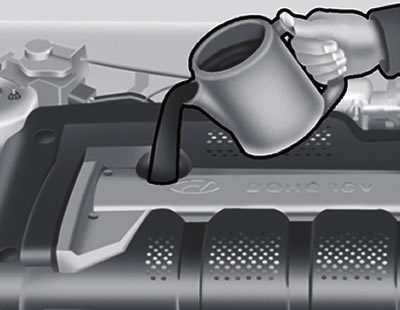
Gasoline engine |
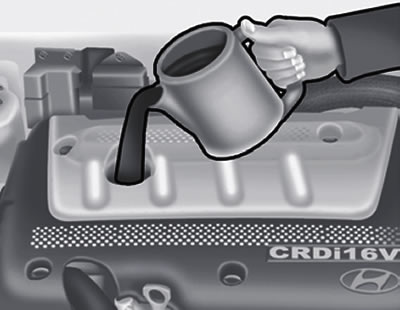
Diesel engine |
If the oil level is below the "L" mark, add oil up to the "F" mark. To do this:
(The publication is borrowed from the website: hyundaibook.ru)
- 1. Remove the oil filler cap by turning it counterclockwise.
- 2. Add oil and check its level. Avoid overfilling with oil.
- 3. Install the oil filler plug by turning it clockwise.
The difference in levels between the "F" and "L" marks: about 1 liter of oil (gasoline engines) and 1.6 liters of oil (diesel engines).
Warning: When checking the oil level, be careful not to touch the radiator hose, which can cause burns when hot.