


Replacing spark plugs
(only cars with petrol engines)
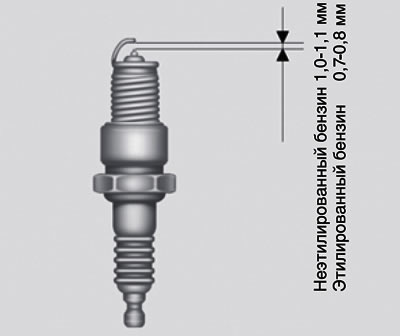
Spark plugs should be replaced at the intervals specified in Section 5 or when engine performance decreases. Signs of deterioration in spark plug performance include misfires in cylinders under load, increased fuel consumption, poor throttle response, etc. When replacing, use only the type of spark plug recommended by Hyundai. Using other types of spark plugs may result in deterioration in engine performance, radio interference, and engine damage.
Note:
- When replacing spark plugs, use only recommended genuine Hyundai spare parts. It is recommended that spark plugs for the 2.7L engine be replaced by an authorized Hyundai dealer.
- Cleaning platinum and iridium electrodes and adjusting the gap between them is prohibited.
Recommended spark plugs
| Type | Unleaded petrol | Leaded gasoline |
| CHAMPION | RC10YC4 | RC10YC |
| NGK | BKR5ES-11 | BKR5ES |
Replacing spark plugs
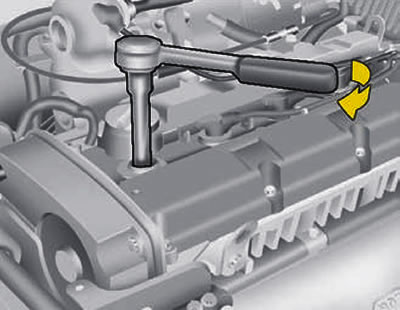
Replacing spark plugs is easier when the engine is cold. To avoid mixing up the spark plug wires, replace the spark plugs one at a time.
1. Remove the center part of the engine cover (2.0L engines).
2. Use a clean cloth to remove any dirt from around the spark plugs to prevent it from getting into the cylinders when removing the spark plugs.
3. Disconnect the spark plug wire by pulling on its insulating tip, but not on the wire itself, as this may damage its carbon conductive core.
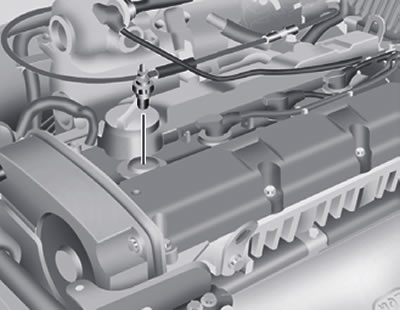
Warning: It is recommended to replace spark plugs on a cool or cold engine. On a hot engine, you can get burned by the wire ends, spark plugs, or hot engine parts.
4. When unscrewing the spark plugs, carefully place the wrench head on them so as not to damage the ceramic insulator.
5. Unscrew the spark plug by turning the key counterclockwise.
6. When tightening the spark plugs, carefully place the wrench head on them so as not to damage the ceramic insulator.
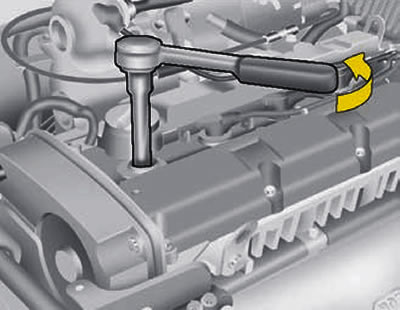
Note: The spark plugs must be tightened tightly. Over-tightening may damage the threads of the sockets in the aluminum cylinder head. Loose tightening may cause excessive spark plug heating and engine damage.
7. Connect the wire to the spark plug by placing the tip on it and pressing it down. Check the reliability of the tip fixation.