


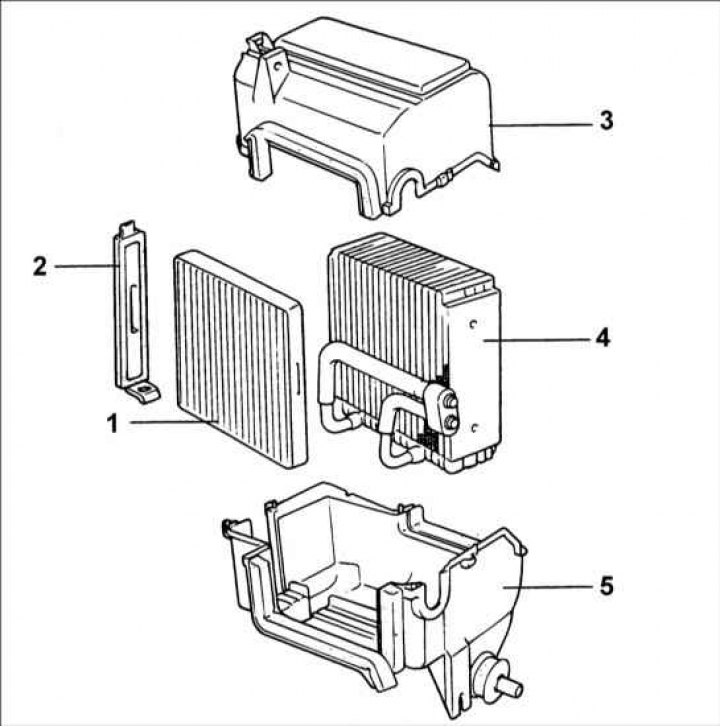
1 – air filter; 2 – air filter cover; 3 – upper evaporator crankcase; 4 – evaporator radiator; 5 – lower evaporator crankcase.
Removal
1. Disconnect the cable from the negative battery terminal.
2. Discharge the air conditioning system.
3. Disconnect the tube (B) and the suction filter from the evaporator.
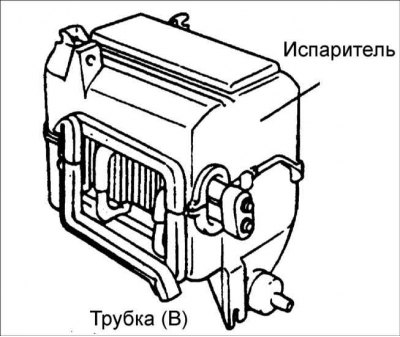
Warning: After disconnecting air conditioning system components, immediately close the connections with the appropriate caps to prevent moisture from the air from entering the system.
4. Disconnect the drain hose from the evaporator.
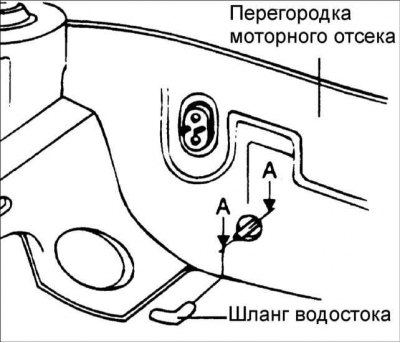
5. Remove the two screws and remove the sealing ring cover from the instrument panel.
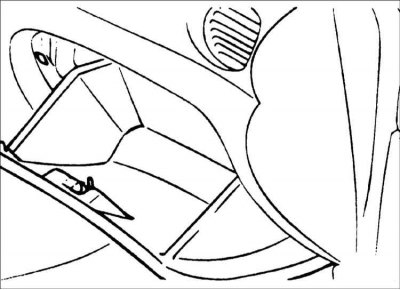
6. Remove the three screws securing the glove box.
7. Disconnect the connector from the thermostatic switch.
8. Remove the three screws securing the evaporator.
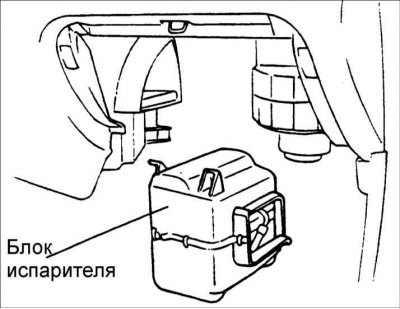
9. Remove the evaporator.
Disassembly
1. Remove the 7 upper evaporator housing mounting clips.
2. Remove the upper evaporator housing.
Warning: Be careful not to damage the thermostatic switch wiring.
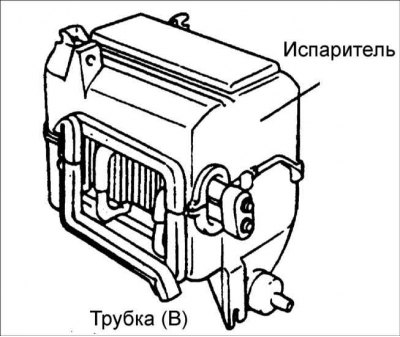
3. Remove the thermostatic switch with the thermistor and its clamp from the evaporator unit.
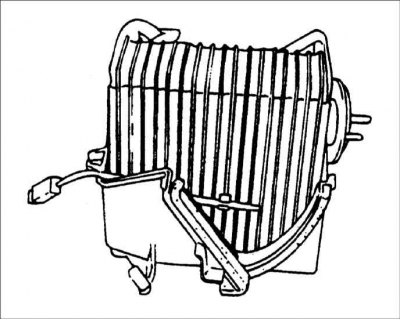
4. Remove the evaporator.
Examination
1. Check the evaporator fins for clogging or damage. If the fins are clogged, blow them out with compressed air.
Warning: Do not use water to clean the evaporator plates.
2. Check the joints for cracks and scratches.
Assembly
1. Install the evaporator into the lower crankcase.
2. Install a thermostatic switch with a thermistor to the evaporator.
3. Install the upper crankcase.
4. Install seven clamps and screw in two screws.
Installation
1. Installation is carried out in the reverse order of removal.
2. If the evaporator was replaced, add 40 cm³ of oil to the compressor.
3. Evacuate, charge and test the air conditioning system.
Check on the car
1. Check the amount of refrigerant during the cooling cycle.
2. Install pressure gauges on the line.
3. Start the engine and let it run for 5 minutes at a crankshaft speed of 2000 min⁻¹.
4. Check the evaporator for the following defects:
- if the expansion valve is clogged, the low pressure gauge reading will drop to 0 kg/cm²;
- if the expansion valve is clogged or there are leaks in the evaporator, repair or replace the evaporator.