


Execution order
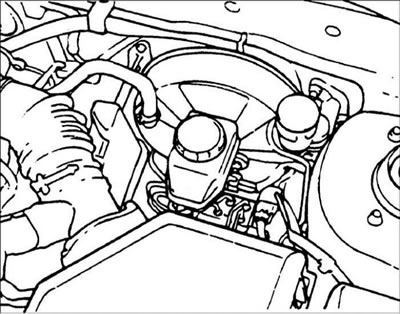
1. Remove the cap from the brake fluid reservoir.
Recommended brake fluid: DOT3
Warning! Brake fluid dissolves paint, plastic and wire insulation, so if the fluid accidentally comes into contact with the vehicle's paintwork or components, rinse them with plenty of water.
Warning: Do not press the brake pedal when bleeding under pressure
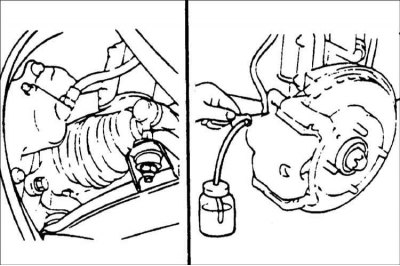
2. Unscrew the cap from the bleed nipple and attach one end of the transparent hose to it, and insert the other end of the hose into a glass container of sufficient volume, half filled with brake fluid.
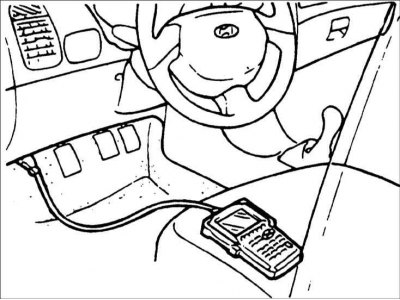
3. Connect the scanner to the diagnostic connector located under the instrument panel.
4. According to the scanner's operating instructions, select the appropriate option.
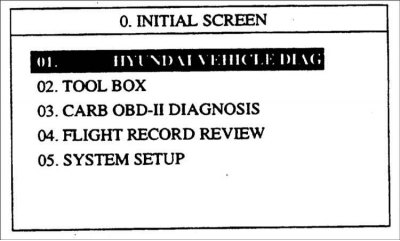
Warning! Consider the maximum working time of the ABS when working with the scanner to avoid burnout of the pump motor.
- 1) Determine the vehicle manufacturer.
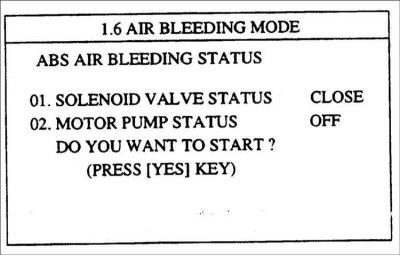
- 2) Set the name of the car.
- 3) Set the anti-lock brake system test mode
- 4) Set the air removal method.
- 5) Press "YES" to activate the pump with electric motor and solenoid valve.
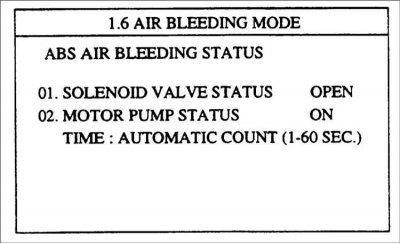
- 6) Wait 60 seconds before performing the air bleeding operation, otherwise the electric motor may be damaged.
5. Slowly press the brake pedal several times. With the brake pedal depressed, use a wrench to loosen the bleeder screw and wait until brake fluid begins to come out without air bubbles. Tighten the bleeder screw and release the brake pedal.
6. Repeat step 5 to bleed air from the brakes on the remaining wheels.
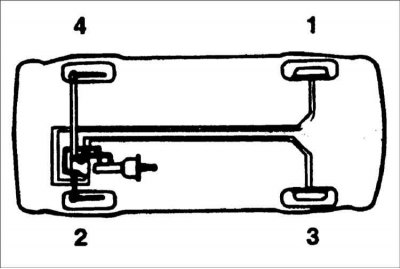
7. Tighten the bleed screw.
Tightening torque: 7–9 Nm