


Measure the distance from the rubber pedal pad to the mat. Nominal value of dimension A = 182 mm (1.6L engines), A = 189 (1.8L engines).
Press your finger on the clutch pedal until you feel a noticeable resistance and measure the free travel of the pedal.
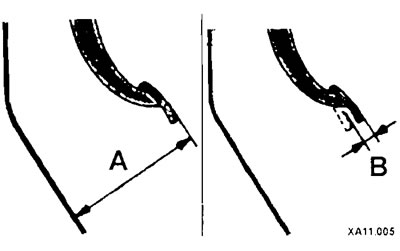
The required value B = 1-3 mm.
If this gap is outside the tolerances, the following adjustment must be made:
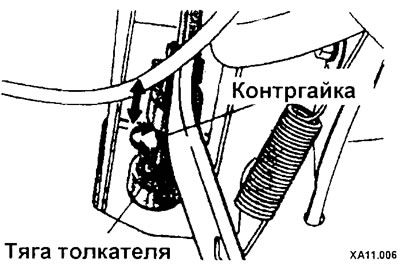
Loosen the lock nut and use the adjusting bolt to adjust the height of the clutch pedal. Tighten the lock nut to approximately 15 Nm. If the clutch pedal height is below the required value, loosen the bolt and turn the push rod so that adjustment can be made. After adjustment, tighten the adjusting bolt until the pedal stops and tighten the lock nut.
Adjust the free travel of the clutch pedal at the fork head pin by rotating the push rod. Then tighten the tie rod lock nut to approximately 15 Nm.
By pressing the clutch pedal several times, check the distance from the pedal to the floor with the clutch depressed. Required value: 70mm or more. The clutch pedal free play should be between 6 and 13 mm.
If the pedal height or free play is outside the tolerance range, the clutch or master cylinder is faulty, or there is air in the hydraulic system.
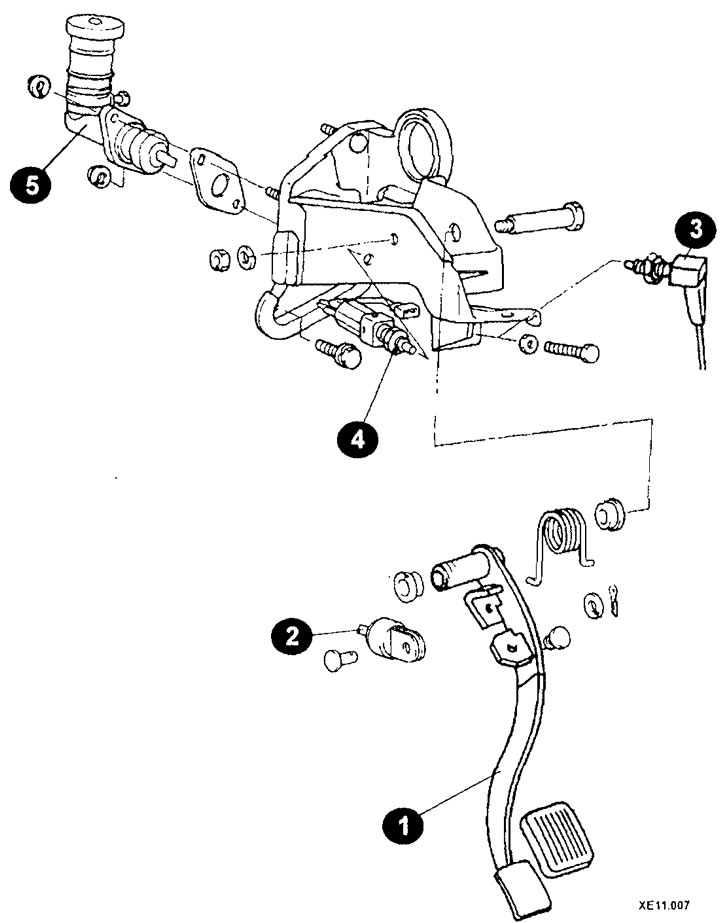
Clutch pedal mounting elements (models before 2000.)
1 - clutch pedal;
2 - bushing;
3 - spring;
4 - pusher;
3 - bracket;
6 - clutch pedal position sensor.
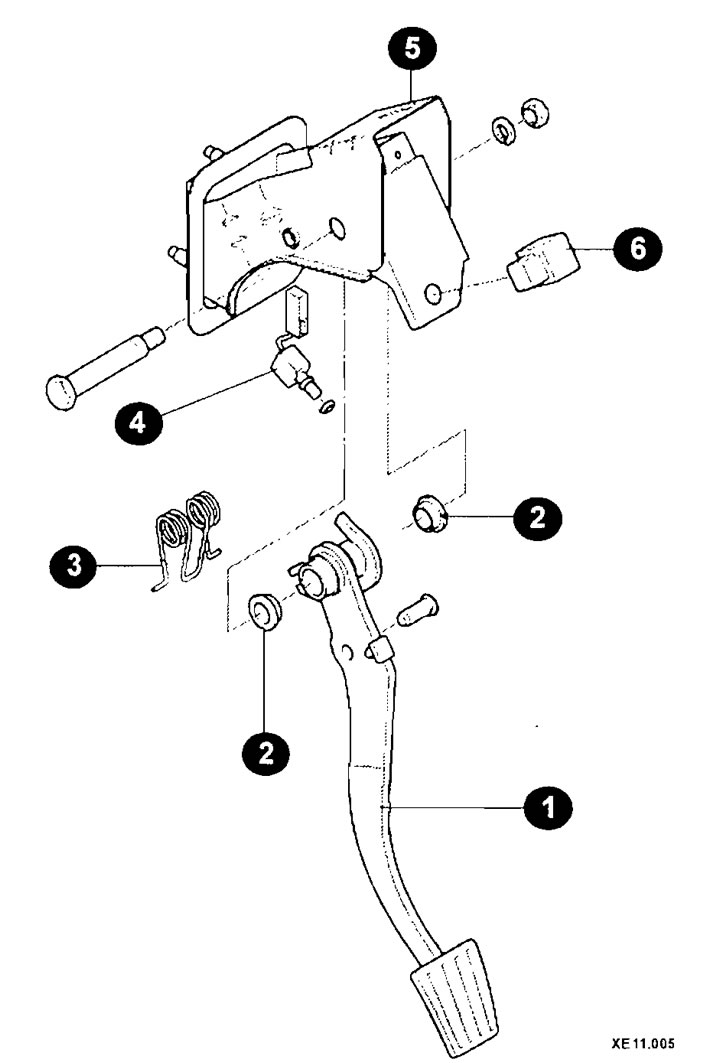
Clutch pedal mounting elements (models since 2000.)
1 - clutch pedal;
2 - clutch master cylinder rod;
3 - Clutch pedal position switch;
4 - ignition interlock switch;
5 - clutch master cylinder.
The original material is located on the website [HyundaiBook.ru]