


Contents: Examination ⇓ Adjustment ⇓
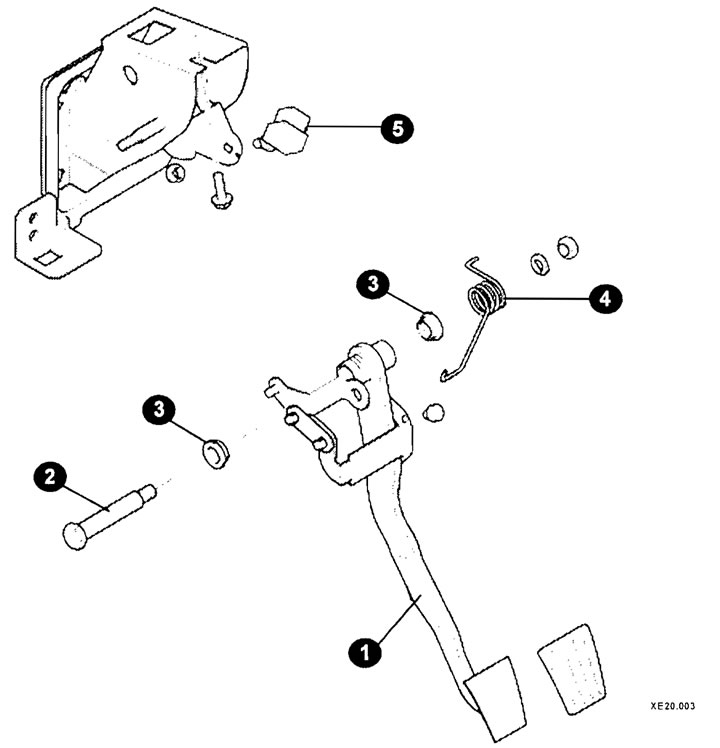
Brake pedal mounting elements
1 - pedal;
2 - axis;
3 - bushing;
4 - spring;
5 - brake light switch.
Examination
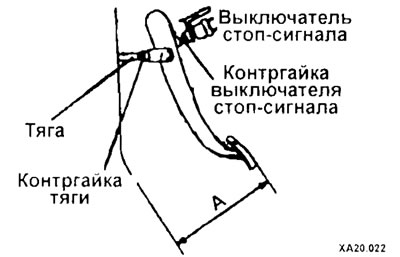
Measure the height (A) of the brake pedal. Required value A: 178-182 mm.
Adjustment
Disengage the brake light switch by loosening the lock nut, turn the brake light switch until it no longer touches the brake pedal.
Slightly loosen the tie rod lock nut and turn it until the brake pedal is at the desired height.
Adjust the pedal free play.
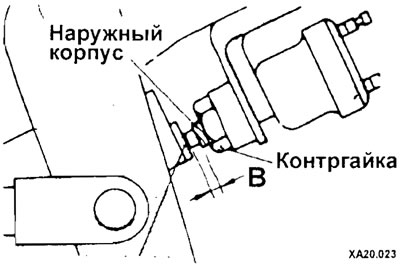
Screw the brake light switch in until it just touches the brake pedal, then back it out ½ to 1 turn and tighten the lock nut. Required value; B=0.5-1.0 mm.
Connect the brake light switch.
Press the brake pedal and watch the brake light. It should light up when you press the brake pedal lightly.
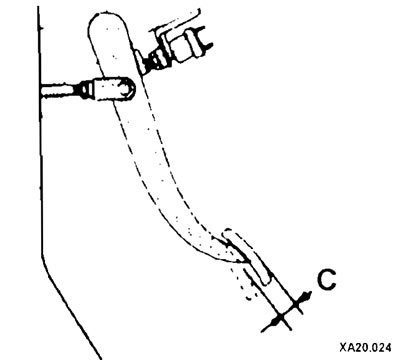
Press the brake pedal several times with the engine off, creating a vacuum in the power steering. Press the brake pedal with your hand until you feel resistance. Required value: C=3-8 mm.
Turn on the engine, leaving it to idle.
Press the brake pedal with a force of approximately 500 N (50 kg) and measure the distance between the brake pedal and the vehicle floor. The required D value is not less than 80 mm.
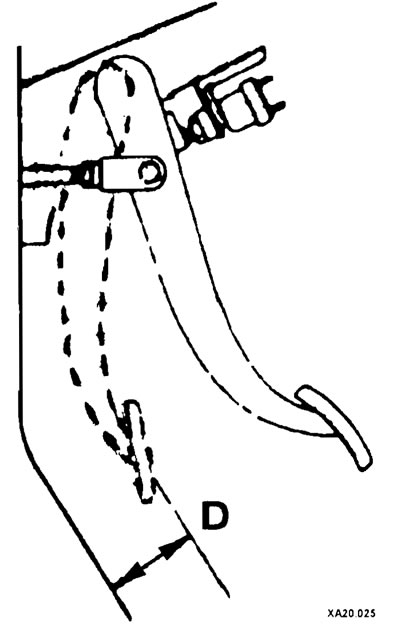
If the dimension D is less than the required value, check the brake fluid level in the reservoir, bleed the brake system, check the ease of movement of the automatic brake shoe setting device of the drum brakes and check for brake fluid leakage.