
HyundaiBook.ru
Repair Chevrolet Repair Honda Repair Toyota Repair Land Rover Repair VAZ Repair Renault Repair Nissan
English Русский
Български
Беларускі
Український
Српски
Hrvatski
Română
Polski
Slovenský
Magyar
ArticlesSitemapContacts  


  Accent   Elantra   Getz   Grandeur   Sonata   Santa Fe   Tucson   Others
Elantra 1 (1990-1995, petrol) Elantra 2 (1995-2000, petrol) Elantra 3 (2000-2006)
  • Main
  • Elantra
  • XD (2000-2006)
  • Power unit
  • Cooling system
  • Checking the density of the coolant

Checking the density of the coolant (Hyundai Elantra XD)

0

Procedure


1. Use a hydrometer to measure the specific gravity of the coolant.
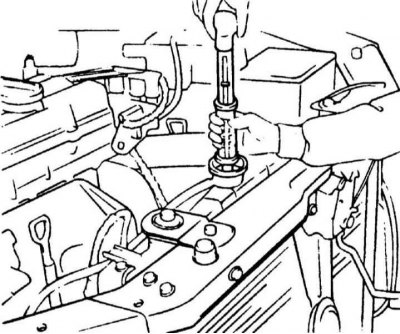
2. Measure the coolant temperature and,…


2. Measure the coolant temperature and, depending on the temperature, calculate the concentration of antifreeze in the coolant.

Example


Safe operating temperature is -15°C at a weighted specific gravity of 1.058 and a coolant temperature of 20°C.

  • If the coolant concentration is below 30%, the anti-corrosion properties of the coolant are reduced.
  • At a concentration of more than 60%, the frost resistance of the coolant deteriorates. For these reasons, make sure that the antifreeze concentration in the coolant is within the exact acceptable limits.
  • Do not use coolant together with another brand of antifreeze.


Recommended coolant


Antifreeze
Antifreeze content in coolant
Based on ethylene glycol for working with aluminum parts
50% (Except tropical areas)
40% (For tropical areas)

The original source of the article is the website: HyundaiBook

The relationship between the concentration of antifreeze in the coolant and the specific gravity


Coolant temperature°C and specific gravity
Freezing point°C
Safe operating temperature°C
Coolant concentration
10
20
30
40
50
1,054
1,05
1,046
1,042
1,036
–16
–11
30%
1,063
1,058
1,054
1,042
1,044
–20
–15
35%
1,071
1,067
1,062
1,042
1,052
–25
–20
40%
1,079
1,074
1,069
1,042
1,058
–30
–25
45%
1,087
1,082
1,076
1,042
1,064
–36
–31
50%
1,095
1,09
1,084
1,042
10,7
–42
–37
55%
1,103
1,098
1,092
1,042
1,076
–50
–45
60%
This article is available at russian, bulgarian, belarusian, ukrainian, serbian, croatian, romanian, polish, slovak, hungarian
This article has been reviewed by: Konstantin Smirnov
Add to social network:

Previous
Elantra 3: Cooling system
Next

Pressure testing the radiator cap
Checking the tightness of the cooling system
Technical data of the cooling system
Cooling system tubes and hoses
Water pump — removal and installation
Radiator — removal and installation
Radiator Cap — Check
Thermostat — removal and installation
We recommend other articles on the topic of Hyundai manuals:

Checking the density of the coolant Hyundai Accent 1 (1994-1999)
Checking and replacing engine coolant Hyundai Getz (2002-2011)
Checking the cooling system for leaks, composition of the coolant Hyundai Sonata 3 (1993-1998)
Checking and replacing engine coolant Hyundai Santa Fe 2 (2007-2012, petrol)
Checking and adjusting valve clearances Hyundai Tucson 1 (2005-2010)
Table 2.1. Relationship between coolant density and ethylene… Hyundai Matrix (2001-2010, petrol)

Link in different formats to this article

Visitor comments
No comments yet


How much will 26 + 21 ?


Elantra 3 (2000-2006) 
  • User manual
  • Control devices
  • Audio system
  • Starting the engine and driving
  • Faults en route
  • Maintenance and care
  • Technical information
  • Power unit
  • Gasoline engines
  • Diesel engines
  • Lubrication system
  • Cooling system
  • Fuel system (gasoline)
  • Fuel system (diesel)
  • Decreased toxicity
  • Ignition system
  • Transmission
  • Clutch
  • Mechanical gearbox
  • Automatic gearbox
  • Drive shafts and axles
  • Chassis
  • Car suspension
  • Steering
  • Brake system
  • Body
  • Exterior (external elements)
  • Interior (internal elements)
  • Air conditioning system
  • Electrical equipment
  • Equipment and devices
  • Headlights and lighting
  • Power devices
  • Electrical circuits
Elantra 2 (1995-2000, petrol) 
  • General information
  • Maintenance
  • Power unit
  • Engine repair
  • Cooling system
  • Intake and exhaust system
  • Fuel system
  • Transmission
  • Clutch
  • Manual gearbox
  • Automatic gearbox
  • Drive shafts and axles
  • Chassis
  • Front suspension
  • Rear suspension
  • Steering
  • Brake system
  • Body
  • Body elements
  • Electrical equipment
  • Equipment and devices
  • Electrical diagrams
Elantra 1 (1990-1995, petrol) 
  • General information
  • Introduction to the guide
  • Maintenance
  • Power unit
  • Minor engine repair
  • Engine overhaul
  • Lubrication system
  • Cooling system
  • Fuel injection system
  • Ignition system
  • Exhaust system
  • Transmission
  • Clutch
  • Manual gearbox
  • Automatic gearbox
  • Drive shafts
  • Chassis
  • Front suspension
  • Rear suspension
  • Steering
  • Wheels and tires
  • Troubleshooting
  • Brake system
  • Body
  • Body elements
  • Electrical equipment
  • Equipment and devices
  • Power devices
  • Heating and air conditioning
  • Electrical circuits
HyundaiBook.ru © 2018-2026 · Mobile version · Sitemap: EN BG BY UA RS HR RO PL SK HU · Administration · Site search · Hyundai owners Accent 1 · Accent 2 · Accent 3 · Elantra 1 · Elantra 2 · Elantra 3 · Getz · Sonata 3 · Sonata 4 · Santa Fe 2 · Tucson 1 · Tucson 2 · Matrix ·
This site uses cookies to optimize its functionality. By continuing, you agree to our terms.