


Contents: Fan speed switch ⇓ Air intake switch (on vehicles…⇓ Air intake switch (on vehicles with…⇓ Turning off the heater and air…⇓ Air distribution button ⇓ Windshield defroster button ⇓
The operation of the climate control system can also be controlled manually by pressing all the necessary buttons on the control panel, except for the "AUTO" button. In this mode, the elements of the climate control system are controlled sequentially depending on the order in which the buttons are pressed. Elements whose control buttons are not pressed continue to operate in automatic mode.
To switch to automatic climate control mode, press the "AUTO" button.
Fan speed switch
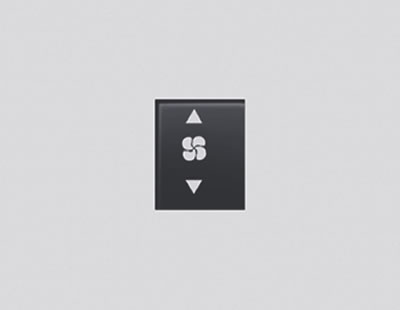
The fan speed is set by pressing the corresponding switch arm. As the fan speed increases, the amount of air supplied to the cabin increases. The fan is turned off by pressing the "OFF" button.
Air intake switch (on vehicles without air quality control systems)
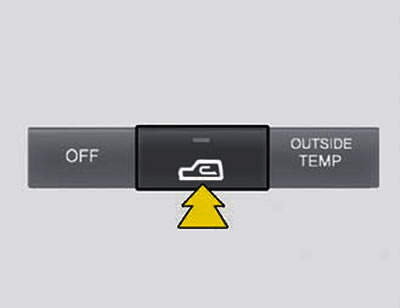
This switch enables the intake of outside air or recirculation of air in the passenger compartment.
Switching air intake modes (outside air intake or recirculation) is done by pressing the switch button.
OUTSIDE AIR INTAKE MODE (
 ): In the outside air intake mode, the indicator lamp built into the switch lights up.
RECIRCULATION MODE (
 ): When the recirculation mode is turned on, the indicator lamp built into the switch lights up.
In outside air intake mode, fresh air enters the passenger compartment, which is heated or cooled depending on whether the heater or air conditioner is turned on.
In recirculation mode, the intake of outside air stops, and the air in the passenger compartment is heated or cooled depending on whether the heater or air conditioner is turned on.
Note:
- It should be remembered that prolonged operation of the heater in recirculation mode will lead to fogging of the windshield and side windows, and the air in the cabin will become stale. If the air conditioning system is operated for a long time in recirculation mode with the air conditioner on, the air in the cabin will become excessively dry.
- When the ignition key is turned to the "On" position, the system automatically switches to the outside air intake mode (
Air intake switch (on vehicles with air quality control system)
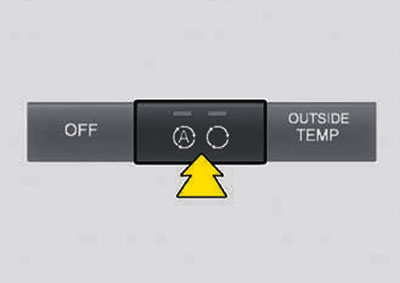
This switch turns on the automatic air intake mode (outside air intake or recirculation).
 Outdoor air intake mode: Outside air enters the cabin and is heated or cooled depending on the set temperature.
 Recirculation mode: The intake of outside air is stopped and the air in the passenger compartment is heated or cooled depending on the set temperature.
 Automatic recirculation mode: In this mode, outside air enters the cabin
air, but only until the moment when exhaust gases begin to enter the cabin along with it, after which the system switches from the outside air intake mode () automatically switches to recirculation mode (
Automatic recirculation mode: In this mode, outside air enters the cabin
air, but only until the moment when exhaust gases begin to enter the cabin along with it, after which the system switches from the outside air intake mode () automatically switches to recirculation mode ( ), thereby stopping the flow of gases into the passenger compartment.
Note:
- It should be remembered that long-term operation of the heater in recirculation mode
- When the ignition key is turned to the "ON" position, the system automatically switches to the outside air intake mode
Caution: If the windows fog up while the system is operating in recirculation or air quality control mode, turn on the outside air intake or turn off the air quality control system.
Turning off the heater and air conditioner
To turn off the heater and air conditioner, press the "OFF" button.
Air distribution button
This button is used to supply air to the floor of the passenger compartment, through the ventilation nozzles in the instrument panel or to the windshield. When selecting the air distribution mode to the face, through the upper and lower ventilation nozzles, to the floor, as well as to the floor and to the glass, the following four symbols light up on the control panel.
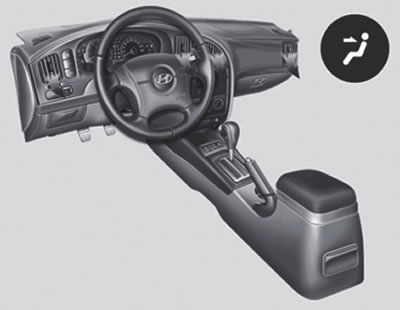
When this mode is turned on, the corresponding icon lights up and air is supplied through the ventilation nozzles in the instrument panel.
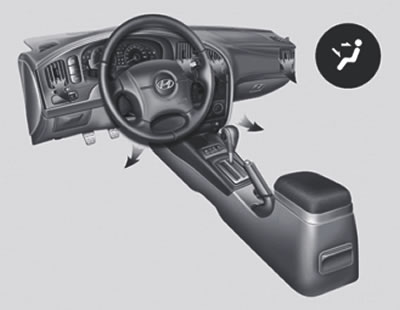
When this mode is selected, this icon lights up and air is supplied through the instrument panel vents and the floor vents. At the same time, unheated air can be supplied through the instrument panel nozzles, and heated air through the floor nozzles.
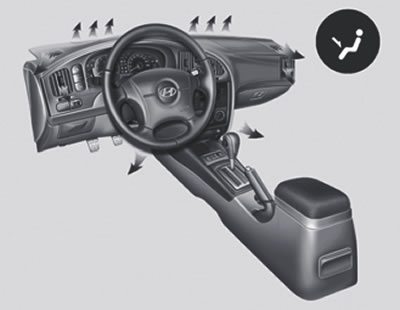
When this mode is selected, this icon lights up and air is supplied through the floor vents, windshield and side window defroster vents and side ventilation vents.
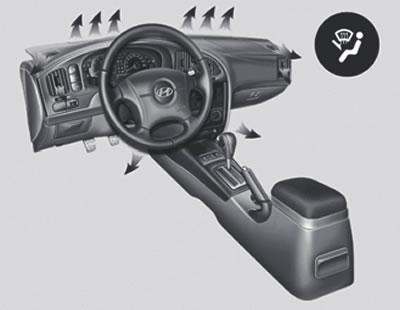
When this mode is selected, this icon lights up and air flows through the windshield defroster vents, floor vents, side window defroster vents and side ventilation vents.
Windshield defroster button
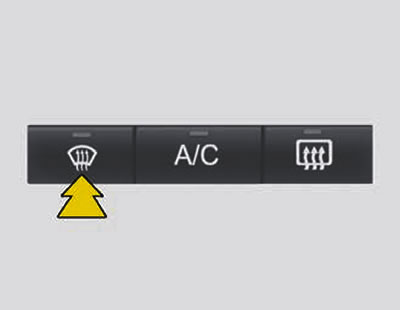
When you press this button, air recirculation is automatically turned on (
) and air is supplied through the windshield blower nozzles. To speed up glass cleaning, the air conditioner is switched on at ambient temperatures above 2°C and automatically switched off when the outside temperature drops below 2°C.