


Execution order
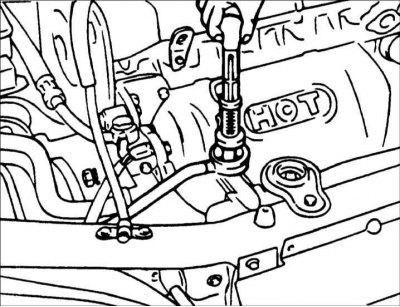
1. Use a hydrometer to measure the specific gravity of the coolant.
2. Measure the coolant temperature and, depending on the temperature, calculate the concentration of antifreeze in the coolant.
The relationship between the concentration of antifreeze in the coolant and the specific gravity
Coolant temperature°C and specific gravity | Freezing point°C | Safe operating temperature°C | Coolant concentration | ||||
10 | 20 | 30 | 40 | 50 | |||
1,054 | 1,050 | 1,046 | 1,042 | 1,036 | –16 | –11 | 30% |
1,063 | 1,058 | 1,054 | 1,049 | 1,044 | –20 | –15 | 35% |
1,071 | 1,067 | 1,062 | 1,057 | 1,052 | –25 | –20 | 40% |
1,079 | 1,074 | 1,069 | 1,064 | 1,058 | –30 | –25 | 45% |
1,087 | 1,082 | 1,076 | 1,070 | 1,064 | –36 | –31 | 50% |
1,095 | 1,090 | 1,084 | 1,077 | 10,70 | –42 | –37 | 55% |
1,103 | 1,098 | 1,092 | 1,084 | 1,076 | –50 | –45 | 60% |
Example. Safe operating temperature -15°C at a weighted specific gravity of 1.058 and a coolant temperature of 20°C
Warning! If the coolant concentration is below 30%, the anti-corrosion properties of the coolant are reduced. At a concentration of more than 60%, the frost resistance of the coolant is impaired.
Recommended coolant
| Antifreeze | Antifreeze content in coolant |
| Ethylene glycol | 50% |
The material was obtained from a web resource: www.hyundaibook.ru