


Clutch housing
1. Clean the clutch housing from dust with a vacuum cleaner or cloth, do not use compressed air. Check the seals for oil leaks. If any are found, replace the sealing cuffs.
2. The wear of the clutch pressure plate should be uniform across the entire surface. If the wear is uneven, it means the clutch plate is deformed or installed incorrectly.
3. Check the flywheel friction surface for discoloration, damage, cracks and wear.
4. Clean the friction surface of the pressure plate with solvent
5. Measure the non-flatness of the clutch pressure plate. If the non-flatness value exceeds 0.5 mm, replace the pressure plate.
6. Check the pressure plate for wear, cracks and damage.
7. Check that the flywheel is correctly installed on the mounting pins.
Slave disk
1. Do not allow the working surfaces of the driven clutch disc to become contaminated. If the working surfaces are contaminated with oil or lubricants, replace the clutch disc.
2. Measure the depth of the rivets. Replace the clutch disc if the depth of the rivets is less than 0.3 mm.
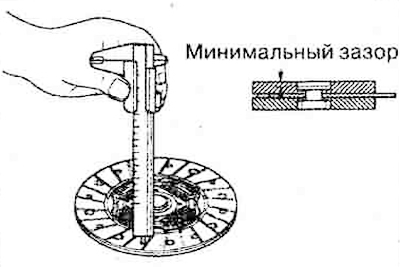
3. Check the groove of the sleeve and clutch disc spring for excessive wear.
Release bearing

(The article is borrowed from the website: www.hyundaibook.ru)
1. Check the release bearing for binding, damage or increased noise. Also check the diaphragm spring contact points for wear.
2. Replace the bearing if the contact points with the clutch release fork are heavily worn.
Clutch release fork
Replace the clutch release fork if it is heavily worn at the points of contact with the clutch release bearing.