


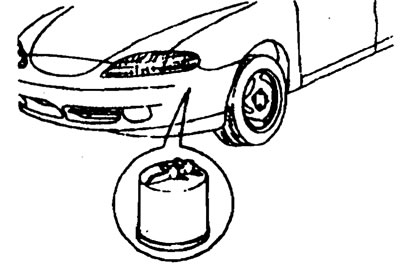
Fuel vapor collection tank
Examination
1. Check for loose connections, sharp bends in pipes, and damage to the fuel vapor line.
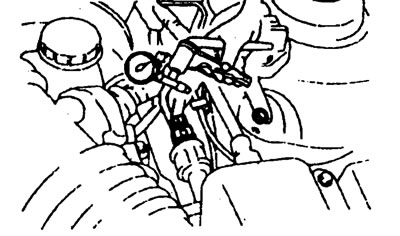
2. Check for deformation of parts, cracks and fuel leaks.
3. After removing the tank, check it for cracks and damage.
Evaporative Emissions Purge Solenoid Valve (EVAP)
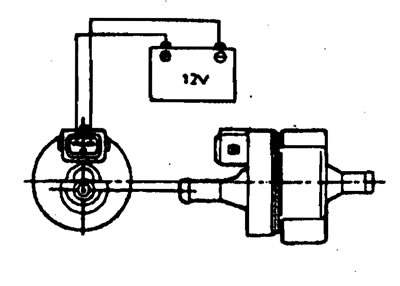
Examination
Note: When disconnecting the vacuum hose, make a mark on it so that you can reinstall it in the same position later.
1. Disconnect the vacuum hose from the solenoid valve.
2. Disconnect the electrical wiring connector.
3. Connect the vacuum pump to the nipple to which the vacuum hose marked with red tape was connected.
4. Turn on the vacuum supply and check for its presence by applying voltage to the valve and disconnecting the voltage.
| Battery voltage | Normal condition |
| Served | The vacuum disappears |
| Not served | Vacuum is maintained |
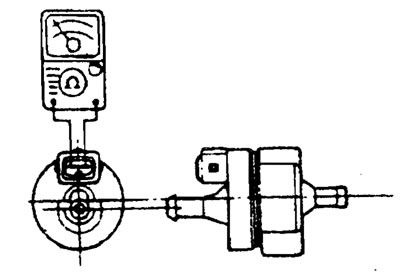
5. Measure the resistance between the terminals of the solenoid valve.
EVAP valve
Coil resistance - 26 Ohm (at 20°C)