


Caution: The front camshaft oil seal can be replaced without removing the engine only if the internal components of the cylinder head are in good condition.
Secure the vehicle from moving by tightening the parking brake lever or supporting the vehicle wheels with blocks.
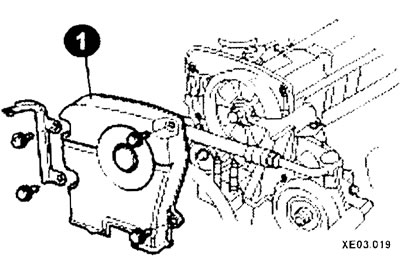
Remove the front cover (1) of the camshaft drive toothed belt.
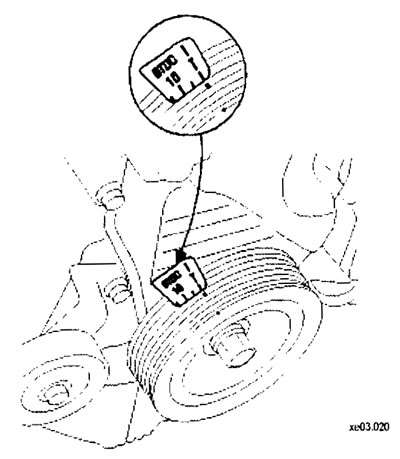
While turning the camshaft, align the timing marks on the crankshaft pulley.
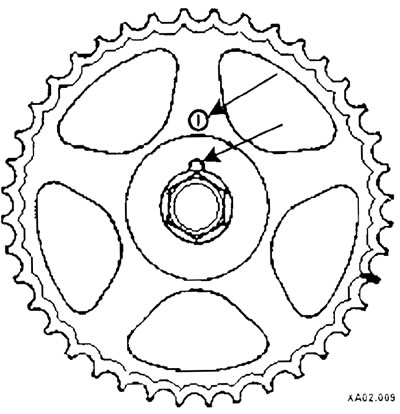
Timing mark of the camshaft gear for 2.0 liter engines
Loosen the tension roller (A) bolt (1) to loosen the timing belt tension.
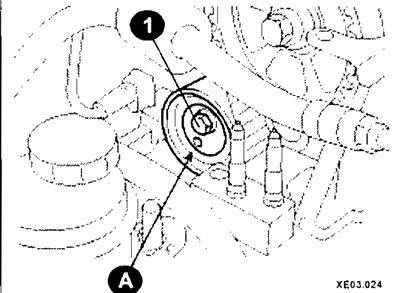
Having secured the camshaft gear from turning, unscrew the gear mounting bolt.
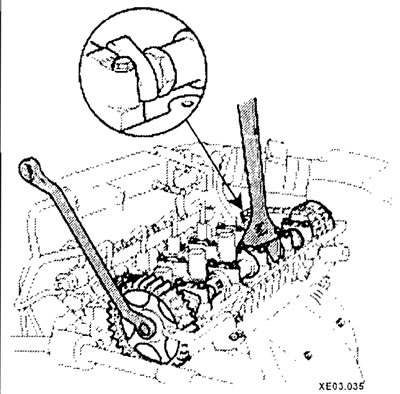
Remove the toothed wheel with the key.
Carefully remove the old seal using a special tool, a screwdriver, or by screwing a screw into it. Do not scrape the seal hole, otherwise the camshaft will be damaged in the process (if the camshaft is damaged, a new seal will not stop the leak).
Clean the seal bore and coat the outside surface of the new seal with engine oil or multi-purpose grease, using a socket wrench slightly smaller in diameter than the outside diameter of the seal, carefully tap the seal completely into place with a hammer. If you don't have a socket wrench, you can use a piece of pipe of the appropriate diameter.
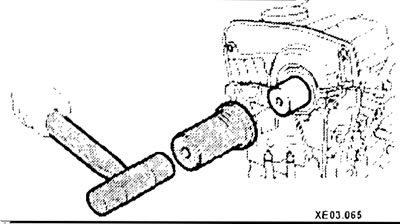
Check the seal after installation to ensure that the seal spring has not popped out.
Put on the belt, check the alignment of the timing marks on the toothed belt, and adjust the belt tension.
Put the cover back on.
Let the engine run and check for leaks.