


Contents: Adjusting the longitudinal position…⇓ Adjusting the seat backrest tilt ⇓ Adjustable headrests ⇓ Tilt the headrest forward and…⇓ Automatically adjustable head…⇓ Lumbar support adjustment (driver's…⇓ Seat Cushion Height Adjustment…⇓
Adjusting the longitudinal position of the front seat
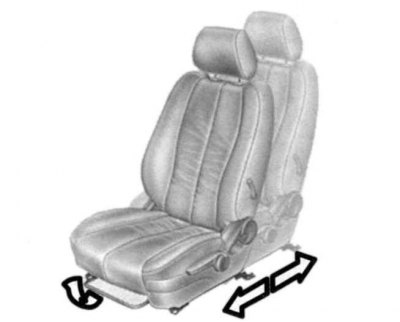
Fig. 1.143. Adjusting the longitudinal position of the front seat
To move the seat in the longitudinal position, lift the adjustment lever up. Release the seat and move it forward and backward to a comfortable position. Once installed, release the adjustment lever and move the seat slightly forward or backward to lock it in the new position.
Caution: Make sure the seat is securely locked by moving it forward or backward without using the adjustment lever.
Adjusting the seat backrest tilt
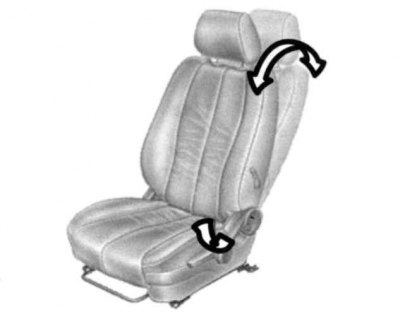
Fig. 1.144. Adjusting the seat backrest tilt
To recline the seatback, lean forward to take your weight off the seatback and pull the seatback recline lever, located on the outside of the seat, up. Press the seatback down to the desired position. To lock the seatback in the new position, release the seatback recline lever.
Warning! To reduce the risk of injury in the event of a traffic accident (crash) or sudden braking while the vehicle is moving, the backrests of the driver's and front passenger's seats should be in a position as close to vertical as possible.
The effectiveness of seat belts and air bags is significantly reduced when the seat back is reclined. There is a high risk that when the seat back is reclined, the driver and front passenger may slide out from under the seat belt, causing serious injury in the event of a vehicle collision during an accident. The seat belt will not be able to provide full protection to the passenger when the seat back is reclined.
Adjustable headrests
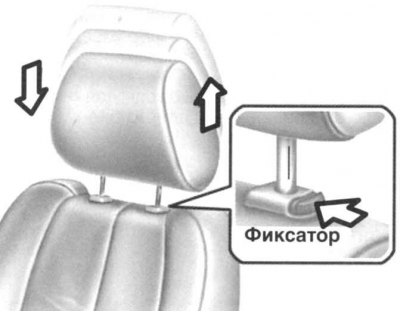
Fig. 1.145. Adjustable headrests
Headrests provide protection for the neck area.
To raise the head restraint, pull it up. To lower the head restraint, press it down while pressing the lock. To remove the head restraint, pull it out as far as it will go while pressing the lock.
Warning! To reduce the risk of injury in the event of a collision, adjust the height of the head restraints so that their center is at eye level. If there is a cushion or something similar between your back and the seat back, the distance between your head and the head restraint increases and the effectiveness of the head restraints in an accident will be reduced.
Warning! It is dangerous to drive a car with incorrectly adjusted head restraints or without them at all. Be sure to check that the head restraints are installed and adjusted correctly. Otherwise, you may receive a serious injury to the neck area in a traffic accident (crash).
Caution: Do not adjust the headrest while the vehicle is moving.
Tilt the headrest forward and backward
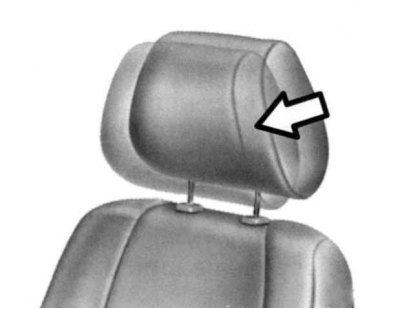
Fig. 1.146. Forward and backward tilt of the headrest
The headrest can be tilted forward to three different positions. To return the headrest back, move it forward to the extreme position and then release it. The headrest should be adjusted so that it properly supports the head and neck.
Automatically adjustable head restraints (optional)
Automatically adjustable head restraints are able to move forward and upward in the event of a rear impact. This prevents the driver and front passenger's head from being thrown back too violently, thus preventing neck injuries that commonly occur in even relatively minor accidents.
Lumbar support adjustment (driver's seat only) (optional)
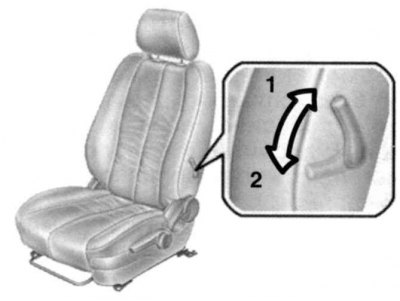
Fig. 1.147. Adjusting the lumbar support: 1 – weak support; 2 - strong support
To adjust the lumbar support, turn the lumbar support adjustment lever located on the inside end of the driver's seat back. To increase the support force, move the lever toward the front of the car. To decrease the support force, move the lumbar support adjustment lever toward the rear of the car.
Seat Cushion Height Adjustment (Driver's Seat Only)
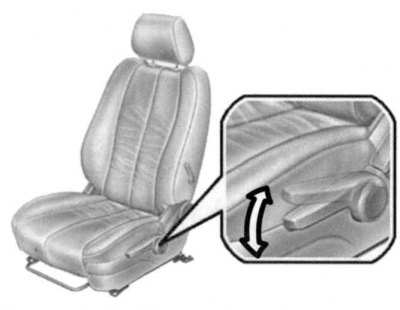
Fig. 1.148. Adjusting the height of the seat cushion
To raise or lower the front of the seat cushion, turn the front handle forward or backward. To raise or lower the rear of the seat cushion, turn the rear handle forward or backward.