


Contents: Rear seat backrest angle ⇓ Folding the second row seat back ⇓ Third row of seats (optional) ⇓ Full folding of the second row seat ⇓ Adjustable headrests ⇓ Precautions when using the rear seat ⇓ Safety precautions when handling…⇓ Seat Belt Care ⇓ Periodic inspection of seat belts ⇓
Rear seat backrest angle
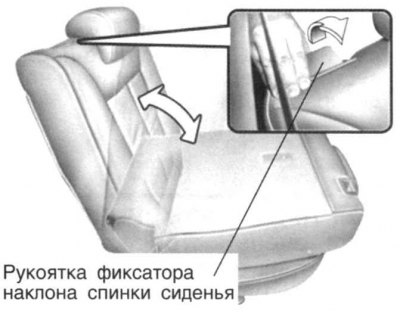
Fig. 1.154. Rear seat backrest angle
To adjust the angle of the rear seat back, pull the locking handle towards the headrest (Fig. 1.154). Once the desired position is reached, release the locking handle. Make sure that the seat back is securely locked.
Caution: When adjusting the angle of the rear seat back, the locking handle must remain extended.
Folding the second row seat back
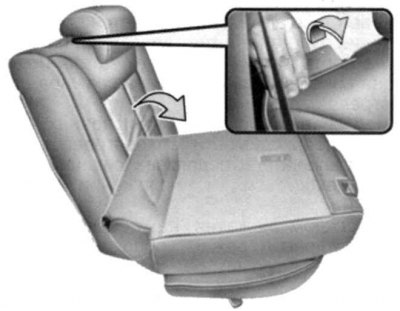
Fig. 1.155. Folding the second row seat back
Lower the headrest to the lower position (Fig. 1.155).
Pull the release handle, then press the seat back and lower it.
The seat back will be securely locked into place once you hear a clicking sound.
To return the seatback to the upright position, move the seatback tilt lock handle and perform these operations in reverse order.
After returning the seatback to the upright position, make sure it is securely locked by rocking the seatback forward and backward by its top.
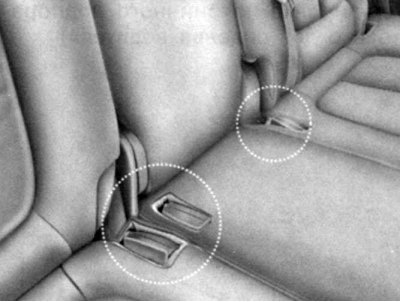
Fig. 1.156. Pockets for seat belt buckles
Note: Before folding the rear seat back, place the seat belt buckles in the special pockets (Fig. 1.156). This is necessary so that when the seat is subsequently folded down, the buckles do not remain under its cushion.
Third row of seats (optional)
Lower the headrest to the lowest position.
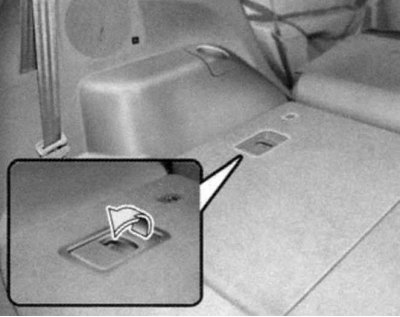
Fig. 1.157. Retainer
To fold the seat, pull the locking handle, then press the seat back and lower it (Fig. 1.157).
To return the seatback to the upright position, perform these operations in reverse order.
Full folding of the second row seat
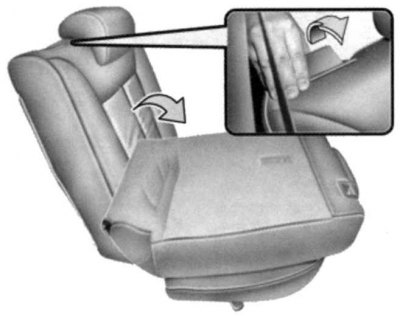
Fig. 1.158. Full folding of the second row seat
To increase the volume for transporting luggage in the car, the second row seat can be completely folded (Fig. 1.158).
Lower the headrest to the lowest position.
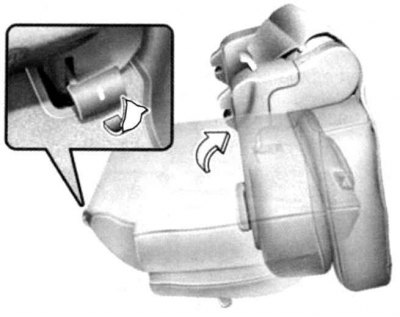
Fig. 1.159. Seat cushion lock handle
Pull the release handle, then press the seat back and lower it (Fig. 1.159).
Pull the seat cushion release handle and fold the seat completely.
Important! When returning the seats to their original position, do not forget to return the seat belts to the correct position. To prevent the seat belts from remaining under the seat or behind the seat when returning the seats to their original position, the seat belt webbing must be located in special holders.
Warning! Never allow passengers to sit in the third row seats if the second row seats are completely folded. In the event of a traffic accident (crash) or sudden braking, passengers may be seriously injured.
Warning: Do not allow passengers to fold or unfold the seats while the vehicle is moving.
Warning! The purpose of folding the seats is to increase the space for carrying luggage in the car. Never allow passengers to sit on luggage while the car is moving, as this will prevent them from being properly fastened with seat belts, which may result in injury in the event of a traffic accident or sudden braking.
Adjustable headrests
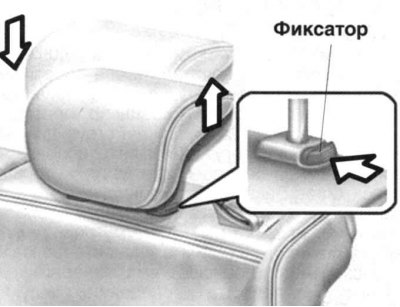
Fig. 1.160. Adjustable headrests
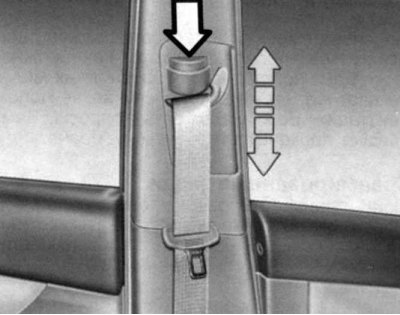
Fig. 1.161. Adjusting the height of the seat belt fastening
To raise the head restraint, pull it upwards (Fig. 1.161). To lower the head restraint, press it downwards while pressing the lock. To remove the head restraint, pull it out as far as it will go while pressing the lock. This procedure is performed with the seat unoccupied.
To reduce the risk of injury in the event of a collision, adjust the height of the head restraints so that their center is at eye level. If there is a cushion or something similar between your back and the seat back, the distance between your head and the head restraint increases and the effectiveness of the head restraints in an accident will be reduced.
[The original can be found on the resource: www.hyundaibook.ru]
Precautions when using the rear seat
For the safety of all passengers, do not place luggage or other loads higher than the back of the rear seat.
Safety precautions when handling seat belts
Seat belts should be worn by the driver and all adult passengers at all times, as well as children large enough to be properly restrained. Following basic safety precautions can minimize the risk of serious injury in the event of a traffic accident.
Seat Belt Care
The seat belt system must not be removed or modified. Care must be taken to ensure that the seat belts and related parts are not damaged by seat hinges, doors or improper use.
Periodic inspection of seat belts
It is recommended that all seat belts be checked periodically for cuts, wear and fraying of the belt webbing, as well as cracks and deformation of their metal parts. Replace any belts that are defective as soon as possible.
Keep the seat belts clean and dry. If the seat belts become dirty, clean them with a neutral detergent dissolved in warm water. Do not attempt to bleach, repaint the belts or use strong detergents or abrasives to clean the belts, as this will damage them and weaken the belt webbing material.
After any accident, all seat belts, as well as the inertia reels and the belt fastening hardware, must be replaced. This must be done even if no visible damage to the seat belts is found.