


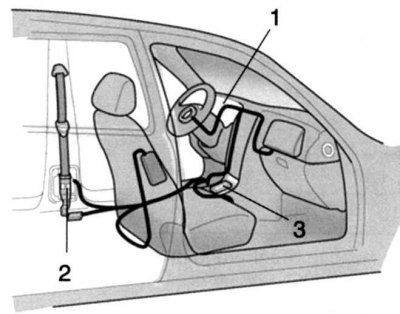
Fig. 1.172. Seat belt system with pretensioner: 1 – SRS indicator lamp; 2 – seat belt pretensioner assembly; 3 – SRS electronic control unit
The vehicle is equipped with seat belts with pretensioners for the driver and front passenger. The purpose of such a belt is to ensure that the passenger is firmly secured in some cases during a frontal impact. The seat belt pretensioner can be activated separately or together with the airbags in the event of a frontal impact of sufficient force.
If the vehicle brakes suddenly or the passenger leans forward, the seat belt lock will engage and lock the belt. In some severe frontal collisions, the seat belt pretensioner will engage and retract the belt to secure the passenger more securely.
After the pretensioner has been activated, if the belt tension is too strong, a special tension force limiter will loosen the belt.
Note: The driver and front passenger pretensioner seat belts are designed to deploy in the event of a frontal impact of sufficient force. The pretensioners may deploy alone or together with the air bags in the event of a frontal impact of sufficient force. The pretensioners will deploy in any severe frontal impact, even if the seat belt is not fastened.
Note: When the seat belt pretensioners are deployed, a small amount of smoke and a loud popping sound are emitted. These phenomena are normal and not dangerous.
Note: Although the smoke is not toxic, do not inhale it because it may cause irritation, coughing, or choking. Wash your face and hands thoroughly after the seat belt pretensioners have deployed.
Caution! After turning the ignition key to the "ON" position, the SRS (airbag) indicator lamp flashes for approximately 6 seconds and then goes out. This occurs because the sensor that activates the SRS airbags is included in the seat belt pretensioner circuit.
This lamp also lights up if the seat belt with pretensioner has a malfunction.